Signs You Need to Call a Plumber

Plumbers are used to emergency calls for leaking water, broken pipes, and frozen valves. However, if you catch issues before they become an emergency it will save you a lot of money, and your plumber will appreciate it.

Plumbing issues that aren’t addressed can become emergencies over time. One leak can cost thousands of dollars in repairs, remediation, and renovation. If you suspect you have an issue with your plumbing, you can save time, money, and stress by calling out your plumber right away.

Clogged Toilets

If your toilets seem to always be clogged you may have a child who uses too much toilet paper, or you could have a plumbing problem. This could be caused by having the toilet vent clogged, low water pressure from an old low-flow or malfunctioning toilet, or roots in your drain lines. Whatever the reason, you should get your system checked with a sewer camera to find the problem.

Slow Drainage

Pipes that consistently drain slowly could show an issue with your overall plumbing or with that specific drain. If you clean out the drain and there is no improvement, it’s time to call a plumber. He may need to clean or replace the trap, or there may be a clog somewhere in your drain lines.

High Water Bills

If your water bill is suddenly higher than normal, and you haven’t been using an unusual amount of water, you should worry about a leak. The best way to check for a leak is to shut off your water everywhere, including inside and outside of the house, and then check your water meter to see if it’s running. That indicates water is still running somewhere it shouldn’t be.

Signs of a Leak

Signs of a leak in your house include brown spots on your ceiling, bubbling and discolored paint, and mold. If your bathroom or kitchen floor is wet frequently and you don’t know why, or if you see wet areas under your sinks or near your bathtub, you may have a leak. Even a tiny leak can cause thousands of dollars of damage. By the time you see signs like bubbling paint, the wall is already very wet inside. Don’t delay.

Strange Sounds in Pipes

If your pipes make a hammering or thumping sound or you hear trickling water long after you are no longer using it, you should call a plumber. Your pipes should be silent except for the sound of running water when in use.

Discolored Water

Strange colored water is a sign of old pipes or mineral build-up in the hot water heater. While discolored water is usually safe to drink, it’s unsightly and can be a sign that your pipes are filling with mineral deposits or breaking down. This is especially the case if you only notice the discoloration after the water has been sitting for a while, like first thing in the morning or after vacation. While some tap water is naturally colored, if you are unsure or the color is new, call an expert.

Standing Water in the Yard

If you notice a puddle in your yard but it hasn’t rained in days, assume the worst- that you have an underground water leak or something wrong with your septic tank. Sometimes, you will have a extra-green patch of grass rather than standing water. It’s a good idea to see if your water meter is still running even with all the water shut off to check for a leak.

Low Water Pressure

Consistently low water pressure is not just annoying, it’s a bad sign. While water can have low pressure from other causes, such as maintenance on the main lines or the sprinkler system running, those will be intermittent or short term. Consistently low pressure could be caused by a leak diverting water from your lines, build up in the water heater, or clogged supply lines.

Sewer Smells

Any sewer or rotten egg smell is both annoying and a sign of an issue. You may need your venting system checked or you may have a leaking drain line. The seals and valves in your toilet might not be working correctly. You could also simply have a dry trap which is designed to hold water and keep odors out. If you have a tub or toilet that is rarely used, run water in it and see if that solves the problem. If not, call a plumber.

Discolored Pipes

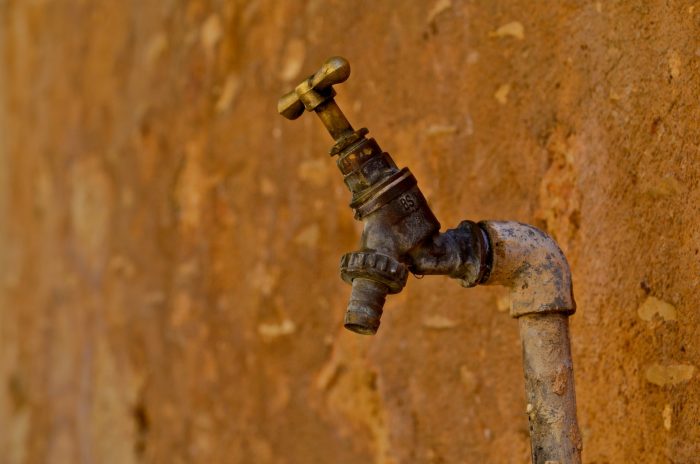
If you notice discoloration on metal pipes, it’s a sign of aging and it might be time to get an inspection on your system. Corroding copper or iron pipes may be slowly leaking or wearing out.

Wobbly Toilet

A wobbly toilet may be a simple problem like a loose seat or it may be a more problematic issue like loose bolts or a wax ring that is breaking down. Try tightening the bolts and if you still feel like something is wrong, call a plumber. The wax ring seals the toilet where it enters the drain pipe and is necessary to prevent leaks and fumes.

Gurgling Sounds

If you hear gurgling or bubbling sounds from your toilet after you have flushed it, you may have air entering the line or a vent that is not working well. Drain water should run freely in your pipes and gurgling sounds, especially delayed gurgling, can be a sign of a partially clogged line somewhere.
How to Keep Your Plumbing Healthy

Plumbing is a fundamental feature of any property. We rely heavily on effective plumbing for our hygiene and health. That said, we may be unknowingly causing damage to our plumbing with our daily actions. Here are some ways that you can take care of your plumbing system so that it can continue to take care of you and your family members.

Clean up your cleansing ritual

If you look around your bathroom, you may notice soap scum on the surface of your tiles or bathtub. Just like soap residue can accumulate in visible areas, it can also build up on the inside of your pipes. The sticky soap scum catches other debris flowing down your drains to create a large clump that can clog up your pipes. To avoid this problem, switch out your soap bar for a body wash. Since body wash stays liquid the entire time, it eliminates the issue of soap-related blockages.

Body scrubs can create the same issue as well. Organic particles in your body scrub such as coffee grounds can still create clogs and non-organic particles like microplastic beads are almost impossible to break down. Look for body scrubs made with dissolvable elements like salt or make your own body scrub with raw sugar. Better yet, use an exfoliating mitt that can be reused numerous times and forgo the commercial body scrub.

Catch debris before they become clogs

Hair is one of the most common causes of bathroom clogs. The average person can shed up to a hundred strands of hairs daily, especially when washing their hair. Therefore, you should always have your bathroom drains fitted with a hair catcher. If you shave in the shower, look for fine-mesh hair catchers instead of those with bigger holes. Very short hairs from shaving can find their way past typical hair catchers and get caught on soap scum or shaving cream residue on the inside of pipes.

The same rule applies to your kitchen. Residue from cooking or rinsing your dishes may seem harmless, but these little bits of food can get stuck further along the pipes. Coffee grounds are notorious for causing serious clogs and food items like pasta can swell after soaking up water and create a blockage. To greatly reduce the possibility of having a clog, use a kitchen drain sink basket to catch all non-liquid items. Do not be tempted to wash food residue down the sink, no matter how small.

Watch what you wash down the drain

Many items that are marked ‘flushable’ are in fact responsible for causing clogs in your pipes. Flushable cat litter, baby wipes, and even some types of toilet paper do not dissolve quickly in your pipes and can get stuck in bends or become attached to sticky surfaces. Despite what the labels say, it may be best to have a separate bin in your bathroom for such items instead of flushing them down the toilet.

In the kitchen, never flush cooking oil, grease, or batter down the sink. You may think that these substances will be quickly flushed through your piping with water but they can get attached to the rough surfaces and build up over time, coating the inside of your pipes and making it harder for water to flow. Furthermore, grease can seep into your pipe joints and cause corrosion to the metal components of your sewage system.

Rinse off before coming in

People who garden frequently may rinse off soil in the shower. Similarly, if you live near the beach or have a sandbox installed for your children, you may often be washing sand down your shower drains. Soil and sand can accumulate in the bends or on the rough surfaces of your pipe and cause frequent blockages. The best way to avoid this problem is to install an outdoor tap or to use a garden hose to rinse off all sand and soil before entering the house. Although this may seem like an extra step, it is much more convenient than having to repair a broken shower drain.

Never use caustic cleaning chemicals

You may be thinking that it is no big deal if you get a clog. You just have to pour a powerful drainage cleaning product down the pipe and it will all be fine, right? Unfortunately, strong chemical drain cleaners may solve your immediate issue but can cause serious problems over the long run. Commercial drainage cleaners contain caustic chemicals such as bleach and lye that create chemical reactions to disintegrate blockages. However, the same chemical reactions can corrode your pipes. The heat generated from certain products can even cause your porcelain toilet bowls to crack.

Stay on top of your plumbing

A surefire way to keep your plumbing healthy is to identify potential issues before they occur. Schedule routine plumbing maintenance to be alerted to any bad habits that need changing. Be informed about the signs of plumbing problems such as leaks, slow drainage, rattling pipes, fluctuating water pressure, and rising water bills. Having a reliable plumbing professional on speed dial can make a huge difference to the health of your plumbing system. Look for a plumber that responds quickly and offers a 24/7 emergency plumbing service.

How to Maintain Your Copper Range Hood

When it comes to kitchen interiors, there’s nothing classier than gorgeous copper vent hoods. They add quite a bit of visual appeal to your cooking area – however, you’ll hear plenty of people telling you that copper is finicky in terms of maintenance.

In reality, a high-quality copper range hood is easier to keep in tip-top shape compared to most other materials available on the market. You just need to understand how copper “behaves” as a metal, and you’ll be just fine. With that in mind, we’ll detail how you can clean and maintain a copper vent hood below!

Maintaining The Exterior

Generally, you’ll probably spend the most time cleaning the exterior of your copper vent hood. And you can buy plenty of different cleaners for this specific purpose, both in liquid form and powder form.

In most cases, the choice depends solely on your personal preferences – and the specific manufacturer recommendations for each individual hood. However, we’ve found that most homeowners go for the powder-based cleaners simply because they’re easier to apply without messing up the cooktop below.

If you decide on a powder cleaner, we recommend you wipe down the hood with a damp cloth first – getting rid of annoying dust build-ups in the process and damping up the surface a bit before applying the powder.

Then, you can start applying your powder to the wet surface. Give it a few minutes to properly settle in. Once you see that a paste has formed on the surface, wipe it away with another clean cloth.

On the other hand, if you went with a liquid solution, odds are you can wipe it away quicker – just make sure to follow the instructions printed on the label.

Cleaning The Air Filter And Vent

Cleaning the surface of your hood was the easy part; however, you also need to do some maintenance on the vent to ensure your hood is as efficient as possible. And just to make sure you know what we’re talking about, the vent is the narrow, hollow duct through which contaminated air is expelled from your kitchen.

Even though it seems like only smoke and air passes through here, you’d be amazed at how much grease can build up in there over time. If you allow for too much of it, your fan motor won’t be able to operate at its required capacity.

So, start cleaning the vent by scrubbing off any excess grease. If there’s too much grease in your air filters, hot gasses won’t be ventilated out – and unpleasant odours may spread through your kitchen as you cook.

It’s a good idea to use a degrease while cleaning the air filters. Then, ensure they’ve completely dried out before you return them to their place in the range hood. And if they seem overly worn out from regular cleaning and excessive grease, you can always replace them with new ones.

Troubleshooting

From time to time, it’s advisable to troubleshoot your range hood and ensure everything is functioning as it should. The best way to do that as a layman is to switch it on and pay attention to how the motor or fan sounds. If you notice more noise than usual, something may be up with the fan.

Again, this could simply be a sign of dirt or grease buildup that’s making the fan work more to vent out the air. However, contact a repair professional if your range hood consistently fails to turn on or clear smoke in a reasonable time frame. There might be some DIY repair advice in your manual, but it’s always better to let a pro handle these kinds of repairs.

Preventing Damage

If you want to have a copper range hood that works at peak efficiency for a long time, the best way to ensure that is to take preventative measures. First, go through the operation manual in fine detail to ensure you understand how the whole thing works – and what some of the major dos and don’ts are.

Even if you don’t notice that the hood is “misbehaving,” cleaning it regularly is always the best way to ensure your filter and motor fans won’t clog down. Remember, grease particles are the number one enemy of even the best copper range hood. If you don’t address this issue on a regular basis, you may need to deal with expensive repairs sometime in the future.

How Often Is Cleaning Necessary?

Naturally, this also depends on your cooking habits. If you don’t prepare a lot of food frequently, cleaning the hood once per season will be more than enough. On the other hand, if you cook all the time (meaning each day), cleaning your hood every month or two is the smart way to go.

Of course, you don’t need to open up your range hood every time; the most regular cleaning will be necessary for the exterior surfaces due to the constant dust buildup no matter how often you use it. Still, cleaning the whole thing thoroughly after holiday feast preparations isn’t a bad idea.

Help! My Baby’s Skin Is Sensitive: Tips for Treating Sensitive Skin

If you’ve just had a baby, or if you have a young child who seems to always have sensitive skin, you’re probably looking for ways to help them. It can be really frustrating when your child’s skin is constantly sore and dry, and it’s hard to know what to do about it. Here are some tips for treating sensitive skin in babies and children, covering everything from using the right soap to taking care of eczema flare-ups.

Up to 20% of children in the world have eczema, according to the American Academy of Dermatology. Eczema is a chronic condition that causes the skin to become dry, itchy, and inflamed. Many babies who have eczema eventually outgrow it, but it can be difficult and sometimes painful to manage in the meantime.

Even if your child does not have eczema, they are likely to have some type of skin sensitivity. It is extremely common for babies and children to have sensitive skin. In fact, it is estimated that up to 40% of infants have some degree of skin sensitivity.

If you have a baby or young child with sensitive skin, whether it is eczema or skin that gets a little red or dry sometimes, you’re likely to be looking for solutions. No-one wants to see their child suffer, and when things like eczema flare-ups happen, they can be difficult to get under control again. What you’re actually looking for is a way to keep your child’s skin under control to start with, so that problems don’t even occur.

Here are some tips for treating sensitive skin in babies and children.

Soften Your Water

If the water that comes out of your taps is hard, that means it contains a high level of minerals. These minerals can dry out your skin, so if you have sensitive skin, it’s best to use softened water for bathing and washing. Many people decide to get a water softening system installed in their home, such as this water softener system Los Angeles. The benefit of getting it installed in your home is that all the water you use will be softened, so it will be gentle on your skin as well as your hair and clothes. Soft water is also better for your home’s infrastructure, such as your heating and plumbing systems, and some of your appliances.

Use Creams and Bath Emollients Regularly

If your child’s skin is dry, itchy, and inflamed, you should be using emollients and creams regularly to help soothe and protect their skin. Emollients are moisturizing products that can help to hydrate the skin and prevent it from becoming dry in the first place. Bath emollients are products that you add to your child’s bathwater, which help to moisturize their skin as they bathe. Look for products that are designed specifically for eczema-prone skin, and make sure they do not contain ingredients you don’t want to expose your child’s skin to, such as parabens.

Creams and emollients should be used every day, even when your child does not have an eczema flare-up. This will help to prevent their skin from becoming dry and irritated, and will make it less likely that they will have a flare-up in the first place. Many doctors recommend finding a regime of creams and emollients that work for your child, and sticking to it until they are at least four years old.

And if your child tends to get skin problems after swimming in a treated swimming pool, apply their cream before they swim. This can act as a barrier to protect their skin.

Choose The Right Soap

The soap you use on your child’s skin is important, especially if they have sensitive skin. You want to make sure you’re using a soap that is designed for sensitive skin, and that does not contain any harsh chemicals or fragrances. You also want to make sure you’re not using too much soap, as this can dry out the skin. Just a small amount of soap on a washcloth should be enough to clean your child’s body. When it comes to their hair, you can use a mild baby shampoo. Sometimes you need to trial a few products before you find one that suits your child’s skin. Ask companies for small tester bottles to help you decide, and to prevent waste from buying large bottles of soaps and shampoos that are no good for your child.

Don’t Overwash

It’s important not to overwash your child if they have sensitive skin. This will only dry out their skin more and make it more likely that they will have a flare-up. Just two or three baths a week should be enough, using lukewarm water and a small amount of soap. You can also top up their baths with some colloidal oatmeal, which can help to soothe the skin. After their bath, make sure you pat their skin dry gently, rather than rubbing it. And apply a moisturizer to their skin while it is still damp to help lock in moisture.

If you follow these tips, you should see an improvement in your child’s skin. If their skin does not improve, or if they have a severe flare-up, it’s important to see a doctor or dermatologist. They will be able to prescribe medication that can help to clear up your child’s eczema. Sometimes skin flare-ups can be caused by an allergy to a type of food, so they can help you rule this out too. Plus they will be able to give you more specific advice on how to care for your child’s sensitive skin according to their particular symptoms.

How to Save Money and Reduce Waste as a Student

As a student, you are probably always looking for ways to save money. And while it is important to be frugal, it’s also important to think about the impact your choices have on the environment. Here are some tips for reducing waste and saving money at the same time!

Climate change and environmental concerns are now among the top worries for college and university students worldwide. In the United Kingdom alone, more than 60% say climate change is one of the top global priorities that must be tackled by world leaders. A notable 76% of students also say that their views on climate change will impact their future career decisions.

Most students the world over always have a concern for saving money too. After all, students have to pay for their studies and complete their assignments, which doesn’t leave a huge amount of time to earn extra money on the side.

So how can these two top concerns of students come together? Here’s how you can save money and reduce waste as a student.

Sell Your Used Digital Devices

We all know how quickly technology changes and how often students upgrade their laptops, phones, and other digital devices. What most people don’t realize is that these devices can be sold for a pretty penny.

There are now specialized companies that will buy your used digital devices and resell them. This is a great way to make some extra money and declutter your room at the same time. And it’s much better for the environment than simply throwing away your old devices, as many of the parts and metals will be reused or recycled. The amount you will get for different digital devices varies. If you sell your used MacBook, you’ll get more money than you might think! But money aside, MacBook or a phone that is being reused, or recycled for its parts is much more beneficial from an environmental perspective, than if the phone were just sitting at the back of your closet.

Recycle Your Old Textbooks

When you’re finished with a textbook, don’t just throw it away! Many students are unaware that their university bookstore will often buy back textbooks at the end of the semester. This is a great way to declutter your room and get some extra money for textbooks that you’re no longer using. It will also help future students to save money too, as they’ll be able to buy these textbooks at a reduced price.

And if your university bookstore doesn’t buy back textbooks, there are still many other options for recycling them. For example, you could donate your old textbooks to a local library or community center. Or you could sell them online or at a used bookstore. There’s definitely no need to throw them in the trash!

Reusable Water Bottle

Investing in a reusable water bottle is a great way to save money and reduce waste. It can be tempting to buy bottled water when you’re thirsty, but this quickly adds up. A reusable water bottle will cost you a bit more upfront, but it will pay for itself quickly as you’ll no longer need to buy bottled water.

And when you’re not using your reusable water bottle, you can simply refill it with tap water. This is much cheaper than buying bottled water and it’s also better for the environment, as there will be no need to recycle all those plastic bottles.

If you like to buy bottled water because it has been filtered or treated in some way, you could buy a water filter to keep in your college dorm. Then you can pour filtered water into your reusable bottle before you head out to classes each day.

Reduce Your Food Waste

According to the Environmental Protection Agency, food waste is the single largest type of waste in the United States. And much of this food waste happens at college and university campuses. There are many reasons for this, including the fact that students often have irregular eating habits and may not have time to eat all the food they buy.

But there are many ways to reduce your food waste, and save money at the same time. For example, you could plan your meals for the week so that you only buy the ingredients you need. Or you could cook larger meals and freeze the leftovers for another day.

And if you do end up with food that you can’t eat, don’t throw it away! There are many organizations that will accept donations of non-perishable food. Or you could compost your food waste to reduce methane emissions and create a nutrient-rich soil amendment for your campus garden.

Drive Less

Driving is one of the most expensive things you can do as a student. Not only do you have to pay for gas, but you also have to pay for insurance, maintenance, and repairs. And if you’re parking on campus, there may be additional fees as well.

If possible, walk or cycle to campus instead of driving. This is great exercise and it’s also good for the environment. If you can’t walk or cycle, take public transportation instead of driving. And if you must drive, try to carpool with other students so that you can split the cost of gas.

By following these tips, you can save money and reduce your impact on the environment at the same time. So why not give them a try?

These are just a few of the many ways that you can save money and reduce waste as a student. So next time you’re looking to save some money or reduce your environmental impact, keep these tips in mind. And who knows, you might just end up saving a lot of money and helping the planet at the same time!

How to Make Your Email Newsletter Convert

Almost everyone has an email address, which means almost everyone is a potential customer. Email newsletters are one of the best ways to reach out to those potential customers and convert them into paying customers. Here’s how to make your email newsletter convert more of those potential customers into paying customers!

The difference between having an email newsletter, and having an email newsletter that delivers results, can be quite significant for some businesses. If you’re putting time, effort and money into building a list of subscribers and sending out email newsletters, there’s no point if it doesn’t gain you the results you need as a business.

Conversion means different things to different businesses. For some, it might mean making a sale, for others it might mean getting a lead or signing up to a service. Whatever your conversion goal is, there are certain things you can do to increase the chances of achieving it.

Here are some tips on how to make your email newsletter convert.

Keep It Short And Sweet

People are busy and they don’t have time to read a long email. Keep your email newsletters short and concise. Get straight to the point and make it easy for people to see what you want them to do. Often less text means more to your customers, but you need to use the words you do have wisely. Make your sentences short, easy-to-read and engaging. Use well constructed, plain English – and check it with a tool such as ProWritingAid. Use web-optimized imagery if appropriate. And let your customers know the crucial message you are trying to relay.

Why Do They Care?

Before you start writing your email newsletter, think about why your customers would care. What’s in it for them? How will they benefit from reading your newsletter? If you can’t answer these questions, then chances are your customers won’t be interested either. Write down a list of reasons why someone should read your email newsletter, both generally and the specific email newsletter you are planning now. If you can pinpoint this sentiment, and then use the right words to relay this, you’ll stand a much better chance of converting them.

Prove It

Once you’ve identified why your customer should care about the topic of your email newsletter, you need to figure out how to back this up. You need to provide evidence that what you’re saying is true. This could be in the form of a case study, research data or even customer testimonials. Statistics can also work really well here – how many people say your product changed their life, or how many businesses have enjoyed success because of the service you gave them. If you can provide some solid proof that what you’re saying is worth reading, then this increases the chance that your customers will convert.

Compelling Subject Line And Preview Text

Your subject line and preview text are the first things your customers will see. If they’re not compelling, people won’t even open your email. So make sure you spend some time crafting a subject line that’s going to make people want to read more, and then back it up with interesting preview text. This is your chance to get creative and really hook your customers in, so make the most of it!

Consider The Stage Of The Customer Journey

When you’re planning your email newsletter, it’s important to consider what stage of the customer journey your subscribers are at. If they’re new to your business, they might not be ready to buy from you yet. In which case, your newsletter should focus on building trust and credibility. If they’ve already bought from you before, then your newsletter should focus on cross-selling or upselling. And if they’re at the end of their customer journey, then your newsletter should focus on customer retention. Each type of email newsletter serves a very different purpose, and you’ll need to respond by creating content that is just right for each stage.

Make It Easy To Convert

Include a call to action in every email newsletter and make it easy for people to take that action. Include links to where people can buy your products, sign up to your services or whatever it is you want them to do. And make those links prominent and easy to spot. Use buttons or highlight the text so that people can’t miss it. Most marketeers find it more effective to include links with the call to action at least a couple of times in their email newsletters.

Remember The Mobile User

More and more people are reading emails on their mobile devices. This means you need to make sure your email newsletter is optimized for mobile. You’ll need to use a single column layout, large font sizes and keep the overall design simple. You also need to make sure your call to action is prominent and easy to click on a small screen. Often simple linked text can work best on mobile devices, so flashy buttons with great designs aren’t always the answer.

Test, Test, Test

Finally, don’t forget to test your email newsletters before you send them out. Send yourself a test email and check how it looks on different devices. Make sure all the links work and that your call to action is prominent. And then track your results once you’ve sent it out to your list. Check how many people opened it, how many clicked through and what the conversion rate was. Use this information to improve your future email newsletters.

By following these tips, you can increase the chances of your email newsletter converting. So spend some time crafting a great email, testing it and then tracking your results to see how you can improve.

The Best Ways to Protect Your Wealth in Today’s Uncertain Economy

Nothing is static in the world economy; what we see today bears little resemblance to a generation ago. And it is almost guaranteed that the economy will not look very familiar a decade or two from now. Financial stability in an economy gripped by uncertainty is a rational objective to aim for. And for many, slashing expenses and aggressive saving is the place to start achieving it.

However, saving funds for the future is not enough; we need to do more for the long term. Inflation erodes away a lot of the purchasing power of our hard-earned money. A simple rule of 72 calculation tells us that with a 5% inflation rate, the cost of living will double every 14.4 years. We are rowing upstream, and the speed at which we go up should be equal to or greater than the speed of the river’s downstream flow. So if sitting on cash and bank deposits are not adequate solutions for preserving our savings, what are reasonable alternatives? In this article, we are going to go over some of the best anti-inflationary assets that protect your purchasing power, each with its own reward-risk ratio.

Precious Metals

Gold and other precious metals have historically been considered strong hedges against inflation because they are intrinsically valuable physical assets. Precious metals tend to hold their value over time because they have a finite supply, don’t need the backing of a particular body, and they are and have been widely accepted as a medium of exchange all around the world throughout history. While they may not be the most profitable investment instrument since they have no yield, precious metals must have a place in every strong portfolio as they provide a good hedge against inflation and market turbulence in the long term. Read more to learn about how you can diversify your investment portfolio with precious metals such as gold, silver, and palladium.

Equities

Looking back at the times when inflation was rampant, like in the late 70s and early 80s, we can see that investing in equities has been one of the best long-term strategies to fight inflation. And it makes sense because when we are investing in equities, we are putting our money in companies and businesses that can raise their prices during inflationary periods.

No company is immune to inflation, and how they respond to external economic variables is dependent on the leadership and its decision-making. However, economic enterprises have the option to pass the inflation on to customers or make other adjustments that would be beneficial in the long run.

Equity investing is not risk-free, and there is always going to be short-term volatility in the market, but data shows that it builds wealth long term.

Real Estate

Real estate investments can also offer a good rate of return over the long term since their value increases in tandem with inflation. And this statement holds despite the housing crash of 2008.

Real estate investment typically has a higher barrier to entry in comparison to many other forms of investment like bonds and stocks. Flipping homes, renovating for profit, and renting apartments and commercial real estate are among the most popular real estate investment vehicles, and they all require a lot of capital upfront.

Investing in real estate has other drawbacks as well. Purchasing and selling properties involve high transaction costs. In addition, it requires a lot of patience as real estate is among the most illiquid assets, which means that it cannot be sold readily without a valuation loss. Also, real estate investment is not as much a passive activity as many believe it is. From maintenance to management, it takes a fair amount of involvement from the investors, unless it is done through real estate investment trusts or REITs.

Inflation-Linked Bonds

One hedge that has come to focus lately due to the recent unprecedented surge in prices is inflation-linked bonds. These bonds, which are known in the US as Treasury Inflation-Protected Securities or TIPS, effectively protect against inflation because they pay the ongoing actual accrued inflation rate in addition to a fixed real yield.

With nominal treasury bonds or normal bonds, the principal and interest (coupon payments) remain fixed for the entirety of the bond’s life. With TIPS, in contrast, the principal and interest are linked to the rate of CPI inflation, which means that when the bond matures, the principal you will be paid is going to be accordingly adjusted to the inflation rate.

So are inflation-linked bonds superior to nominal bonds? It depends. Inflation-linked bonds are always issued with an interest rate less than an equivalent nominal bond. And whether or not inflation-linked bonds will yield more returns than nominal bonds depends on whether the inflation exceeds a specific rate known as the breakeven rate over its lifetime.

How to Prepare for Studying Abroad as an International Student

The prospect of studying abroad is both aspiring and intimidating, especially for young high school students who have yet to break off their ties of reliance on parental support. Studying abroad and the uprooting it involves is a life-altering experience for anyone at such a young age. It entails change on all fronts of life and calls for a series of serious decisions. However, those who come out from the other end of it have achieved exceptional growth personally, professionally, and of course, academically.

It is unfortunate that many students drop the idea of pursuing their dream to study abroad because they are overwhelmed by the fear of change or don’t see it in themselves to be able to do it. Studying in another country is not easy, far from it. But with the right approach, ample preparation, and hard work, it can be one of the most fulfilling and rewarding journeys of your life, one that strengthens the backbone of your professional development for the days to come.

To help you achieve that, we have compiled a few pieces of advice that we think you should consider before proceeding to study abroad.

Get into the Right Mindset

Before embarking on this journey, it is crucial that you get a reality check regarding how things work and what you should expect.

Studying in another country is going to be demanding, much more so than in your home country, because so many of your layers of support are going to be stripped away from you. You probably won’t have many of the luxuries you enjoyed back home, nor can you depend on your parents for the necessities and responsibilities of everyday life. This means that on top of studying hard, doing the homework, and working on projects, you will also need to do all the household chores by yourself. You will need to do things like buying your own groceries, doing your own laundry, and cooking your own meals, which can add up and take a lot of your time. Mastering time management and cultivating self-discipline is key to tackling the extra responsibilities that are going to get introduced into your life.

Moreover, the first few months will probably be extra challenging as you get accustomed to your new routine, get acclimated to the new cultural climate, and make new social connections.

At first glance, it may seem overwhelming, but it is really not. In fact, it is all worthwhile because the whole studying abroad experience will get you on the fast lane to adulthood. You will get real-life experience under your belt, come across new opportunities, and get to enjoy and appreciate the freedom and independence you have always wanted.

Gather as Much Information as You Can

Though it is natural to have doubts, you need to decide on the course you want to take, the country you would like to study in, and the college or university you wish to attend.

You can start with courses that interest you and look for them in different colleges and universities to compare different criteria such as their fee structure and syllabus, as well as whether or not they offer any part-time job opportunities, internships, or scholarships.

You can visit each institute’s website to gather this information and review their course details. All prominent and credible universities and colleges around the world provide resources about their courses and academic programs on their official website. Create a list of priorities and go through them one by one to get a better idea of the depth and breadth of each institute’s offered curriculum.

In addition to the official communication channels, there are many online forums and social media communities where you can reach out to alumni and ask about how the life, faculty, and studies are at specific colleges and universities.

Build a Solid Admission Portfolio

There is no way around it. Suppose you want to study abroad at a renowned and well-regarded college or university. In that case, you must have good grades. So, get started early and build a good CV, as higher grades directly increase your chances of getting into top schools.

In addition, many universities place an equal if not a greater emphasis on extracurricular activities. So try to get work experience, participate in internships, and engage in a few extracurricular and co-curricular activities to enhance your application portfolio and demonstrate unique skills and interests.

Gather All the Necessary Documentation

The process of applying to study abroad requires hefty paperwork. And although different universities from different countries around the world have varying admission criteria, there are many common documents that are required by almost all of them. These include your transcript, your GRE and language proficiency test scores, as well as your statement of purpose or essay and letters of recommendation. If you are also applying for scholarships or financial aid, then you are going to need more documents on top of those. You will find the list of all the required paperwork for each institution mentioned on their respective websites.

Music Is Essential for Children’s Development: 6 Reasons Why

Did you know that music is not just fun and interesting, it’s actually essential for children’s development? There are many benefits to exposing children to music at a young age. Here are six reasons why music is so important for kids.

Music has been around for longer than we can imagine. Signs of music have been discovered from the Stone Age, more than 250,000 years ago. Indeed, sounds that have been organized by using rhythm, melody, and harmony have captured the imagination forever.

Many people say they enjoy music, and have a soft spot for a certain genre or artist. We know it can alter our emotions, making us feel happy, sad, peaceful, and many other sentiments. But music is often described as being a pleasant accompaniment to life, rather than an absolute essential. Yet more and more studies are showing that music is essential to children’s development. Here’s why.

1. It Helps Them Understand Their Feelings

When children are first born, they cry to communicate that they need something. As they develop, they learn to use language to express themselves. But even before words are learned, music can be used to help kids identify and understand their emotions.

Songs with a fast tempo can help kids feel happy and energetic, while slower songs can be calming. Songs about sadness can help kids understand and process difficult emotions. And happy songs can help kids feel, well, happy!

Music is a great way for kids to express their feelings, and as they get older, it can help them to gradually put these feelings into words.

2. It Improves Cognitive Function

Exposing children to music has been shown to improve their cognitive function. A study published in the journal, Nature, found that children who received musical training had improved sound discrimination, memory, and the ability to process information.

Other studies have shown that kids who are exposed to music have better motor skills, spatial-temporal reasoning (the ability to see how objects fit together in space), and even math skills! In addition, studies show that children who have some musical training have better short term memory, verbal memory, second language pronunciation accuracy and reading ability.

It’s not just that kids who are good at music tend to do better academically. It seems that exposure to music actually makes kids smarter. There are now independent schools that focus on music, drama and other creative avenues to ensure students get the maximum benefits out of music.

3. It Teaches Them About Cooperation

In order to make music, children have to cooperate and work together. They have to learn to share instruments, take turns singing or playing, and work as a team to create a beautiful piece of music.

This cooperation helps kids learn how to be part of a group and work together towards a common goal. It also helps them develop social skills, such as communication and turn-taking.

Making music with others is a great way for kids to learn how to cooperate and work together.

4. It Encourages Creativity

Making music is a great way for kids to express their creativity. They can experiment with different sounds, rhythms, and melodies to create their own unique pieces of music.

Kids who are exposed to music often develop a greater sense of creativity. They learn to think outside the box and come up with new ideas. Encouraging kids to be creative is a great way to help them develop their imagination and problem-solving skills. Having this creative mindset means that they can apply this way of thinking to anything they embark on in the future, from creative pursuits to developing practical skills.

5. It Supports Mental Health

Exposing children to music has been shown to have a positive effect on mental health. A study published in the journal, Frontiers in Psychology, found that music therapy can be an effective treatment for anxiety, depression, and stress.

Other studies have shown that music can help reduce anxiety levels, improve mood, and increase self-esteem. Listening to music can also help kids relax and get to sleep.

Music is a great way to support mental health, especially for children who are struggling with anxiety, depression, or stress. Exploring and enjoying music also means children have something they can go towards for comfort throughout their lives, to help them deal with the normal ups and downs they might experience.

6. It Helps Them Develop Motor Skills

Exposing children to music can help them develop motor skills. A number of scientific studies have found that music therapy can be an effective treatment for improving motor skills. This includes gross motor skills and fine motor skills, depending on the type of music or instrument a child focuses on.

Other studies have shown that music can help improve coordination and balance. This is because children have to use both sides of their brain when they are making music, and if they play music together, they have to learn how to listen to others and meld into the rhythm.

These are just a few of the reasons why music is essential for children’s development. As you can see, music has the power to improve cognitive function, support mental health, encourage creativity, and teach cooperation. So if you’re looking for a way to help your child develop in all areas of their life, consider exposing them to music. It might just be the best thing you ever do for them.

Looking to grow your Instagram account? Here are the best sites where you can buy Instagram likes

For most businesses operating in the online environment, social media has become their bread and butter. Social networks provide the ideal platform to attract and engage customers, receive feedback and build trust and loyalty. Regardless of industry or niche, being active on social media is a must, and Instagram definitely holds pride of place among the platforms that can help you gain a competitive advantage.

At the moment, Instagram is one of the most popular social media apps in the world by monthly active users – as of May 2022, it’s ranked the fourth with nearly 2 billion active users, so it’s no surprise that a large number of influencers and companies use it as an outlet to promote themselves and their products/services.

But Instagram’s popularity also comes with a huge downside: the sheer number of accounts that live on the platform have created a competitive environment where only the best can thrive. Therefore, increasing your following and growing your Instagram account can be painfully slow and incredibly difficult these days without some help from the outside. Fortunately, help is here and is readily available in the form of sites that allow you to purchase Instagram likes.

It’s important to note that not all these sites are created equal. So, if you want to grow your Instagram account safely and efficiently, here are the best sites to buy Instagram likes and improve your social media presence.

Likes.io

If you’ve been running an Instagram account for a while, you surely know how hard it can be to boost your reach organically. One way to do it is by interacting with similar accounts. You can like and comment on their posts, and chances are some of the users will visit your profile and return the favor. Eventually, that will bring more likes and followers to your Instagram account.

However, this method can be slow, and time-consuming, and it might fail to provide long-term results. If you want to experience real growth, the quickest and most effective way to do it is by buying genuine Instagram likes from Likes.io. Their basic package includes automated likes sent out to targeted accounts, automated story views, and detailed reporting information, so you can enhance your brand’s presence in the shortest time possible.

Likes.io bases its growth strategy on exact targeting and minimal automation, ensuring instant delivery, high-quality likes at affordable prices, and excellent customer support. The site also pays great attention to Instagram updates to make sure its services comply with the platform’s regulations.

Stormlikes

Stormlikes has become one of the most popular sites to buy Instagram likes due to the quality services it provides. The platform allows you to purchase Instagram likes, followers, and views effortlessly, in just a few minutes.

The process is simple and straightforward: first, you have to provide your Instagram account username, then you can proceed to choose the package that best suits your needs. Once you’ve made up your mind, you can submit your order and the likes will be delivered to your account. You can rest assured that all the likes provided by Stormlikes come from real Instagram users, so you don’t have to worry about scams or breaking regulations.

Social-viral.com

Just like Stormlikes, Social-viral is also a well-known platform that offers reliable and trustworthy services for those looking to increase the like count on their Instagram accounts. The site provides a range of options, so you can choose the number of likes you want to purchase, depending on your specific needs and budget.

Another great thing about Social-viral is that you can choose from two different delivery methods: you can have the likes delivered to your account immediately, or you can opt to receive them gradually over a specific period of time. Regardless of the method you choose, Social-viral guarantees real Instagram likes at competitive prices.

Followers.io

Followers.io is another great site that has made it onto the list, given its reputation and the positive reviews it gets from satisfied customers. Offering real Instagram likes, followers, and views at low prices, Rushmax promises to boost your Instagram presence in minutes.

The site prides itself on providing 100% authentic likes from genuine Instagram users, giving both influencers and businesses the possibility to increase their Instagram engagement and presence with minimal financial and time investment. They also have an associated site, stormviews.net, that provides similar services for Youtube channels.

reviewers.net

reviewers is a one-stop-shop for buying quality Instagram likes, views, and followers for your account. reviewers.net is well-aware of the challenges that users face when trying to promote their brand on the platform, so it came up with viable solutions for their problems.

The site places a great deal of importance on the quality of the likes they provide. As they mention on their pages, only genuine likes that come from real followers can help you boost engagement and build a great reputation on Instagram. You can purchase up to 500 real likes on reviewers.net that will be delivered to your account instantly. They also provide 24/7 customer support and a money-back guarantee in case you’re not happy with the purchase you’ve made.

stormviews.net

Like all the other sites we’ve mentioned previously, Stormviews also provides great options for those looking to boost their social media presence with minimal effort. The Stormviews youtube likes, views, and subscribers purchased from Stormviews can definitely give your youtube account a major boost.

In order to make the process as simple and hassle-free as possible, Stormviews offers a variety of packages you can choose from, as well as several payment options. Although some of their packages are quite large, the prices are still affordable, so you can check them out even if you have a limited budget.

Whether you’re an influencer or a business owner, elevating your youtube channel can be quite challenging if you don’t have enough time and resources at your disposal. But thanks to these sites, you can now purchase Instagram likes in just a few minutes and step up your social media game in a safe and affordable manner.