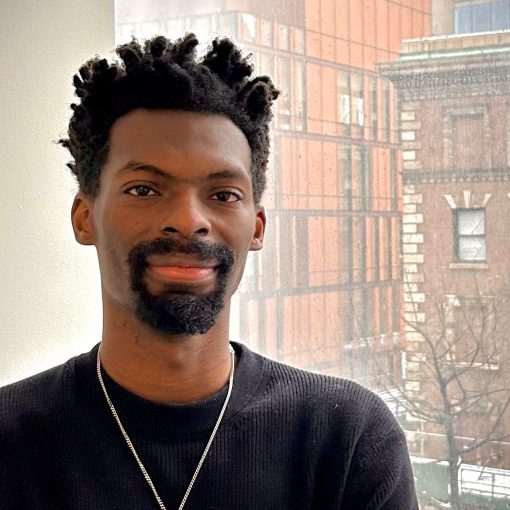
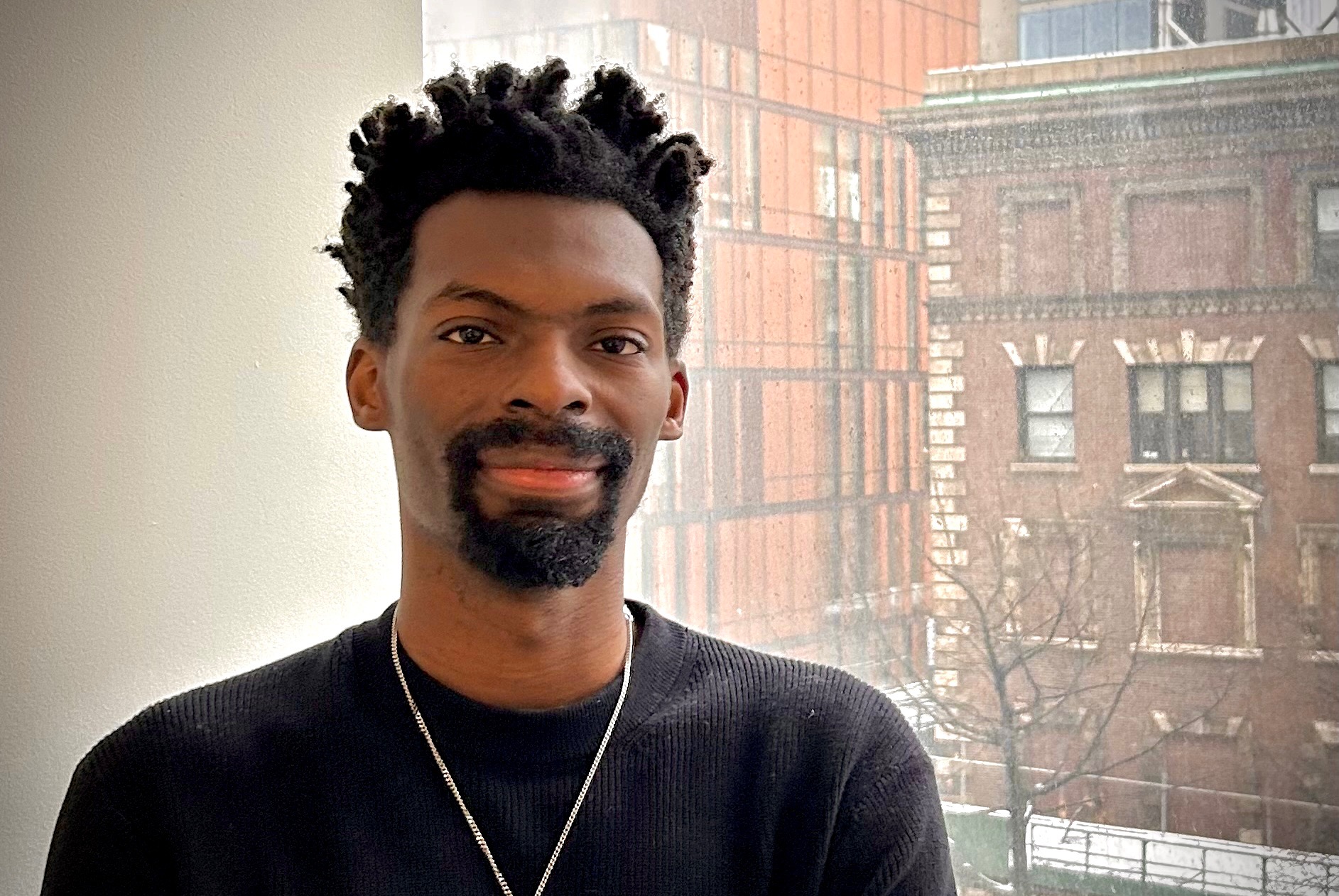
Maya Barzilai is a prompt engineer at LinkedIn and an adjunct instructor in linguistics at Barnard and Columbia. She spoke with us about being a linguist in tech, her advice for students seeking work in industry, and the new Advanced Phonetics course she’s teaching at Columbia this fall.
This interview has been edited for length and clarity.
When did you know you wanted to study linguistics?
I grew up speaking three languages at home. I always knew that I was good at languages, and I remember when I was applying to colleges, I thought, “I don’t know what I want to study, but I know that whatever job I have, I want to do it in multiple languages.” Then I went to Middlebury College for undergrad, where all students take a writing-intensive course in their first year. Mine was called Language Acquisition. When I took the class, I realized, “Oh, it’s not just cool to speak languages, but there’s also stuff to understand about how they work.” And the second I figured that out, I realized, “Oh, this is what my brain likes to do.” It ended up working out great because the first class that I took helped me figure out exactly where I wanted to be going.
Many students are curious about linguistics-related career paths, and you’ve had some very interesting jobs beyond academia. We’d love to hear about these! Can you tell us about your current role at LinkedIn, as well as what you did at Grammarly?
When I joined Grammarly, they had a big team of linguists whose role was to be the subject matter experts on the product features they were building. So if the design team said, “We want to build a feature that makes your writing sound more professional,” then part of the linguist’s job was to say, “Okay, what is professional writing? How can we define it? How do we compile 100,000 of those examples to build a model that is behind this feature?”
And then when LLMs came on the scene at Grammarly, around 2022 or 2023, a need for prompt engineers arose. Prompt engineering is the task of writing a prompt that is specific enough to generate good output every time (for example, “Draft a message that is succinct, professional, and includes information about what the sender and recipient have in common”), but general enough to work with a whole range of inputs (where, in this example, the input is information about the sender and the recipient). Leadership at Grammarly quickly realized that a good group of people to be doing prompting is linguists. And I think there’s two major reasons for this. One, we understand language, and we understand language patterns. It’s one thing to look at an edit or an output and think, “Yeah, this looks bad.” It’s another thing to look at 100 and be like, “Okay, here are the types of mistakes that are happening.”
The other thing I think makes linguists good at prompting is that trained linguists are social scientists. That means that we’re experts in experimental design and statistical analysis. So it’s both linguistic expertise and scientific rigor that make us good prompt engineers.
How important was your educational background, including your studies in computational and theoretical linguistics, to your jobs in industry?
I actually don’t have that much computer science background. I took two computational linguistics courses in grad school. To a linguist, I would never describe myself as a computational linguist, because I never did academic research centered around topics like NLP. But if there’s an industry job advertising for a computational linguist, I know that I could be a good fit for it based on my technical expertise. This is an important distinction for linguists to make when applying for jobs.
For my PhD, I focused on phonetics and phonology. I did mostly experimental work and some field work. I would say that the work I do day-to-day is extremely different from the work I did during my PhD. But the skills that you acquire as a research linguist have a lot of satellite skills that come with them, and those are really useful in the industry jobs I’ve had.
My team happens to be full of journalists who kind of came into prompt engineering because, similarly to linguists, they think really carefully about language. What I bring to this team as a linguist is the rigor—the statistical and methodological rigor. So, the skills that I developed in grad school definitely make me good at this job.
Also, the ability to work with people and explain how you’re thinking through things and what the pros and cons are is really useful in a tech role. These are also skills that I developed as a grad student, and ones that I think are good no matter what you do.
How many other linguists do you work with, and how have you gone about explaining linguistics to laypeople in and outside of your work?
It’s the plight of a linguist that very few people understand what you do, but everyone thinks they know what you do. I had a friend say to me once, soon after I finished my PhD, “I speak English; am I a linguist?” I was like, “Isn’t it possible that I just studied for five years to learn stuff you don’t already know?”
At Grammarly, my team was full of linguists, and that was great. Still, each of us in our cross-functional work communicated a lot about linguistics to non-linguists. I also do lots of communicating with non-linguists in my current role, where I don’t have direct teammates who are linguists. To me, the hard part about this is threading the needle on the right amount of information to relay—the more you know about something, the more excited you are to share it. But it’s really hard to explain a second-year phonetics phenomenon to someone who didn’t really want a 10-minute explanation. The fun challenge is figuring out what is useful for someone to understand and which details to omit.
Can you give us an example of a case where linguistics was key to solving a problem?
An example that’s recently come up is I’m working on a project to automatically translate LinkedIn posts. As you might all know, translating is not easy, and you can’t just write a prompt that says, “Translate this, and make sure it’s good.” My job is to help evaluate the translations.
So, one issue that’s come up is author gender. In English, you can write a whole article and not have to say anything about your gender; however, in other languages, you can’t, because gender is implicit in the grammatical structure of the language. And misgendering our members who didn’t necessarily know that their post was going to be translated is a very high-risk thing that we don’t want to do. So in this example, I didn’t need to go into detail about grammatical gender in Germanic and Romance morphology with my cross-functional colleagues. That stuff is cool and interesting to me, but not what my team needed to know. They did need to know, “Here’s how often we might expect this to happen. Here’s how we might mitigate it. Here’s some other options, and this is how serious it could get.”
What influenced your choice of dissertation topic? Did you choose it with a particular career path in mind?
I give this advice a lot: I actually think it’s best to just pursue what calls to you the most, what intrigues you the most. Georgetown, where I went to grad school, has a computational linguistics master’s program that I got into. My thought process at the time was, “I don’t want to get a PhD, those people are nerds. I’ll just spend two years getting better at computational linguistics, and then I’ll make more money when I leave.” And then at the very end of my first semester of grad school, I realized I didn’t want to not take all these phonetics and phonology courses. I had become one of those nerds.
So all of that is to say, I had no grand plan. I was not being at all strategic. At every juncture, I simply chose to do the thing that was most interesting to me.
My dissertation topic came out of a genuine curiosity about this one thing I had come across. I pursued what was interesting to me at the time. I made decisions about my career in the moment based on what seemed right to me. And I think that trying too hard to reverse engineer a major or a thesis topic based on what you think you want to do—it might work, but I don’t think it’s easy to make it work. You might as well just follow the stuff that’s interesting to you.
For example, prompt engineering didn’t exist as a job three years ago, let alone when I graduated from grad school, let alone when I declared my undergrad major. I’m in this role because I accumulated the necessary skills for it along the way, not because I set out to make myself a fit for it from the beginning.
What advice would you give to linguistics students searching for internships or full-time roles? What fields do you see linguists entering in the future?
Do what’s exciting to you and don’t try to massage it too much—just do what’s exciting. Think about what about linguistics you love and try to really boil it down to its component parts. If you have loved your syntax classes, you might be really interested in data visualization because drawing a syntax tree is like drawing visual structures of data in a way that’s easy to see. You might love statistics and data science and experimental design. Or you might love thinking about people and anthropology and how people relate to each other. Those are all things that linguists 100% have—each of those things could be a reason to declare a linguistics major.
My examples are going to be biased towards the tech industry, just because that’s what I know. One of the places where linguists succeed—that you might not realize—is data science. Maybe less so with undergrad experience, but something to think about if you really love taking data and figuring out how to make sense of it—that could be a good place to start.
Another tech area where linguists tend to work is UX (User Experience) research, which involves figuring out the best way to build a product based on how people use a phone or a computer screen. I’ve talked to linguists who excel in this career because, again, it requires a lot of experimental design and other social science skills. In many cases, it also involves talking to users, which can be fun and fulfilling.
I got the two startup jobs I’ve had because I emailed the CEO and pitched myself for a role. That doesn’t work 95% of the time, but if you do it 20 times, you’re starting to maybe be in a place where you might get a response. That also connects to general job advice, which is getting used to being rejected. If you get a rejection, that means you’re applying to jobs, which is exactly what you should be doing.
All of our careers are long and not necessarily linear. It’s so useful to think of your career as consisting of many different steps that ultimately add up to something. If the first role you take has the data science component but it’s not related to language, or it’s about language but it’s not really linguistics, it’s getting you in a place where you’re thinking about language and how people use language. Each of those things could be a great next step, so cast a wide net.
One other thing I’ll say is don’t be afraid to reach out to people for a referral or a connection. Most people are happy to do it in tech. If I refer someone to a job here [at LinkedIn], and they get hired, I get a cash bonus. So I’m always happy to do that. Be respectful of people’s time and be gracious, but don’t be hesitant.
How did you connect with people in the industry, especially during the initial phases of searching for jobs?
In college or grad school, all of your mentors are people who have never left academia. Everyone who was on my dissertation committee, and all of my professors, were linguists who had never left academia. This means that as long as you’re in an academic setting, it can be hard to find role models whose path you can emulate. I recommend looking to mentors or connections who have a job that you would love to have in industry, and ask those people about how they ended up there.
I promise I would still say this if I had a different job: LinkedIn is really useful for this. Start building a profile and connecting with people. It can be your parents and your parents’ friends. If you think, “I would love to work at Duolingo,” or “I would love to be building Siri,” you can look for people in those roles. And if it’s someone who also went to Columbia, that’s a great introduction. If it’s someone who knows someone you know, of course, that’s great. Again, you have to be okay with getting ghosted. That’s part of the game. Ultimately, the goal of a job is not to get any job, it’s to get the right job, so if someone rejects or ignores you, it’s okay to simply believe that wasn’t the right fit for you anyway.
From a logistical perspective, it’s important to be creative about the search terms you use when you’re looking for job openings. Of course, you’ll include things like “linguist” or “phonologist” or “syntactician.” But again, think about the aspects of linguistics that you like doing, and turn these into search terms. For me, this meant searching for roles that included “curriculum development” since I taught and designed courses in grad school; I also used things like “data visualization,” “science communication,” and “technical writing”. Expanding your list of search terms helps you cast that wide net and ensures that you’re not missing out on roles for which you’d be a good fit just because of the terminology you’re used to using.
What excites you most about the Advanced Phonetics course that you’ll be teaching this fall?
I love phonetics. That’s probably clear. So, of course, one of the aims is just to go deeper into the sounds of the world’s languages. There are two other kinds of goals I have for this class.
One is to make use of some technical tools. I’m hoping to do a much more in-depth version of the Praat workshop I taught last year, and also just a version that gives people the chance to do more of their own work.
And then the other piece is I’ve built in some reading of recent academic work on phonetics. I think as researchers, a great thing to be able to do is, first of all, just read a research paper and understand what’s going on, which takes a lot of practice. The next step is to be able to critique it and say, “Does this finding make sense? Is there another way I would do it? What’s the next question I would ask?”
I plan to run these sessions as more like a reading group where we’re talking about research together. I hope to have some good discussions and build up that muscle of talking about research in a way that is in-depth, skeptical, and inquisitive.