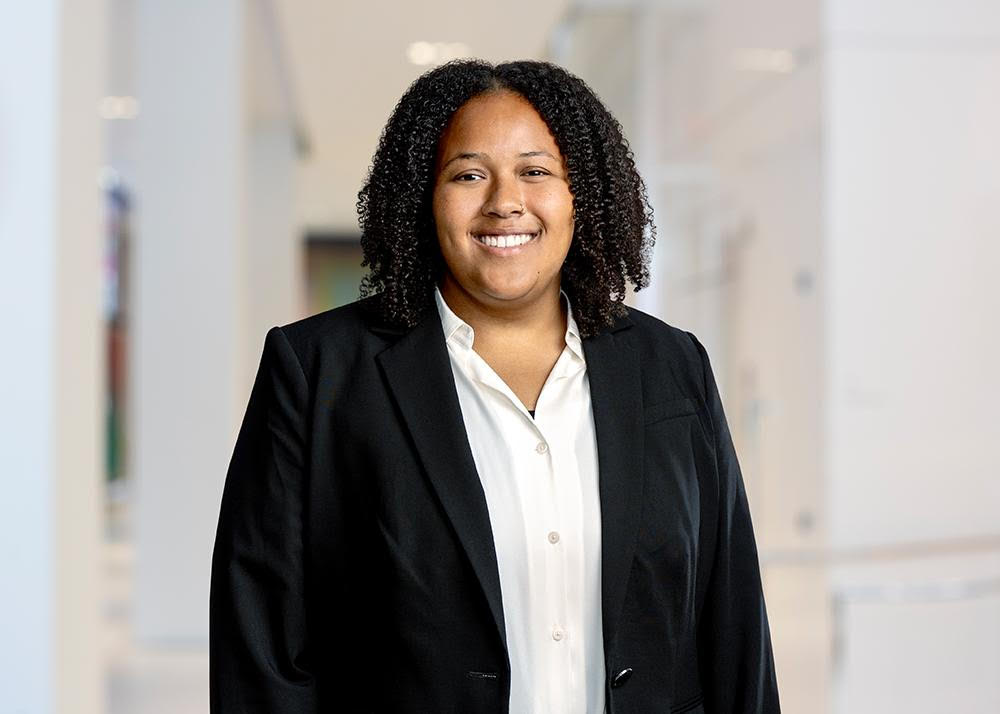
Kelsey Bialo (BC ‘21, Linguistics & Education) spoke with us about her Fulbright years in Taiwan, her language documentation and revitalization work at Wikitongues and Living Tongues, and her current MA thesis research on Palauan at the University of Hawaiʻi at Mānoa.
Can you tell us a little about yourself and how you got into linguistics?
Yeah! My name is Kelsey Bialo. I’m from Westchester, New York, just north of the city. I started at Barnard in 2017 and graduated in 2021. I originally opted to major in East Asian studies. I had been studying Mandarin since high school and continued that at Columbia. Then, in the summer before my junior year, I did the Columbia in Beijing program, and I loved it. I was taking an advanced reading and writing course and got really interested in linguistic structures.
As soon as I got back from that, it was my junior fall. I enrolled in McWhorter’s Intro Ling class and obviously loved it. And Mara Green’s course, ‘Introduction to Language & Culture’—that was the class. I was sitting on the edge of my seat, and thinking to myself, “Yep, this is going to be my major.” So I came in really late to the party—I declared linguistics as my major in my junior spring, so I was just barely able to finish the major requirements by the time I graduated a year later.
And yet here we are. For me, finding linguistics as a major, I was really looking for something that bridged the gap between being research-oriented and intellectually stimulating, while also getting to work with people, and that’s what I love about linguistics. Getting to sit around and talk to people in their language and talk to people about their cultural background and things that are important to them, that’s always been at the core of it for me. Everything else is just a bonus.
Many linguistics students are interested in the Fulbright program, given our interests in language learning and cultural exchange. What drew you to the Fulbright ETA?
By my senior fall, I had been studying Chinese for many years, and I wanted to live abroad longer-term, somewhere where I could use Chinese. Mainland China doesn’t have the Fulbright ETA, Hong Kong—you’re not going there to teach English. And then Taiwan kind of appeared as an exciting new point of interest for me.
The application process felt very natural to me. At Barnard, I actually double-majored in Linguistics and Education Studies, so it was the first application I’d written in my life that felt like everything was pulling together perfectly. For once, all the weird background things I had studied, all these really disparate interests that I had pursued for so long, came alive in that application. And now, post-Fulbright, I volunteer to be a reviewer for the Beyond Barnard office to give people feedback on their personal statements.
Fulbright really changed my life. I loved teaching, I love kids, and I loved being in Taiwan. I feel like it’s now a second home. I go back one or two times a year to visit friends. And I also got more involved in linguistics while I was there.
What was it like “on the ground” in Taiwan? Can you explain a typical day in your life teaching English?
I had a moped there—that’s the major mode of transportation. I would take my moped to school. I would teach. We had to teach 20 classes a week plus extracurricular engagement. You’re co-teaching, so a lot of it was collaborating with local English teachers, learning from them, and then developing classes and curricula with them, which was really fun. It was like a family, truly just the most wonderful community of teachers who were super supportive of my crazy plans—I was trying to do extra-credit things, like escape rooms and a cooking club. And they really supported me and helped me make it all happen. So I’m forever grateful to all of them, and they are still some of my closest friends.
How did your linguistics training come into play? Did studying linguistics help you with teaching English?
Linguistics helped a lot. You don’t realize how much knowing things about phonetics and articulation will actually help explain English to people who are learning. For example, knowing which sounds contrast in Chinese but not in English, and vice versa. So I do think it helped me teach English. But honestly, a lot of your job as an ETA is just to promote cross-cultural understanding.
My education studies degree and my SLA background made me feel a bit ahead of the game when I started teaching. One of my Chinese teachers at Columbia, Shaoyan Qi, was teaching graduate-level courses in second language acquisition (SLA), but with a teaching perspective. I worked with her on a pilot study about task-based teaching when I was in school, and I rolled with that all the way through my time teaching in Taiwan. Now I work in the world of language revitalization, and I still draw a lot on that SLA-pedagogy background. Working with speakers to develop language revitalization resources and plans, it helps to have a foundational understanding of language acquisition and communicative language learning, which were topics I got a lot of exposure to in my undergrad and practice with while teaching in Taiwan.
What did you like most about your Fulbright experience?
Getting to use Chinese every day! It had been this thing that I studied for so long, and then it became something that was actually part of my everyday life. All of my closest friends and colleagues, we would (and still) use Chinese together. So it felt like it went from this thing that I studied in a textbook to now suddenly I have my Chinese name on my visa, and I have a driver’s license from a test I took in Chinese!
I don’t think that’s everyone’s experience. You are perfectly eligible to apply for Fulbright if you don’t have any background in the language for most countries that you apply to. But for me, that’s what I loved most about it all.
Do you think that your experience as an ETA informed your work now?
People talk about cross-cultural competency and understanding—obviously, that’s a buzzword, but fundamentally, learning how to exist in another culture, in a place that works very differently than where you’re from is key to enjoying Fulbright.
Now I do linguistics research working with people from a variety of cultural backgrounds, and fieldwork, and these principles are number one, learning how to navigate cultural boundaries politely and respectfully. Fulbright and just living abroad in general will help you develop that mindset and give you more experiences where you can learn what that actually looks like. It can give you moments where you’re confronted with the decision between, ‘Do I do something that I’m comfortable with, or do I do something that’s appropriate for this situation?’ It’s practice in understanding other people’s perspectives and in learning how to meet people where they’re at when you’re working with them, either collaborating or teaching. Those are all incredibly valuable skills that I use all the time, and my time as an ETA definitely helped me hone them.
How did you get into language revitalization? What does working as a linguist look like at Living Tongues, a non-profit, in contrast with a degree-granting institution?
I took Field Methods senior year at Columbia and loved it. It was, like, the time of my life in college, and we were on Zoom! After that, I thought, “This is what I want to do with my life,” you know, barring the fact that there are very few job positions in that field. So, I basically cold-emailed and applied to internships at every language revitalization nonprofit that I knew existed at the time, starting with Ross Perlin’s ELA. I ended up working for Wikitongues, which is based in New York. They do language revitalization and documentation. I interned with them for four months, and then as soon as that wrapped up, I spent my month in quarantine in Taiwan working for Living Tongues remotely, doing phonetic analysis and annotating data in Praat for 10 to 20 hours a week. I loved getting to see both sides of it over that summer—Wikitongues is more of the documentation and revitalization work, and then I got to do the very STEM-y Praat analysis work and feel like a big shot phonetician for a month. I felt like with Living Tongues, especially, I got to apply everything I had learned in two years of Meredith’s classes.
When I got to grad school, I continued working for Living Tongues for the first semester. I took a phonetics class my first semester, and I already knew my way around Praat segmentation and annotating sounds. I was putting a lot in with those skills that I had, and now I work in phonetics and phonology with the professor who I took that first class with. And so, it keeps snowballing, and you never know what part of the work you’ve done before is going to come back into play.
You mentioned that you value interacting with people and giving back to communities. Do you feel like that desire is fulfilled with the Living Tongues work?
What was interesting about my particular role with Living Tongues is that it was definitely one step removed. All of the on-the-ground data collection had already happened, and I had zero interaction with the people whose voices I was spending 20 hours a week listening to and transcribing. And that’s an interesting contrast with what I had done at Wikitongues, which was very speaker-facing, interviewing language activists and evaluating oral history submissions for their YouTube channel.
But one thing that I kept coming back to when I was doing what felt like really mind-numbing work, all that annotation, was just the fact that the structure of Living Tongues is very capacity-building oriented. The data collection was being done by speakers in the language communities, our lead phonetician who I worked under is an Adivasi scholar himself. In some cases, a lot of the data collection was done by women in the community, which I don’t think is the norm.
So I was getting all of this exposure to what capacity-building can look like while doing linguistics research. It was not me getting dropped in there as a junior phonetic researcher, like bumbling things around and trying to collect data. I was working under people who already had the expertise and were there to do the teaching, to myself and others, and then we got to do the transcription and annotation and be part of the team.
Can you describe your documentation and revitalization work so far in graduate school, and how being at a degree-granting institution compares to your non-profit experience?
It’s an interesting question, and one I’m still working to answer myself. There are different priorities and dynamics for sure. I think I mentioned that my personal role at Living Tongues was removed from working with people, whereas at UH, I’m part of a lot of initiatives where I get to work directly with speakers, either as a mentor, or running training workshops, or as a linguist doing my own research. In these roles, I have to care about all of the things—phonetics is still one portion of it, but I really love doing the community-facing things, which I have been able to do a lot of here [at UH].
I technically finished my degree in May, but I opted to switch tracks to a thesis track. So I’m now working on a project that is basically like a language-change informed description of the Palauan sound inventory. The background is that a lot of that work that’s been done with Palauan– spoken in Palau, a small island nation in the western Pacific– is from the 1970s, when there were no acoustic analysis methods, and all of the data came from only a handful of speakers with no recordings. There are a lot of things written about and in Palauan, but very, very little on the phonetic and phonological features of Palauan, which are typologically unique for that part of the world. So I got into that because of my grad school field methods class, where we worked with a speaker of Palauan, who’s a good friend of mine.
Our department has an NSF grant with a couple of different community-facing prongs to it. One of them is called MURAL, which is the Micronesian Undergraduate Research Apprenticeship in Linguistics. So I am a grad student mentor, and I worked with three undergrads this past year who are all speakers of Palauan as they worked on projects in and about their language, ranging from a series of interviews with older speakers to to stop motion animation videos for children. Now I’m going back for my last semester, which will just be writing my Master’s thesis and working on archiving and analyzing all of the data that I collected this summer when I had the chance to go to Palau.
Our department also recently got an ultrasound machine, which is like this whole other part of linguistics that I’ve been so fortunate to get into because it is crazy technology. When you bring speakers in and you put the probe up to their neck and allow them to see inside of their vocal tract, it’s impossible for people not to get excited about it. It’s so cool to see people have “lightbulb moments” about their language or the way they speak or what’s happening in their mouth. And it’s relatively cutting edge in terms of phonetics research, certainly for research on languages spoken in the Pacific. We’re currently working on a project with a language that allegedly has soundless vowels, vowels that are fully articulated with the tongue and lips, but there’s no audio signal. I think this is the first ultrasound study of a Micronesian language ever. And we’ll be presenting on that this fall, hopefully. So, really cool stuff.
How do you archive your language documentation and keep speakers engaged with your work?
I’m using the UH-hosted digital language archive. So everything from the research I’m doing will be archived there. I’m also working with the Palaua Language Commission to get them to develop an archive of their own, where all of those recordings can be transferred. All the videos I have will be transcribed, edited, and subtitled, and they will be publicly accessible in the Kaipuleohone archive.
The primary online Palauan resource is a website called Tekinged, which is the largest Palauan dictionary website. I’m hoping a lot of the language description, the ultrasound videos, and the other things I’m working on will make their way there eventually, in a plain language format that can be translated between Palauan and English, so that it can be read in either.
This is all part of the constant question about balancing “research for the sake of research” and, you know, meaningful language work that actually helps communities meet goals that they want met for their language. My goals can never come before the goals of the speech community that I’m working with. That’s the golden rule. And pulling back from that, you have to always think, “Okay, what do I need for this research, and how can that further what they need for X, Y or Z goal that they’re working towards?”. If the two can go hand in hand, that’s amazing. And if they can’t, you know, you have to think about where your priorities are.
What’s next for you?
I’m going to stick with this path as far as it will take me. Again, jobs in this field are few and far between much of the time. I’ve come this far and I love it, it truly is what I’m passionate about and I want to keep doing it.
I am on the fence about a PhD. I think I will probably go back and do it. I’m going to take probably a few years off and try to save up some money and work. I worked at an institute in Alberta, Canada last summer that does community training classes in linguistics, and I have a few other connections that I am definitely interested in furthering in the coming years. And other than that, I’m trying to network as much as I can and keep my options open.
Can you share some advice for undergrads thinking of graduate school and/or language documentation?
Take time off, truly. Doing a Fulbright was the best way for me, and it is still a “productive” use of two years. Having that time to figure out what I really cared about and grow up a little bit helped me go back to grad school a bit more clear-headed. School is really important, but there are other important parts of life that affect who you are in the world and that you should pay attention to. So yeah, take time off. You won’t regret it later, most likely. And if this is something that you care about– if you like linguistics, if you like language revitalization, like if that’s what lights your fire, like it is for me– keep doing it.
The answer to “how did you get involved in X linguistics research/opportunity/role?” (which I often ask others in this field) is usually, “Well, I knew a guy and it was the right place at the right time.” And I hate that answer, but in many ways, it is true. Lean on your networks, meet people. The best thing I did at the International Conference on Language Documentation and Conservation this past March was just going around and talking to people and asking them probably dumb questions about their jobs and their research and things that I knew nothing about. But, you know, those are now people that I can email and say, “I spoke to you in March and I’m wondering if you could help me with this”, or people who reach out to me and say, “I remember you were doing this project.” Meet people, talk to people and stick with it if it’s what you really want to do.
It all started with the Field Methods at Columbia. I learned everything in our field methods class. That was, and still is, my main go-to when I think about how to do an elicitation well. It goes by fast! Enjoy college. And you all have my email. So if you have any questions about Fulbright, if you want someone to look at applications, if you have questions about UH or any of the various groups that I’ve worked for, you can email me anytime.