To better understand the material properties of a potential cable choice, 5 samples of 50 pound weight nylon fishing line were loaded into the mechanical engineering lab’s Instron 5569A (Kindly donated by Instron, thanks guys!!). The 5 samples were subjected to an increasing load of 100 Newtons per minute until failure.
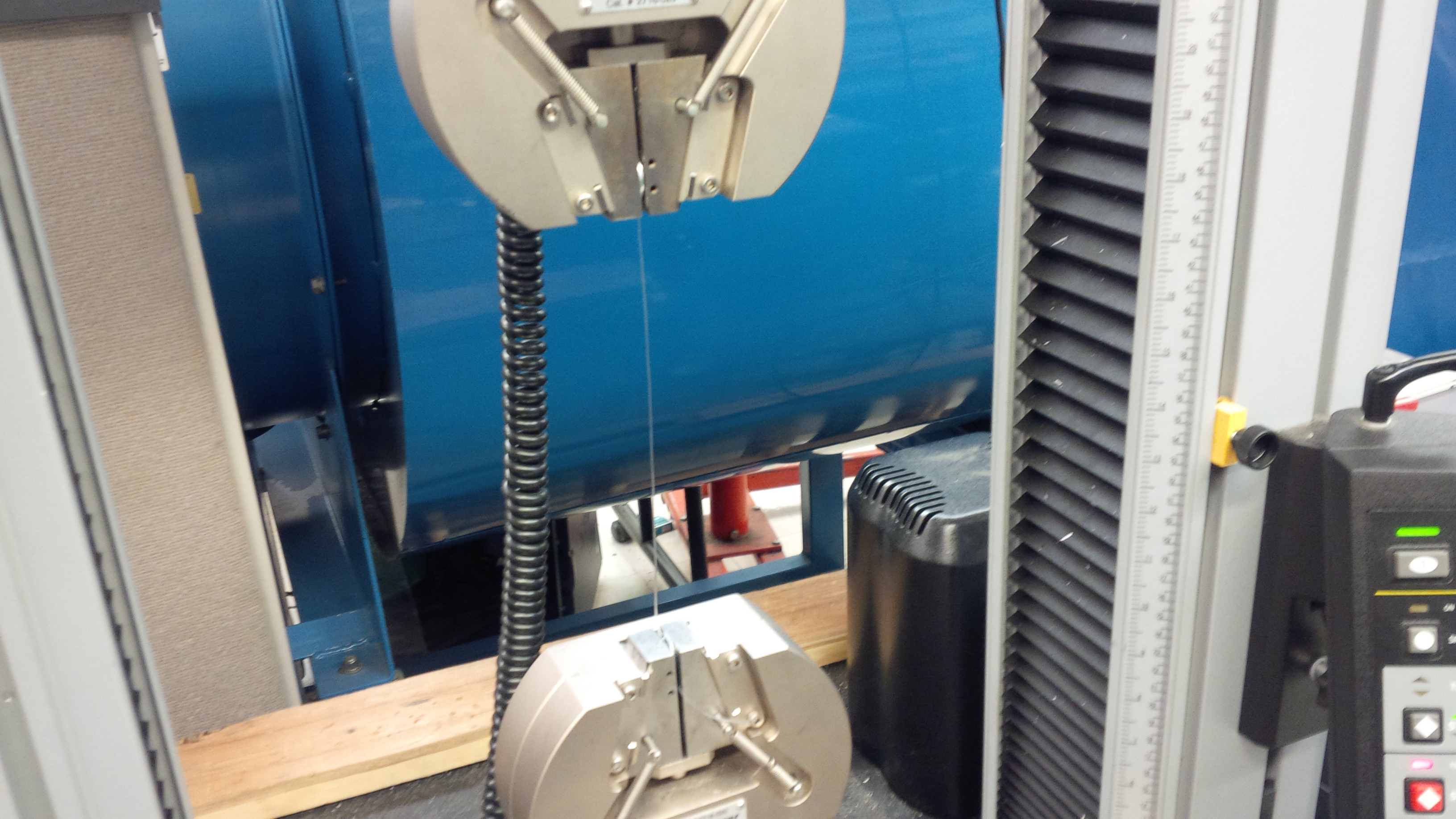
Instron Setup for fishing line
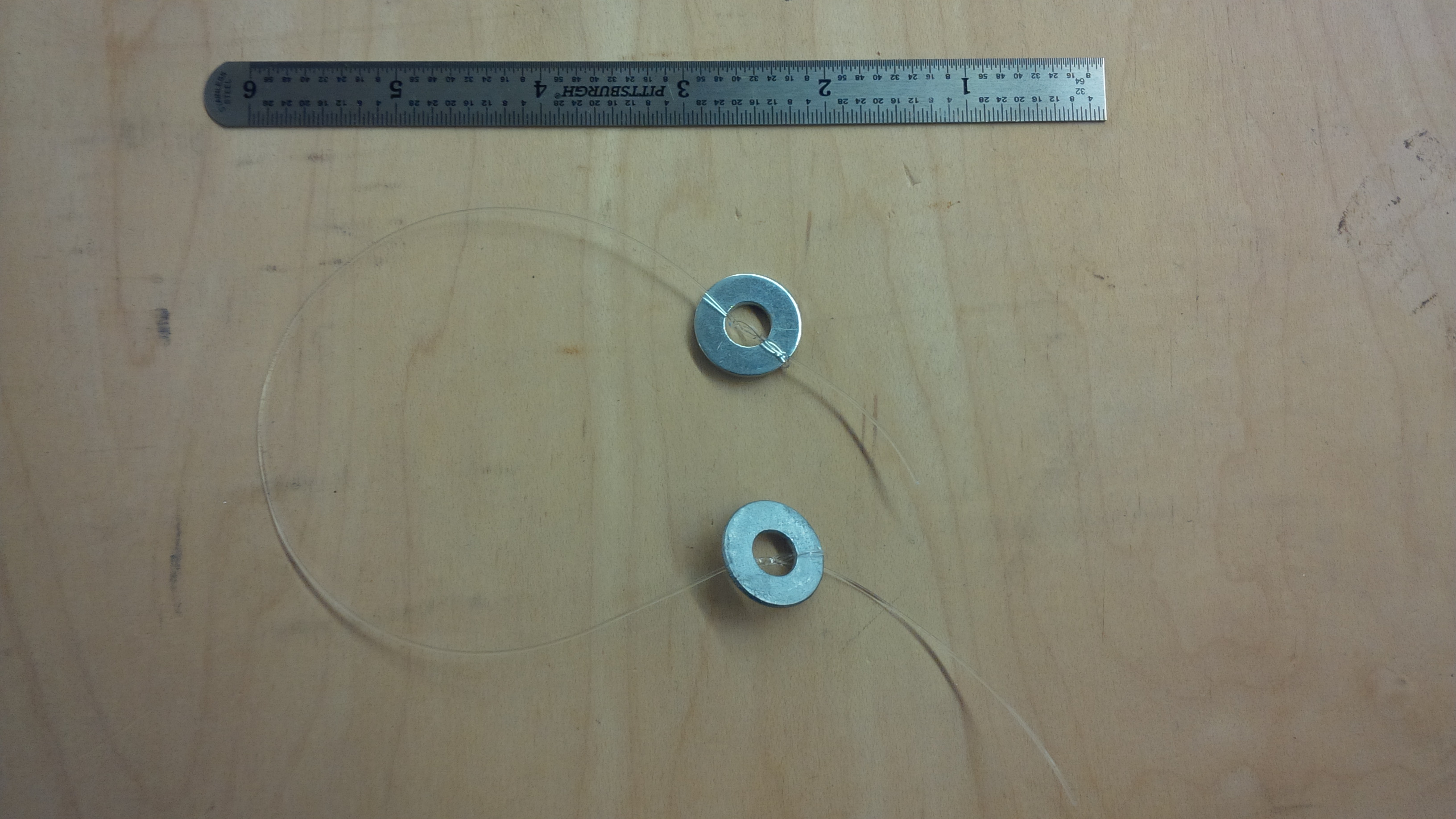
Sample preparation for Instron testing
During the test, we observed the knots tied in washers at either end to tighten during the test, this corresponded to the downwards “hump” in the data. The point of failure seemed to be highly correlated with how the knot was tied, with failure occurring at the knot.
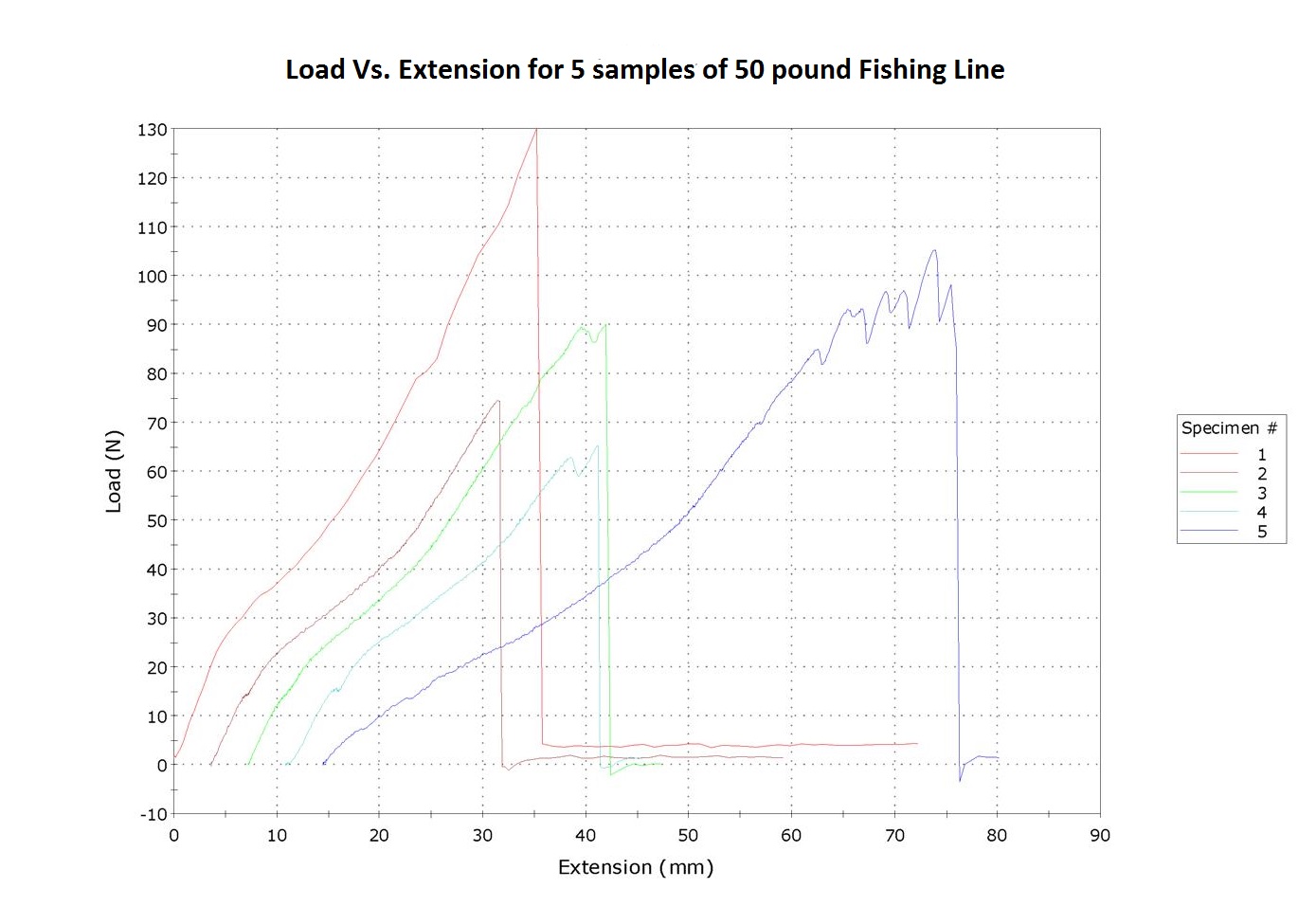
Data from the test of fishing line in the Instron. Click for a larger image.
In order to implement our algorithm were the load is changed as a function of displacement, we are interested in the ratio of change of length vs. the change in load for the material.
For the first sample the ratio is 3.3426 N/mm with R squared = 0.9898
For the second sample the ratio is 2.3871 N/mm with R square =0.986
For the third sample the ratio is 2.5877 N/mm with R square = 0.9922
For the forth sample the ratio is 2.0646 N/mm with R squared = 0.9897
For the fifth sample the ratio is 1.7433 N/mm with R squared = 0.9760
Since this is such a critical number, we will not average these values but instead improve the knot tying technique so that the failure does not occur at the knot. Right now, we are measuring the strength of the knot, the characteristics of the material are still unknown.