Joshua Pringle is the senior editor of Worldpress.org, an online publication that covers international affairs. He has a bachelor’s degree in magazine journalism from Ohio University and a master’s degree in international relations from New York University. He has written articles about topics as varied as land grabs in developing countries, the role of religion in politics, sectarian strife in Bahrain, rethinking the drug war in the Americas, the injustice of the blockade of the Gaza Strip, and political machinations behind international efforts to hold human rights abusers accountable. He also has a background in music and film, and is the author of two novels.
Author Archives: Anushri Alva
Women Are Key to Development in the Middle East
By
Joshua Pringle
The math is simple. If a post-conflict country in the Middle East-North Africa region (MENA) wants to develop its institutions and grow economically, it is better off utilizing all of its human capital. Leaving women out of the equation is like building a house and leaving half your tools behind.
Unfortunately, across MENA, the picture is bleak for women. According to the 2012 Economist Intelligence Unit report, female labor participation in MENA is the lowest in the world—below 30 percent.[1] This is of course directly attributable to the difficulty women have accessing quality education, as the region also has some of the lowest female enrollment and literacy rates in the world.
However, even when women are able to get a university education, they still find it far more challenging than men to find a decent job. In Lebanon, 54 percent of university students are women, and yet women make up only 26 percent of the workforce, according to the United Nations Statistics Division.[2] When it comes to senior management and legislative positions, they hold only 8 percent of those jobs. In Qatar, women make up 63 percent of the university population, yet only 12 percent of the workforce.[3] In Iraq, 68 percent of women with a bachelor’s degree were unemployed in 2011, according to an Iraq Knowledge Network survey.[4]
Religious and cultural mores inhibit women’s progress in a number of ways. Many girls are encouraged to drop out of school and get married at an early age. In some countries, such as Yemen, mixed-gender classrooms are discouraged, which often leaves communities without enough schools for girls.[5] Other communities in the region view female education negatively in general. Women also have fewer protections against violence, and are allowed less of a political voice.
Even in countries where the government has made an effort to support female education and employment, socio-economic discrimination has been stubborn to budge. In Saudi Arabia, King Abdullah has invested massively in providing scholarships and creating jobs for women, realizing the boost this could give the Saudi economy. Yet unemployment in the country is still five times greater among women.[6] Maybe Abdullah would have better luck moving things forward if he started letting women drive and vote. We dare to dream.
Some of these issues are evolving, but it’s an uphill battle. Abstract arguments about economics or human rights are unlikely to unmoor the mores that have been in place for generations. Change requires engagement on a number of fronts, ranging from subversive political activism to simple community dialogue. One can see a certain circle of irony in the dynamics at work: For women to become more empowered, cultural transformation is required, and for cultural transformation to occur, women need to become more empowered. And it’s in everyone’s best interest to utilize all of the population’s brainpower, but part of the population doesn’t have the brainpower to see that.
Several initiatives are doing important work in the region. In Egypt, Save the Children’s Ishraq helps girls who have dropped out of school learn math and literacy, understand sexual and reproductive health, boost self-confidence, and re-enroll in school.[7] In Lebanon, Media Supporting Women Leaders encourages professional women to participate in public debates concerning the country’s future.[8] In Jordan, Women in Technology provides women with IT and professional development training.[9] Clearly these are just a few examples.
Non-governmental organizations often have the resources and the expertise to make real progress on the ground, while social media and technology have given women the ability to organize and create little fissures in the status quo. I imagine that fighting for women’s empowerment must feel like a Sisyphean task, but day by day the boulder climbs the hill.
Joshua Pringle is the senior editor of Worldpress.org, an online publication that covers international affairs.
Further Reading:
Empowering Women, Developing Society: Female Education in MENA
Women Empowerment Initiatives for the Future of the MENA Region
[1] http://www.yourmiddleeast.com/columns/article/the-need-to-unleash-the-economic-potential-of-women-in-the-middle-east_6003
[2] http://www.cnn.com/2012/06/01/world/meast/middle-east-women-education
[3] Ibid.
[4] http://www.japuiraq.org/documents/1681/IKN_S4_LaborForce_en.pdf
[5] http://www.irinnews.org/report/74159/yemen-female-education-remains-key-challenge
[6] http://www.independent.co.uk/news/world/middle-east/saudi-arabia-struggles-to-employ-its-mosteducated-women-8312035.html
[7] http://www.huffingtonpost.com/international-center-for-research-on-women/a-life-more-enlightened-g_b_3379958.html
[8] http://www.commongroundnews.org/article.php?id=32926&lan=en&sp=0
[9] http://csrmiddleeast.org/profiles/blogs/women-empowerment-initiatives-for-the-future-of-the-mena-region
Kimberly Foulds
Dr. Foulds is a lecturer in International and Transcultural Studies at Teachers College, Columbia University. Her research focuses on the intersections of postcolonial nation-building, cultural constructions of identity, and global education reform in East Africa. Outside of Teachers College, she has worked on evaluation projects with USAID/Checchi Consulting in Afghanistan and AVSI-USA in Uganda. She holds a Ph.D. in Education and a M.A. in African Studies from UCLA, and a B.A. in Diplomacy and World Affairs from Occidental College.
Textbooks in Post-Conflict States: Tensions and Opportunities
By Kimberly Foulds
If to the victors go the spoils, then a sense of anxiety clouds the hope around education in states emerging from conflict. Many countries emerging from conflict-Bosnia and Herzegovina, Guatemala, Germany, Rwanda, South Africa, and South Sudan for example-have looked toward a revised history curriculum as the foundation for new directions in national narratives and sustained peace. As is often the case, education is the silver bullet to a nation’s ills. Admittedly, while education can offer students a sense of stability in the midst of conflict and during post-conflict reconstruction, the development of revised textbooks to address the changing environment, and curriculum, is given cursory consideration.
The timing around curriculum revisions is a major concern. Of the examples offered above, all revised curricula during the period following the conflict. The Inter-Agency Network for Education in Emergencies [INEE], however, advocates for curriculum revisions during emergencies. The drive behind this suggestion is the concern that curriculum reform will not be addressed until the transition to a post-conflict society, particularly problematic during protracted conflicts. The situations among stateless peoples, like Palestine, Kashmir, Kurdistan, and Tibet, complicates these dynamics, though this issue remains under-researched. Nonetheless, reform is a contentious and slow process during times of peace. In the midst of conflict, the process is even slower and becomes more controversial, possibly exacerbating existing tensions.
INEE’s Guidance Notes offer a number of recommendations, arguing that potentially conflict-inducing elements remain in curriculum. In practice, however, this is rarely the case. There is a hunger for a simple, even universal, remedy independent of conditions. The contemporary trend appears that this hunger has revealed itself as an avoidance of critical discussions on conflict.
In Rwanda, for example, a superficial peace reigns and the official narrative leaves no room for ethnic identification. Those currently in power are primarily Tutsi who grew up outside of Rwanda, only to return after the rebel army they supported ended the 1994 genocide and took control. Though the minority, their representations of Rwandan history are not in line with the majority of Rwandans. Discussions of the genocide are forbidden. Further, Rwanda banned the teaching of history for more than a decade after the 1994 genocide. With its reintegration, only the official narrative is allowed in schools to support the creation of a unified Rwanda. With perpetrators and victims often coming from the same neighborhoods, even from under the same roof, the absence of the space to critically engage national history produces an uneasy peace, reminding us that the absence of war is not a symbol of peace.
Bosnia-Herzegovina offers an example on other end of the spectrum. The state operates as two distinct entities under one national identity: Republika Srpska and Federation of Bosnia and Herzegovina. During the war, each local area created its own curriculum and textbooks. This system persisted post-conflict. The Bosnian curriculum saw Bosniaks as victims, the Croat curriculum offered no history outside of Croatian history, and the Serbian curriculum ignored Bosnians and Bosnian-Croats. International interventions led to a number of changes, including the use of non-transparent markers to black out inappropriate text in lieu of revised textbooks because of time and cost considerations.
There are many, many more examples of how post-conflict states have moved forward with textbook reform. Postcolonial states also offer a number of examples of the challenges emerging governments face. Rwanda and Bosnia-Herzegovina are used here to show that the two ends of the spectrum are ineffective and unsustainable. Moving forward, though the need for a revised history curriculum will certainly remain, post-conflict states appear to prioritize preparing student for the global marketplace over history. The driving need to craft a unified, albeit imagined, community under one national identity through a history that either obscures conflict or reinforces incomplete histories will ensure that peace remains artificial at best. In their study of history curriculum in Rwanda, Freedman et al (2008) put forth the idea of empowering teachers to mediate history curricula and accompanying textbooks by framing history as a democratic process:
We are going to look at history as a series of choices . . . We’ll look at the decision to be a bystander. We will look at the decision to be a perpetrator. We will look at the decision to be a rescuer. And we will look at the decisions of everyday citizens to make a positive difference (681).
The benefit of this framework is in its recognition that there is a significant need to move away from a binary history of aggressor/victim, and an awareness that through major political transformations, the next generation is there, waiting to be educated.
Kimberly Foulds is a lecturer in International and Transcultural Studies at Teachers College, Columbia University.
References:
Freedman, Sarah Warshauer, Harvey M. Weinstein, Karen Murphy, and Timothy Longman. 2008. Teaching History after Identity-Based Conflicts: The Rwanda Experience. Comparative Education Review 52(4): 663-690.
Inter-Agency Network for Education in Emergencies. 2004. INEE Minimum Standards for Education in Emergencies, Chronic Crisis and Early Reconstruction. New York: INEE.
For further reading on textbooks and post-conflict transformation, the following list offers a few starting points:
Barnes, T. 2007. ‘History has to Play its Role’: Constructions of Race and Reconciliation in Secondary School Historiography in Zimbabwe, 1980-2002. Journal of Southern African Studies. 33(3): 633-651.
Chisholm, L. and R. Leyendecker. 2008. Curriculum reform in post-1990s sub-Saharan Africa. International Journal of Educational Development 28(2): 195-205.
Cole, E, and J Barsalou. 2006. Unite or Divide? The Challenges of Teaching History in Societies Emerging from Violent Conflict. Special report. Washington, DC: U.S. Institute of Peace.
Hodgkin, M. 2007. Negotiating Change: Participatory Curriculum Design in Emergencies. Current Issues in Comparative Education 9(2): 33-44.
Low-Beer, A. 2001. “Politics, School Textbooks and Cultural Identity: The Struggle in Bosnia and Herzegovina.” Paradigm 2 (3): 1–6.
Pingel, F. 2010. UNESCO Guidebook on Textbook Research and Textbook Revision. Paris: UNESCO.
Weldon, G. 2009. Memory, identity, and the politics of curriculum construction in transition societies: Rwanda and South Africa. Perspectives in Education. 27(2): 177-189.
Woolman, David C. 2001. Educational reconstruction and post-colonial curriculum development: A comparative study of four African countries. International Education Journal 2(5): 27-46.
Peter G. Kirchschlaeger
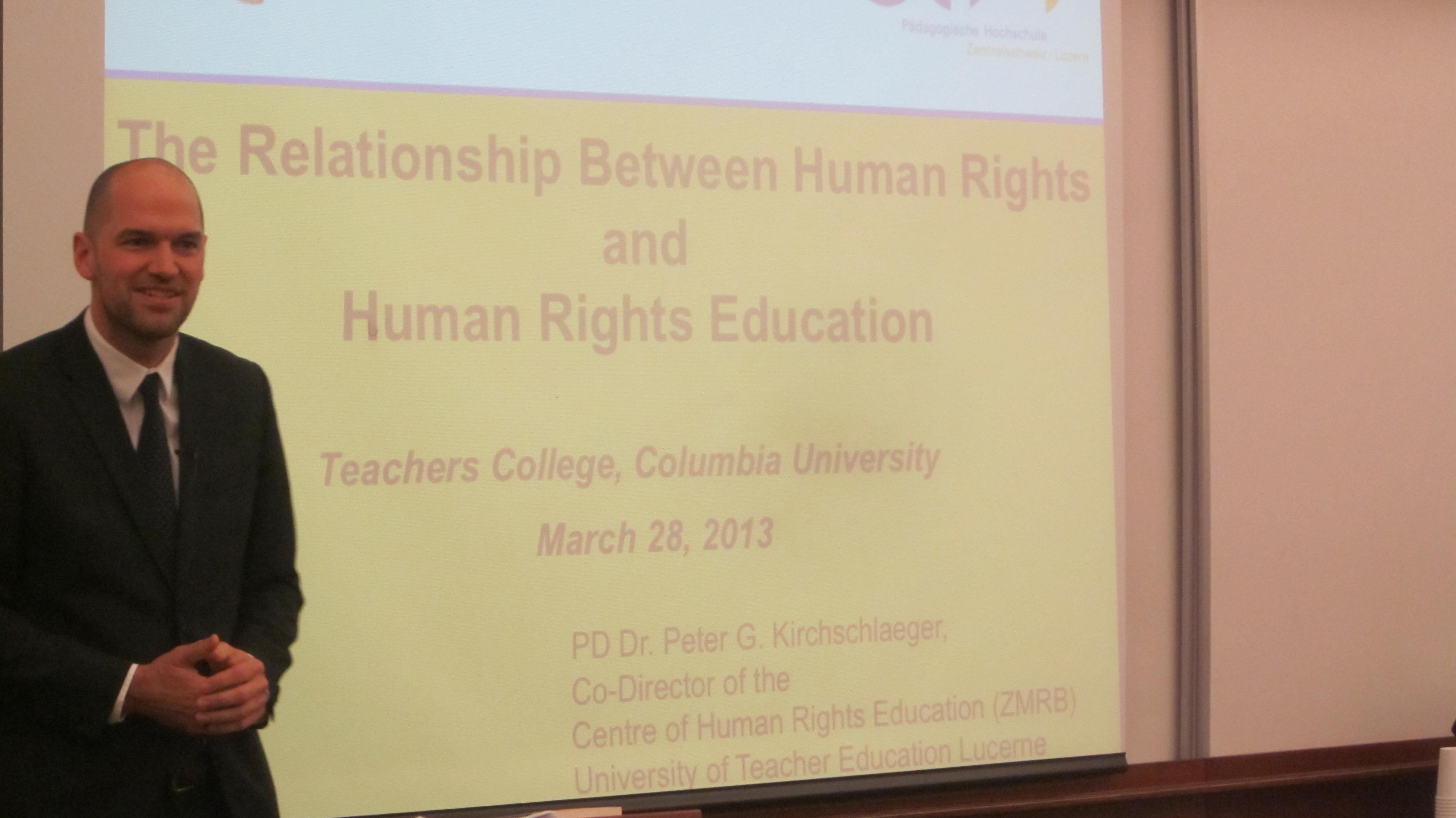
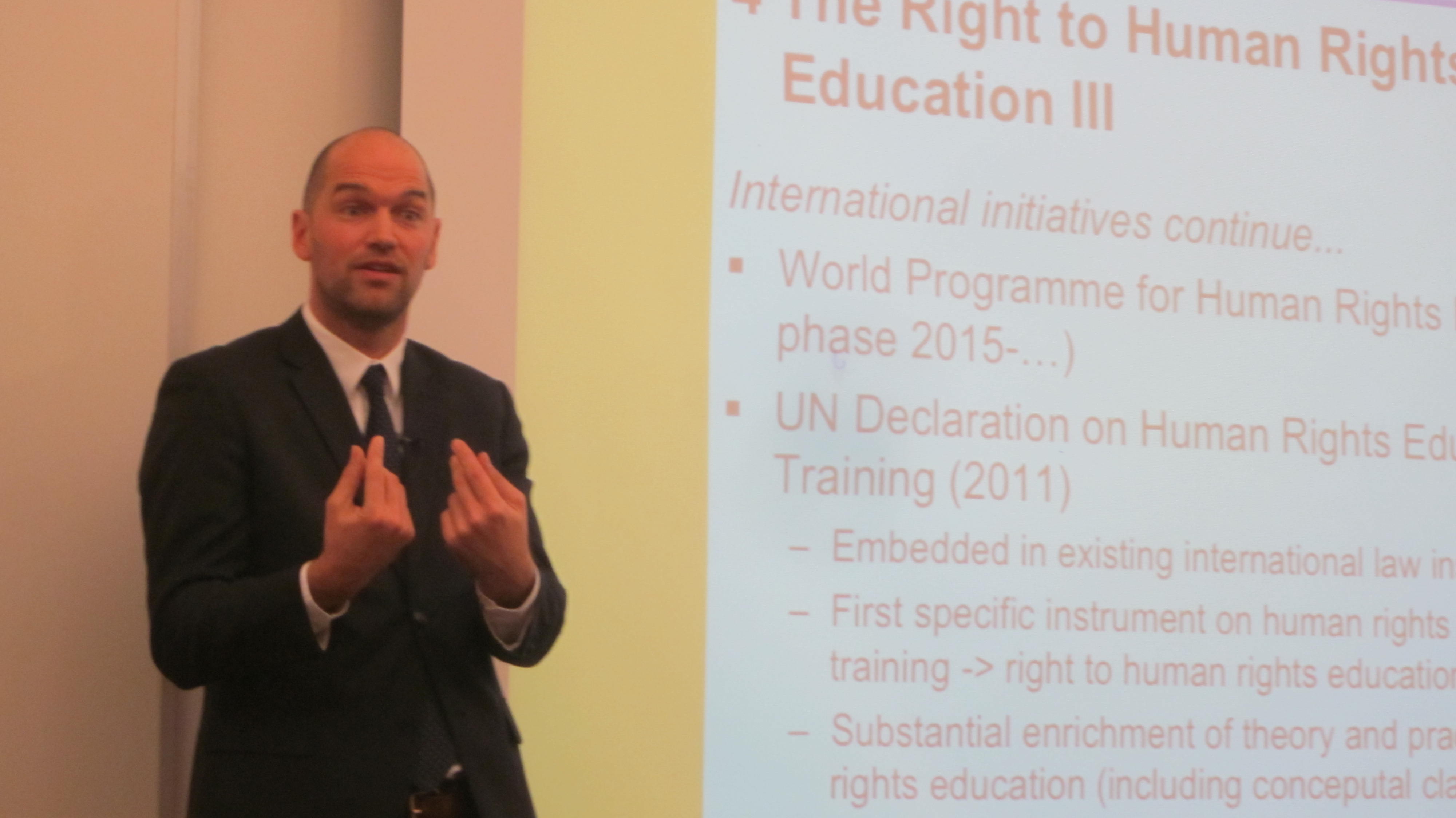
The Relationship between Human Rights and Human Rights Education
Watch the video here: https://vialogues.com/vialogues/play/9004
PD Dr. Peter G. Kirchschlaeger is the Co-Director of the Centre of Human Rights Education (ZMRB) of the University of Teacher Education Central Switzerland Lucerne.
Additional Resources Authored by PD Dr. Kirchschlaeger :
Certificate of Advanced Studies CAS Human Rights Education: http://www.phlu.ch/weiterbildung/zusatzausbildungen/cas-human-rights-education/
Perspectives of Research on Human Rights Education: tibbitts_kirchschlaeger_research_hre_jhre_1_2010
Philosophy-based and Law-based Human Rights Education: kirchschlaeger_kirchschlaeger_hre_jhre_1_2009
Universality of Human Rights: http://theewc.org/uploads/files/Statement%20Series%20First%20Issue-Final%20WEB.pdf#page=22
Peter G. Kirchschlaeger, Wie können Menschenrechte begründet werden? Ein für säkulare und religiöse Menschenrechtskonzeptionen anschlussfähiger Ansatz, LIT Verlag, Muenster (Germany) 2013
Tzvetomira Laub
Tzvetomira Laub coordinates the INEE Working Group on Minimum Standards and Network Tools, and manages capacity development, projects and advocacy on Education in Emergencies. Prior to INEE, Tzvetomira worked on child protection, advocacy and education in emergencies. At the Watchlist on Children and Armed Conflict, she supported the UN Security Council negotiations of UNSC Resolution 1882 (2009) on children affected by armed conflict. She has also worked for Save the Children-US, CARE-Kosovo and Balkan Sunflowers-Kosovo in the field. She holds a MA in Politics from Brandeis University and a BA in International Relations and Asian Studies from Mount Holyoke College. She is hosted by UNICEF HQ and can be reached at [email protected].
Integrating Conflict Sensitivity In Education Programs and Policies
by Tzvetomira Laub, INEE Coordinator for Minimum Standards
The field of Education in Emergencies has grown and expanded over the last decade, and today there is a more pronounced recognition that education could potentially contribute to tensions and grievances and thus exacerbate conflicts. INEE has addressed the need for systematized guidance on developing and carrying conflict sensitive education programs and policies: the new INEE Guidance Note on Conflict Sensitive Education was launched in March 2013.
What is conflict sensitive education?
Conflict sensitive education is defined as the process to:
- analyze and understand the context within which education takes place
- analyze and understand the complex, bi-directional interaction between education and conflict
- and, on the basis of context- and conflict-analysis, take action to maximize education’s contribution to peacebuilding while minimizing education’s potential to contribute to tension, grievances and conflict.
In conflict-affected and fragile contexts, it is important to take concrete actions to ensure that conflict sensitivity is mainstreamed in education policies and practices.
What does this mean in practice?
In the new INEE good practice tool, the Guidance Note on Conflict Sensitive Education, we share some strategies for actions to incorporate conflict sensitivity in education programs and policies. Here are a few highlights:
Access and Learning Environment: Making education equally accessible to all means including previously marginalized or newly marginalized groups, such as children formerly associated with armed forces and armed groups (child soldiers, children working as cooks and porters for armed groups/forces etc), IDP and refugee children, host communities, and speakers of the non-dominant languages. The protection and well-being of all school community members, especially students, must be ensured. To keep the schools, and the routes to them, free from violence and occupation, strategies include establishing “schools as zones of peace” and working with armed forces and armed groups to recognize them as such zones of peace. Providing education facilities and services in a conflict sensitive way involves considering the proximity and safe access of girls and boys to schools, water points and latrines. Learning spaces should also be clearly marked with visible protective boundaries and clear signs.
Teaching and Learning: A conflict sensitive curriculum should include information for teachers on developing and delivering lessons free from stereotypes and bias, lessons that promote inclusivity, respect, peace and nonviolence. One strategy for conflict sensitive teacher training, professional development and support is to ensure that opportunities for teacher training are equally available and accessible to both male and female teachers and without discrimination against any group, including refugee and displaced teachers. Structures for peer-to-peer learning and mentoring can be established to increase conflict-coping skills, share good practices, and provide psychosocial support. In a conflict sensitive teaching and learning process, it is best for students to learn in their mother tongue for early grades, so recruiting, training and retaining teachers who speak the minority languages is important. Finally, fair and accessible assessment of learning outcomes should be implemented. This means that tests should be reviewed and redesigned so that they are free from bias against social groups and conflict-inciting content is removed.
Teachers and Other Education Personnel: Informed by the conflict analysis, conflict sensitive teacher recruitment and selection should be transparent, participatory and inclusive. A diverse selection committee, for example, can be utilized and this should include representatives from groups previously marginalized due to the conflict dynamics. Strategies for conflict sensitive conditions of work and compensation should include providing sustainable, fair teacher compensation that is also equitable with the local labor market.
The INEE Guidance Note includes many more strategies as well as case studies and other examples on conflict sensitive education.
What resources are available on conflict sensitivity in and through education?
INEE offers a holistic package of tools and resources to support the integration of conflict sensitivity in and through education:
- INEE Guidance Note on Conflict Sensitive Education
- INEE Conflict Sensitive Education Quick Reference Tool
- INEE Reflection Tool for Designing and Implementing Conflict Sensitive Education Programs in Conflict-Affected and Fragile Contexts
- INEE Guiding Principles on Integrating Conflict Sensitivity in Education
- INEE Toolkit: Conflict Sensitive Education Tools and Resources
To learn more about INEE’s work on education in emergencies and conflict sensitive education, please visit www.ineesite.org and www.ineesite.org/toolkit or email [email protected].
Tzvetomira Laub coordinates the INEE Working Group on Minimum Standards and Network Tools, and manages capacity development, projects and advocacy on Education in Emergencies.
Mary Mendenhall
Dr. Mendenhall currently works with the International Rescue Committee as the Project Director for an innovative partnership with the University of Nairobi to develop the first-ever Master of Education program for Education in Emergencies.
Previously, Mary served as the Network Coordinator for the Inter-Agency Network for Education in Emergencies (INEE), first based at UNESCO in Paris and later at UNICEF in New York, from 2005-2007. During this time, she coordinated global advocacy activities on behalf of the network; managed the INEE Steering Group; facilitated the promotion and distribution of relevant resources to members and partners; and oversaw the work of INEE’s Task Teams.
Mary completed her Doctor of Education in International Educational Development, with a specialization in International Humanitarian Issues, in May 2008 from Teachers College, Columbia University
Mendenhall’s research interests include examining the quality, relevance and sustainability of education programs provided by international organizations for displaced students in conflict-affected states in Sub-Saharan Africa. Specifically, she is interested in understanding which aspects of educational programs are sustained; what types of knowledge and skills are most relevant and transferrable for refugee students; and what challenges global, national and local actors confront in the process of achieving quality, relevant and sustainable education in crisis-affected settings.
Strengthening Education in Emergencies Capacity in East Africa for East Africa
By Mary Mendenhall
Director, IRC-University of Nairobi Education in Emergencies Partnership
In 2009, the International Rescue Committee (IRC) and the University of Nairobi joined forces to establish the first-ever graduate program for Education in Emergencies. This partnership between a humanitarian NGO and an African university seeks to build a cadre of qualified education practitioners and scholars prepared to respond to the educational needs of children and youth whose lives have been affected by conflict and crisis.
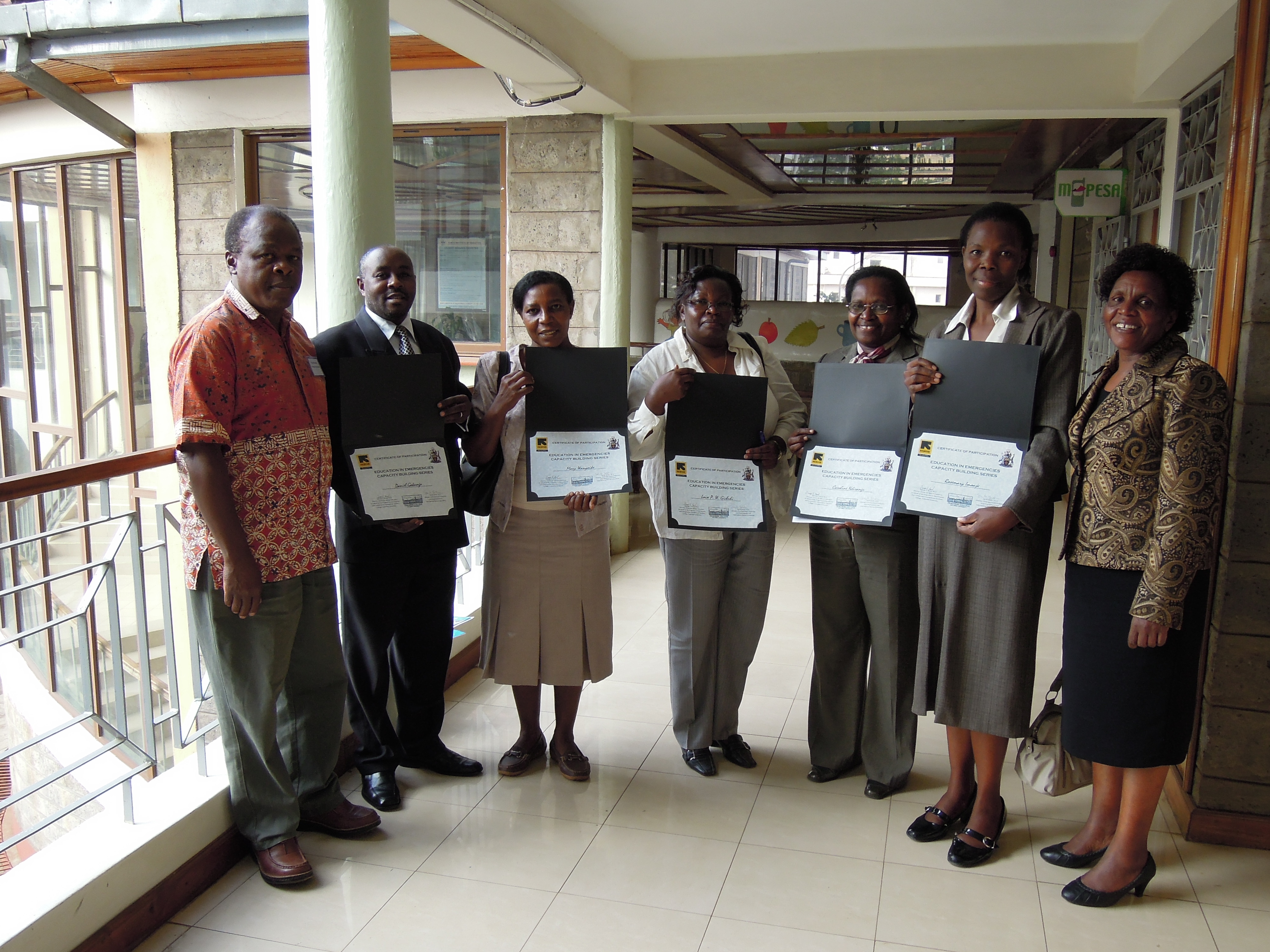
Photo of faculty after completing capacity building series, supported by IRC and TC.
Children and youth living in Sub-Saharan Africa figure greatly in out-of-school statistics and their educational access and attainment are further hampered by armed conflict and natural disasters. According to the UNESCO Institute of Statistics, half of the 61 million primary school-aged children currently out of school globally live in Sub-Saharan Africa, with another 10 million in the region dropping out every year. Almost three-quarters of out-of-school girls are expected never to enroll, compared to two-thirds of boys. Out of the thirty-five countries that were affected by armed conflict from 1999 to 2008, fifteen are in Sub-Saharan Africa, where protracted armed conflicts remain all too common. As a result, young people affected by conflict in Sub-Saharan Africa face enormous barriers to accessing quality education and subsequently earning a livelihood and contributing positively to their communities.
The decision to launch this flagship program at the University of Nairobi and to focus on East Africa was based on a number of factors. First and foremost, Kenya had just experienced its own post-election violence in 2007-08 after the last presidential election. The crisis highlighted the need for educators and school administrators to be better equipped to prevent, prepare for and respond to inter-ethnic conflicts through schools and educational processes. The faculty and administrators within the School of Education at the University of Nairobi were keen to play a role in this process and sought out an opportunity to partner with the IRC on this initiative.
Second, Kenya is host to an incredibly large number of refugees—the majority originating from Somalia and Sudan—in two refugee camps, both of which have been operating for over 20 years. Dadaab refugee camp, which is located in northeastern Kenya on the border with Somalia, is the largest camp in the world. It currently hosts close to 500,000 refugees, making it the third largest city in Kenya. Kakuma refugee camp on the border with South Sudan has been experiencing a renewed influx of arrivals from South Sudan as a result of continued violence and instability in the region, with the camp population exceeding 100,000 refugees. The availability and quality of education in both camps have been weak, but with second and third generations of children being born in the camp, educational opportunities must be increased and improved.
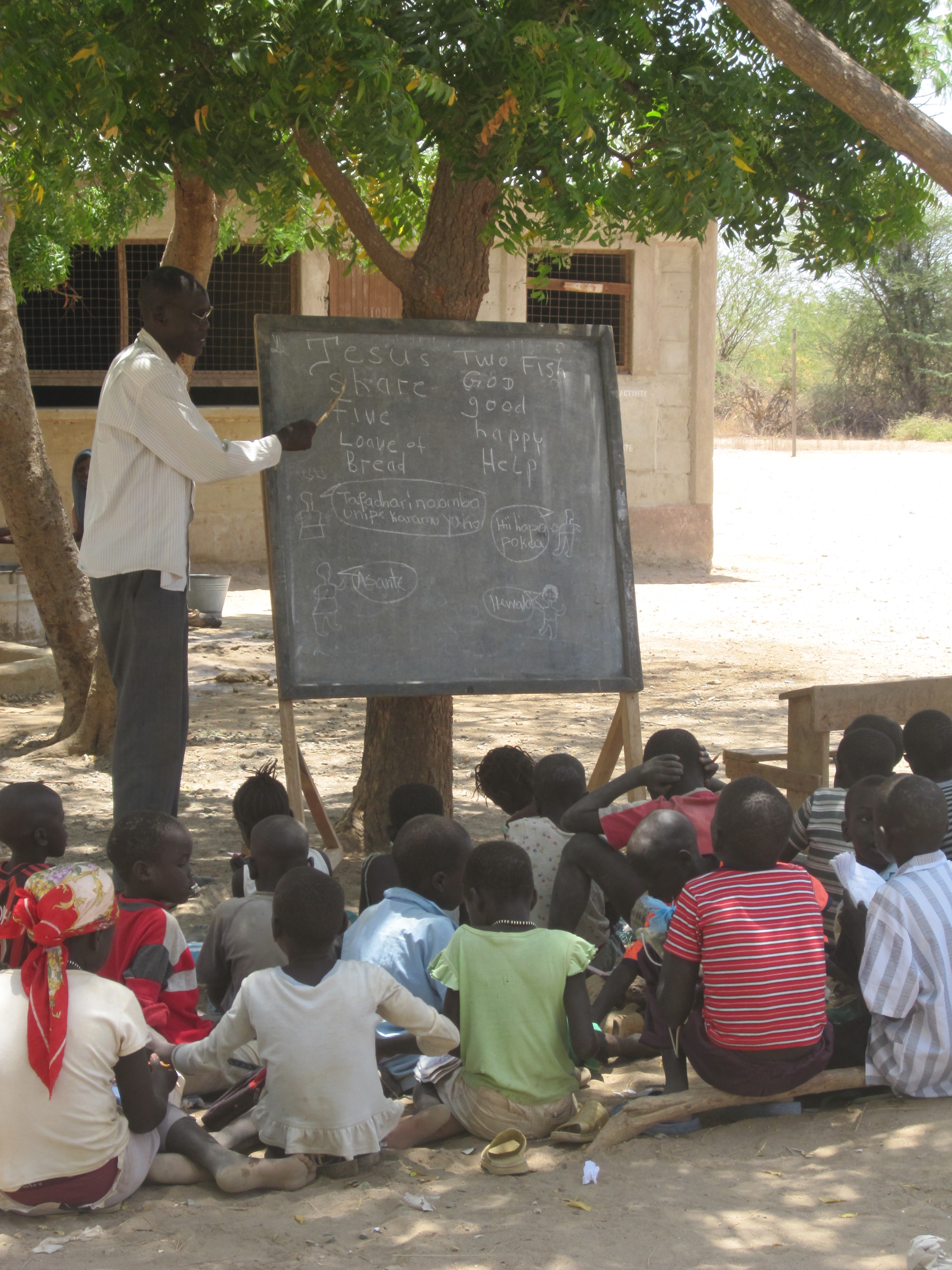
Class being held in Dadaab refugee camp during a study visit by UoN faculty; student initiative to develop appropriate early childhood materials for semi-nomadic communities.
Third, there are significant numbers of refugees residing outside of the camps in Nairobi and other cities and towns. According to UNHCR’s 2012 assessment of refugee education in Nairobi, there are over 55,000 refugees residing in the city, including more than 29,000 school-aged children, with numbers expected to rise in the future. Despite their relative ease of mobility in comparison to camp-based refugees, urban refugees experience discrimination, xenophobia and extortion in their efforts to attend school and receive an education.
Within this context and the challenges that accompany it, education practitioners require specialized knowledge, skills and qualifications to assist governments, international organizations, and local communities not only to prevent and better prepare for humanitarian crises but also to overcome the challenges of providing quality education during emergencies and in their aftermath. The need for qualified national education practitioners is particularly acute in Africa. Even though many educators have lived through emergencies and have tremendous practical experience, there are few opportunities, apart from on-the-job training and one-time workshops, for them to obtain the skills and qualifications required to be effective practitioners in the humanitarian field. To date, there are also few universities in Africa that have included humanitarian subjects in their curricula.[1]
The establishment of a University graduate program for Education in Emergencies responds to the need for comprehensive study and training opportunities that adequately equip graduates with the requisite skills they need to work with a diverse array of stakeholders in their collective efforts to provide quality education for children and youth affected by crisis. Graduate study, when coupled with experiential learning opportunities, provides a more meaningful and lasting way to build the capacity of current and emerging education practitioners in the East Africa and beyond.
Mary Mendenhall is a Lecturer in the Department of International and Transcultural Studies at Teachers College, Columbia University (starting Fall 2013).
Further Reading: IRC-University of Nairobi Education in Emergencies Partnership and Student Activities
Project/Partnership Overview: http://www.rescue.org/news/education-emergencies-10594
From child soldier to teacher: Ador’s story: http://www.rescue.org/blog/child-soldier-teacher-adors-story
The Kenya Forgiveness Project is an inspirational exhibit showcasing stories of forgiveness and reconciliation in Kenya in the aftermath of the violence that took place after the contested presidential elections in December 2007. The project was born out of a deep desire to contribute towards peace in the build up to the 2013 presidential election, which took place last week. One of the education in emergencies students who interned with the Forgiveness Project and was later hired has been working on this project, collecting stories, putting together exhibits, and touring the country. http://www.kenyaforgivenessproject.org/
Additional Resources
Borderless Higher Education for Refugees: http://crs.yorku.ca/bher
Council for Assisting Refugee Academics: http://academic-refugees.org/
IIE Scholar Rescue Fund: http://www.scholarrescuefund.org/pages/intro.php
Scholars at Risk: http://scholarsatrisk.nyu.edu/
Dadaab Stories: http://www.dadaabstories.org/
[1] Namusobya, S. (2008). Can’t Africans be Humanitarians too? Building Local Capacity to Co-ordinate and Manage Humanitarian Responses in Africa. Presentation to 3rd ICVA Conference; ‘Essential Humanitarian Reforms’, Geneva, Friday 1 February 2008.
Photo credit: Mary Mendenhall