Matt Malone (Linguistics and Math, CC ’18) shared his postgraduate journey with us, from fieldwork in Cameroon and a Cambridge Fellowship to professional experience in industry and non-profits, and, currently, a Phd Program in Linguistics at the CUNY Graduate Center.
Can you tell us a little about yourself?
I studied Linguistics at Columbia College, and graduated in 2018. Currently, I’m a third-year PhD student in Linguistics at the CUNY Graduate Center, where I’m using a combination of descriptive and computational methods to study Bantu languages.
When did you become interested in linguistics?
I had always liked learning languages in school, but the appeal was less about speaking them and more about being really interested in the patterns and wondering why constructions work how they do. I didn’t really know that there was an academic subject that focused on those things in a very scientific, systematic way. When I took Introduction to Linguistics as a sophomore, I was like, “Ah, this is the thing that I’ve been searching for this whole time.”
How did you find your opportunity for field work, and how did your field work experience shape your career?
During my sophomore spring semester, I was enrolled in both Languages of Africa and Language Documentation. I loved the material from the former and the methods of the latter. I expressed this interest to Professor McWhorter, who then introduced me to a colleague studying Bantu languages in Nigeria. He connected me with a Cameroonian community – the Bapuku – whose language had not been properly documented in decades. At the risk of sounding dramatic, the experience is the reason I’ve continued studying African languages after all these years! I loved working with native speakers, untangling the puzzles of their complex language, and helping ensure the language is not lost amid the decline of speakers.
Is there anything you wish you had done differently?
I was a bit overambitious in my goals. Documenting a language from the ground up is impossible over the course of only six weeks of fieldwork, which I learned the hard way.
Also, a bit new to fieldwork at the time, I collected data primarily by eliciting exact translations for French words and sentences, rather than focusing on natural speech. When I go back to Cameroon, I plan to collect more stories and conversations.
Before starting fieldwork, I would recommend you identify something you can do to prevent frustration. Make sure that you’re not doing the Columbia student thing of trying to do as much as possible when you’re there. Unless you’re the most patient person on Earth, it’s hard to stay calm and clear-headed when faced with interruptions, animals, or other noises that may impede a calm session.
As much as you might feel like you’re on a timeline and you only have two days to save this language, do what you can to make sure that you are in the right space to do those sessions. Your output is going to be so much better if you treat yourself well, even if there’s a time crunch.
What was your experience writing a descriptive thesis rather than an investigative or experimental one?
I loved my experience conducting fieldwork on Bapuku in Kribi, Cameroon – I’m actually going back to continue documentation in just a few months! Writing a descriptive thesis was rewarding, albeit a bit daunting in terms of scope. I came back from Cameroon with so much data that it was difficult to choose which features to discuss. I ultimately settled on Bapuku’s noun class system, particularly its employment by semispeakers.
How did you choose a subfield of linguistics to specialize in? How easy or difficult is it to change subfields?
I’m not sure if I even have narrowed down an exact subfield yet! While I’ve studied African languages and used computational methods, there’s a good chance I’ll end up doing some research on formal semantics in the next year or so. Also likely is a project in syntax after I return from Cameroon with more data. As someone who’s hopped around different subfields for many years, I’d say it’s pretty easy! Luckily, the linguist community is a kind and open one – I’ve never met professors who gatekeep their area of expertise.
How did it feel to go directly from undergrad into graduate school?
At the time, I felt eager to continue my studies in Linguistics, ignoring any signs of “burnout”. In retrospect, I may have benefited from a year or two off in between undergrad and graduate school. By the end of my Masters, I experienced pretty significant academic fatigue, which led to my needing a few years off before returning to a PhD!
You did your Masters through the Gates-Cambridge program. What was your experience with the UK system?
I enjoyed my experience abroad, but it was definitely not what I expected it to be. People had told me about the independent aspect of it, but I wasn’t able to actually envision it. At the beginning of the semester for each course, you would get a bibliography of books and the assumption is just that you would read it on your own time throughout the semester, and then at the end of the semester, either have a topic to write about based on all the things that you read. I don’t know if I quite had it in me to self-motivate to the degree that I would have liked to. I read some, but maybe not all, of the books on the list. Though a lot of people in my master’s program were applying to a PhD, I knew pretty early on that I didn’t want to do that. A PhD would’ve been even more independent than that, which I was not ready for.
At CUNY, the professors feel a lot closer to you. It doesn’t feel like you have to jump through hoops to get face-to-face time with them. They’re so eager to work with you that they would jump through hoops to talk with you. Everyone wants to collaborate and do research together. I really appreciate that aspect. I don’t know if this is a byproduct of the school or the faculty or what exactly it is, but it just feels very level insofar as the faculty are not removed on some high table or whatever. You talk with them casually and you discuss ideas in a very casual way and everyone is open to working on either having you help out with something that they’re doing or working with you on something that they’re interested in.
Gates-Cambridge looks for “leaders committed to improving the lives of others”. What was your proposed project, and how have you built upon it?
My proposed project was very different from what I ended up pursuing. I originally planned to continue the description of Bapuku, but unfortunately, Cambridge’s language documentation expert was on sabbatical during my Masters. Therefore, I pivoted to a computational project that built technological resources for Swahili. Luckily, I was still able to work with native speakers. We spent hours collecting similarity judgments, to ultimately produce a resource that evaluates the quality of word embeddings (see more here if you’re curious!). I’ve since stayed in the field of computational semantics, now using word embeddings to quantify the semantic cohesion of Swahili noun classes. I even used the tool we built to evaluate my own embeddings!
When attending the Gates Cambridge fellowship, were you planning to remain in academia, or were you thinking of using your linguistics skills elsewhere?
It was always my plan to remain in academia. At the beginning of my time at Cambridge, I even planned to go directly into a PhD from the Masters. After a few months of application-writing, however, I acknowledged my fatigue and decided to wait. Working with ELA allowed me to keep some linguistic skills sharp in the meantime, which I very much appreciated.
Why did you switch to an industry job? and then back to academia?
After five years of school and sporadic part-time work, I figured it was about time I experienced what a “real job” was like. Having studied math and a bit of computer science, I opted to work at a tech company that focused on natural language search. I participated in a “rotational program” that essentially offered three six-month internships prior to a final placement. I ended up in product management, which required an understanding of technical architecture and problem solving skills. While this work was fulfilling, my plan was always to return to my studies eventually. So I did!
Between non-profits, academia, and for-profits, what in your experience have the benefits and downsides of each been?
The for-profit lifestyle is certainly a comfortable one, and I do believe there are many opportunities to pursue linguistic passions within industry. One of the downsides I experienced was lack of autonomy. It’s not always easy to take the helm of your own projects while working for a company with predefined goals. Academia has its challenges as well, but I really enjoy the freedom that comes with research. It feels like a privilege to explore exactly the areas of language that I find most interesting, and collaborating with others who share my interests.
What was your experience working with the ELA? How did it differ from the work you were doing at Cambridge?
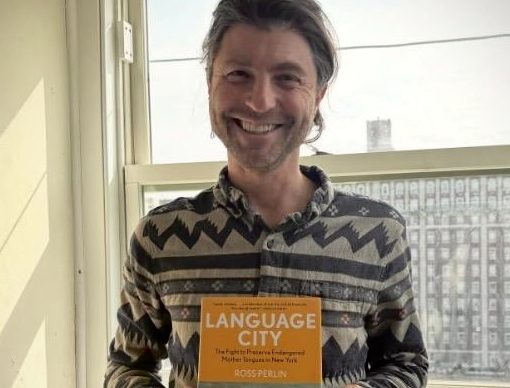
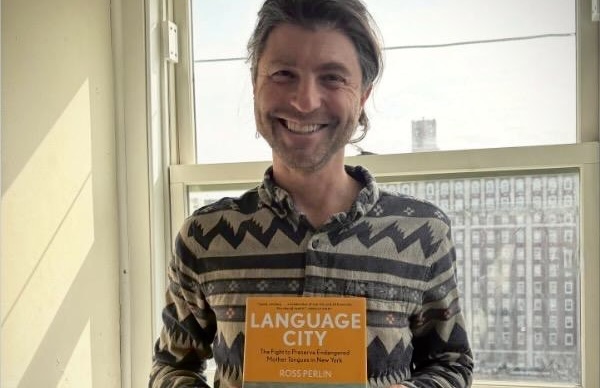
The Endangered Language Alliance is a gem. After finishing graduate school, I spent roughly a year helping the organization with two projects primarily: their digital language map, and multilingual resources for the 2020 Census. These projects showed me just how diverse the responsibilities of a professional linguist can be. I’ve stayed in touch with Dan Kaufman and Ross Perlin over the years, and consider both of them mentors and idols. This work was much more “on the ground” than my Cambridge studies. While I loved diving a bit deeper into computational linguistics at Cambridge, the work felt a bit removed from the people it benefitted. ELA projects, on the other hand, typically involve direct contact with speaker communities in New York.
How has the Gates Cambridge fellowship impacted your career so far?
The Gates-Cambridge community is large and widespread. It’s great to have people I keep in touch with from all over the world, studying very different subjects. I’ll be attending the wedding of a Gates friend in Istanbul this May! In terms of career impact, I’ve found that applying for fellowships becomes easier once you have one under your belt. The rigorous application and interview process were good practice for many grants and scholarships I’ve since applied to.
In your experience writing grant applications, how do you balance the interests of different stake-holders who may have different interests?
For funding sources, it depends on who’s funding your project. For example, with NSF grants, where I imagine people are interested in the advancement of knowledge, you can give examples of this type of work throwing a wrench in theories that had been believed to be universal. Talking about how the study of West African Bantu languages changed how we talk about tone, ideophones, and other linguistic concepts, as an example relevant to my work, would be a way to demonstrate the scientific merit in this work to appeal to the grant givers, which will allow you to do the work you think is important. Of course, you’re still doing what you talked about, but it’s just the way you phrase it that will resonate more with different funding sources. I don’t think it’s being duplicitous, just that there are a lot of angles as to why this project is important, and you might want to highlight one of them depending on where your funding might come from.
In terms of talking to speakers, it’s always speaker-dependent. If a speaker is an academic and recognizes that this work goes beyond language learning, I would totally tell them what the goal of my research is. Other people might not be interested in the scientific aspect. They might just like talking about their language, or they might care about preservation, in which case you definitely want to talk about why you think that’s important. I don’t think there’s any harm in being totally forthcoming.
What advice would you give to students who are interested in field work and academia as well as in the applications of linguistics elsewhere?
Do it! At universities like Columbia, it’s tempting to pursue a straightforwardly prestigious career after graduation, particularly when jobs with linguistic application appear scarce. But I’ve found that if you look hard enough (and expand your mind to what “linguistics” can entail), you can build a career that suits your interests. Starting with a fellowship is always a good idea, and I found Columbia’s Undergraduate Research and Fellowships office to be extremely helpful in pursuing one. From there, connections will come naturally, and you can continue down whichever path excites you. And if you have any questions about stops I’ve made along the way, don’t hesitate to reach out to me!