Address: 37-65 74th St (2nd Floor), Jackson Heights, NY 11372
Subway: 74 St-Broadway (7), Jackson Heights-Roosevelt Ave. (E,F,M,R)
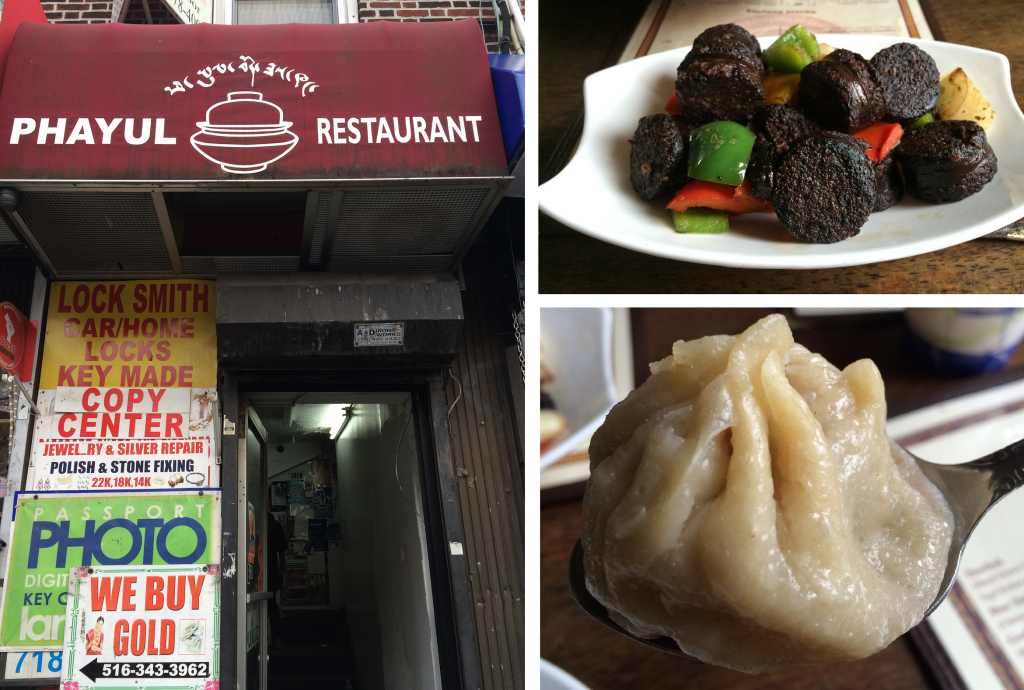
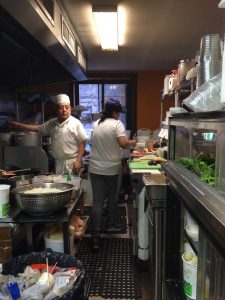
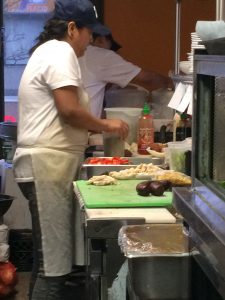
Though slightly easier to spot than Lhasa Fast Food (LFF), Phayul was inconspicuous enough that my friend and I walked right past it as we tried to pinpoint its location on Google Maps. 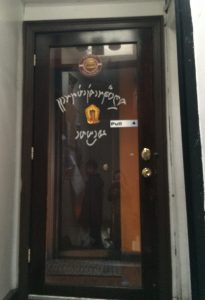 When we finally found its entrance, we walked up a narrow flight of stairs before hitting the restaurant entrance. My first thought when we walked in was: “Is this a restaurant or someone’s attic refurbished with a kitchen?” Like LFF, Phayul was no more than a couple hundred square feet. One half of it was taken up by a relatively modern kitchen teeming with five workers and the other half was filled with tables next to windows that overlooked Jackson Heights.
As we sat down and perused the menu, I remembered that one of the dishes I had wanted to try while researching Tibetan specialties was the gyuma (gue-ma), or blood sausage. I opted for gyuma ngoe ma and the beef momos.
Just as we placed our order, we noticed a small commotion in the kitchen, which was even more open than LFF’s. From our table, it looked like something–maybe a pan or wok–was on fire. As a result, our food didn’t come for another 20 minutes or so as the cooks tried to put out the fire without alarming their customers.
We took the time to taste the complementary butter tea, which look similar in color and consistency to the tea we just had at LFF. Though the underlying taste of the tea was the same, Phayul definitely added salt to its while LFF probably added sugar. It was slightly disconcerting to drink salty tea, so I stuck with water for the rest of the meal.
When the food finally came, I was immediately drawn to the gyuma ngoe ma–I had never seen anything like it. The sausage itself was quite dark in color–close to black–and had a very porous look to it. It was sauteed with onions, red and green bell peppers.
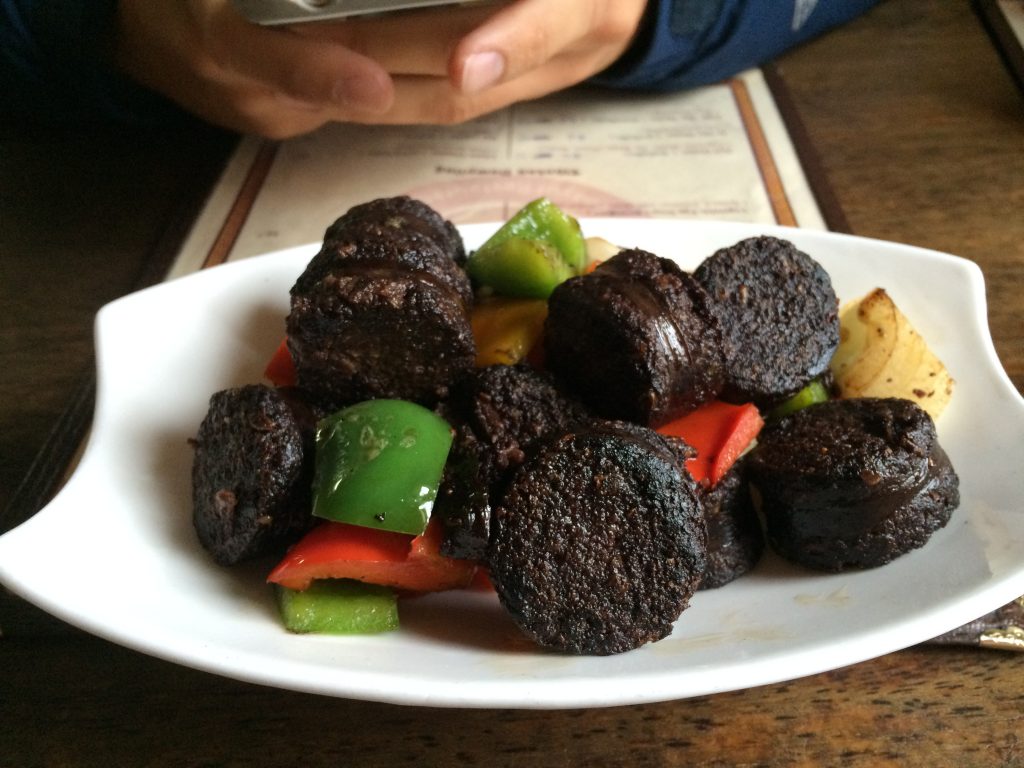
I expected the blood sausage to have a texture similar to that of a sausage, so I was quite surprised when I bit in and found it to be crunchy (because it was sauteed) and then smooth 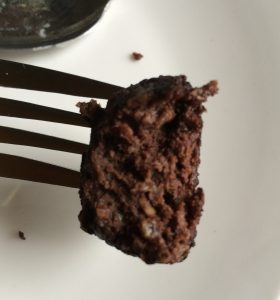 and almost doughy. The combination of textures was very perplexing–though not unpleasant–and I had to try another piece before I decided that I actually really liked it. The taste of the blood sausage is hard to describe…the closest thing I can come up with is that the gyuma is bland in the way that a hot dog is bland, which isn’t really bland at all, just not overwhelming in its own flavor or spice (it soaked up the flavors of the onions and peppers it was cooked with).
The momos, arriving on a plate instead of in a steamer basket, were pretty tasty (“tasty” meaning I enjoyed them but they weren’t knock-me-out-of-my-socks good) and smaller than the ones from LFF. I 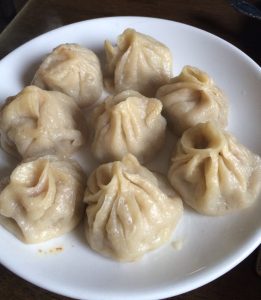 ate them with a bit of soy sauce since they were just a tad too unseasoned for me, though my friend said they were fine as they were. The filling was distinctively beef (we were both used to the pork-based fillings used in Chinese cuisine), and there was some other ingredient that we tasted in the filling that we thought was celery, but it could have also been onion. We easily finished everything.
When I went to the counter to ask for the check, I ended up chatting with our waitress in Chinese, who I learned was actually from Nepal. She told me that she was unrelated to the chefs, who all came from Tibet. I asked her a question about the gyuma that she couldn’t answer so she called over one of the cooks. The only other lady worker, the cook explained that the gyuma is made in-house using blood, beef, and oats stuffed into an intestine casing. At first, she didn’t wasn’t sure how to say “oats” in Chinese, so she went over to the shelf and showed me the can of Quaker Oats.
While I had her attention, I asked the cook (who I found out is from Lhasa) what the restaurant’s specialties are and she pointed out a dish called tsak sha la kor hot. According to her, tsak sha la kor hot is traditionally eaten during special occasions. It is made with sliced beef, white radish, and a specific mountain herb. She mentioned that they import this herb directly from Lhasa and even grabbed the herb container to show me what looked like very short blades of dried grass (I tried to look up the name of the herb after getting back, but had no luck).
Not wanting to take up any more of her time, I thanked her and the waitress, paid, and left this little restaurant in an attic. If I’m ever back in the area, I’ll be sure to try the tsak sha la kor hot.