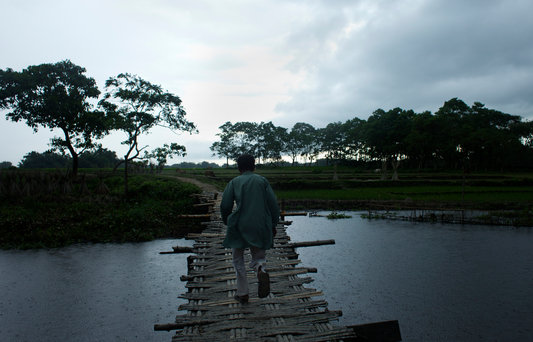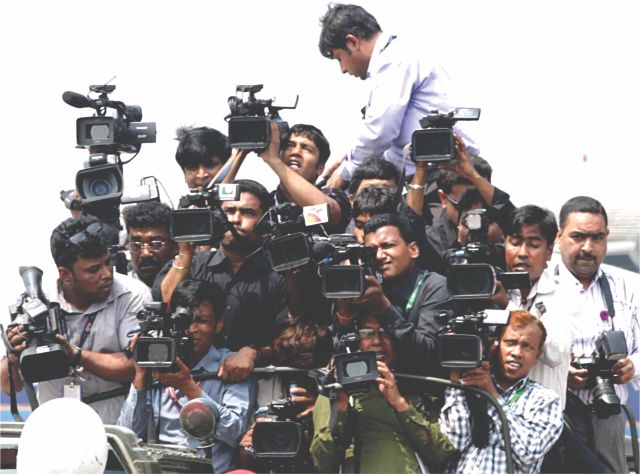
I first started researching Bangladeshi censorship cases during a micro-blasphemy controversy—a 2007 cartoon in the Alpin satire magazine. A list of post-1971 cases was meant to be the appendix to an essay about the case. Appropriately enough, the piece was rejected by the newspaper as “too sensitive a subject.” In the years since, I kept adding to this list. I was struck by the always expanding scope of the dragnet and the increasing weakness of institutions in the face of this deluge. In the three decades of market liberalisation since 1990, a record number of newspapers and television stations opened. This was driven by the profit motive, as a weapon for political ambition, and a project to accelerate consumption. Not enough of it was motivated by an ideology of expanded speech rights for the many, not the few and powerful. The timeline was first published in Daily Star in 2012. A revised version was published in 2024, just as the new post-uprising government took its first steps toward new censorships.
Category: Essays
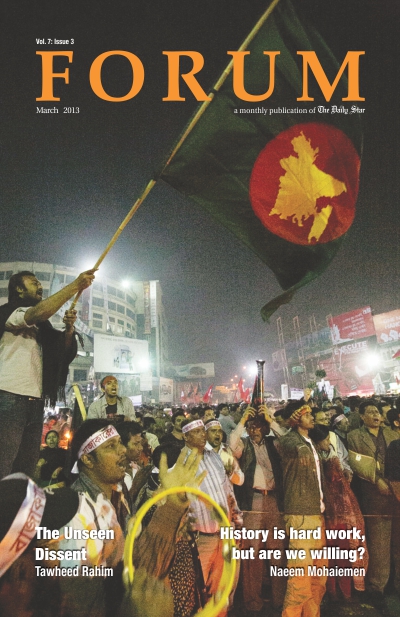
History is hard work, but are we willing?

There is a particular way of lensing mass movements, when we are observing from within immediate tactics. In a fast moving situation, with opponents and allies squared off, the first thing to shrink is the space for internal critique. Professor Azfar Hussain uses the term “critical solidarity” for his approach to the issue of 1971 and memory. A critique that seeks to help the history activists, but also demands changes from within the movement. Hussain reminds us, “The middle-class tragic sentimentality and liquid emotional nationalism actually suppressed the radical character of the language movement. So we have to return to history and say loudly: language movement was for establishing linguistic rights, but also a battle for the rights of farmers, laborers, and the working class.”
Continue reading
On the borders of two Bengals

Bangladeshi man runs across a makeshift bridge, as it starts to rain in Cooch Bihar district in the Indian State of West Bengal. © Manpreet Romana/NYT
In November 2012, The New York Times ran two paired pieces written from both sides of the Bengal border.
Jyoti Rahman analyzes both articles: “Naeem is a few years older than me, and Mr Ray is likely to be slightly younger. That means, all of us were born decades after partition. Continue reading