In life, we are born into a sphere (our earth), which moves around its axis and periodically revolves around the sun. The moon revolves around us and creates the cyclical nature of time: day, week, month, year. Similarly, the planets in our solar system move around the sun. Therefore, as the Tibetans believe that in nature, there are infinite mandala movements that we live and experience on earth, for example flowers, snowflakes, tree trunks, conifer cones, hurricanes, Helix Nebula etc. Mandala means “holy circle” in Sanskrit which refers to a typical circuit, which can be a drawing, or other graphical mark. Over the years, various cultures around the world gave the notion of mandala a variety of symbolic meanings. There are cultures in which the mandala symbolizes the pattern of existence, and represents the basis of meditation and visualization. In addition, it represents a blessed place. The mandala represents the spirit of the cosmos and the existence of the world. The Squares, which appear consecutively, represent the dual principles, but also the complementary of the universe, the establishment of creation, and the rise of the soul to heaven. They also represent the center of power, leaving the secure zone from the effects of conflicts. This center functions as a key to enter heaven.
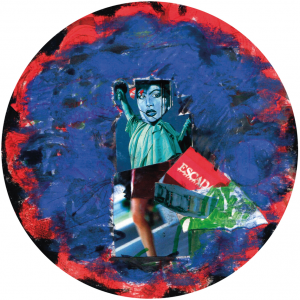
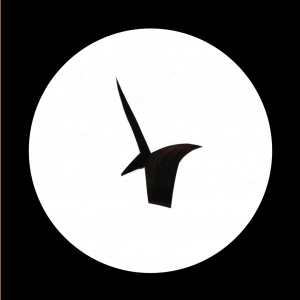
The mandala is built from a central point from which the branches that form circle-packed lines, geometric shapes, signs and symbols. It symbolizes an energy drawing. The purpose of the mandala is to connect us to our soul and represent the flow of life. Furthermore, the energy circle symbolizes the energy of life. Mandala creation is based on the shape of the circle and helps in the process of personal healing and positive energy. Therefore, with these mandalas that were inspired by my modern life time. I would like each of the observers to take his own individual inspiration from those Mandalas. It is up to the individual to interpret the meaning behind the mandalas, and to relate this meaning to themselves and to the larger world. This is the beauty of mandalas, and much of the spiritual Tibetan culture as a whole.
Here are the mandalas that we have chosen, both of which we thought could provoke interesting thoughts from the viewers. Also, they are two very different mandalas, and show the variety that can be seen between various modern mandalas.
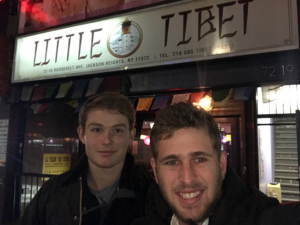 At Little Tibet, we took a few minutes to interview the chef of the restaurant, a woman named Tenzin Che Ni, to find out some more about Tibetan food and the culture found in a Tibetan restaurant in New York City.
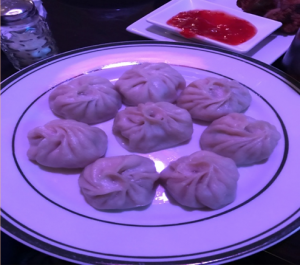 nt tastes… Momos have evolved. You can do chicken, veggie, and everything.
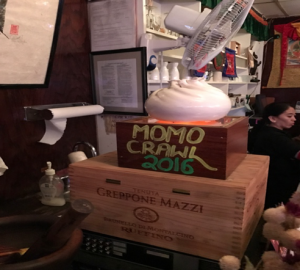 lmost like a Momo festival where all the restaurants they compete in the best Momo, and we won this year. You see the trophy up on the wall? She showed us the trophy and apologetically rushed back into the kitchen, as the restaurant was very busy during that time. We were impressed with the trophy and with the overall experience that the restaurant provides. From the food, environment, design of the space, and of Tenzin herself, everything was exceptional.
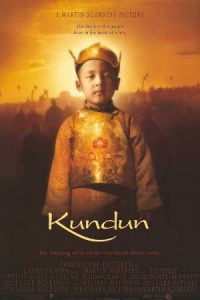 n is an amazing movie about the circumstances surrounding the choosing of the 14th Dalai Lama, and the story of his life. Directed by renowned director Martin Scorsese, the true story of the film begins in 1937 with monks who are on a mission in search of the 13th Dalai Lama’s reborn spirit. The 13th Dalai Lama died three years before this search, when the current Reting Rinpoche, or regent of Tibet, has a vision about the next Dalai Lama. The ensuing search eventually leads to a small village in Tibet, where the two-year old 14th Dalai Lama (Tenzin Yeshi Paichang) is found. The child is tested to see if he is really an incarnation of the Dalai Lama, and has to choose which of various objects that the monks possess are his. He passes this test with flying colors, and spends the next few years being taught by the monks, until he can be ready to leave with them back to Lhasa. The film is shot in episodes rather than scenes, and a large amount of time passes in between each episode.
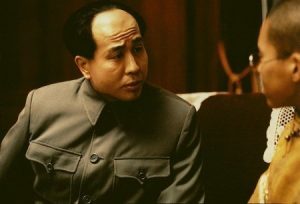 ose whether or not to uphold his religious values in order to put his people at risk. He also meets with the leader of China at the time, Chairman Mao, to discuss their conflict. During their meeting, the intimidating figure of Chairman Mao tells the young Dalai Lama that “religion is poison”. Once he returns from this meeting, there is an agreement in place that never ends up being fully followed, as the Chinese still plan to kill him. His family and colleagues then convince him to flee to India, where he stays for the rest of the movie. This interestingly displays the difficult decisions that the real 14th Dalai Lama had to face during this time period, where tensions with China were never higher.
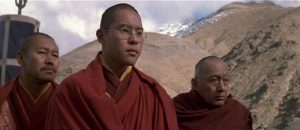 hese crucial final lines appear on screen: “The Dalai Lama has not yet returned to Tibet. He hopes one day to make the journey”. This displays how much the Dalai Lama has had to deal with his entire lifetime, while staying devout and open-minded. Overall, this movie shows a plethora of Tibetan culture throughout, with rituals, prayer, and many of the historical events that transpired in Tibet during the mid 20th century, but that are not yet resolved, as the Dalai Lama has still not returned to Tibet. I think that Kundun tells the story of the 14th Dalai Lama amazingly, with a well-articulated plot and great acting to do the extraordinary story justice. Thus, I would recommend this movie to anyone looking to discover more about Tibetan culture as a whole, or to someone who is interested in Tibetan history. However, I think it would be an entertaining movie for anyone, as it accurately tells the astonishing true story of the journey that the 14th Dalai Lama has undergone throughout his lifetime
 pocket of Tibetan culture in New York, Jackson Heights is home to many Tibetans, some of whom have relocated to the United States from foreign lands, others who simply chose to live in the area because of the large Tibetan population. The area is an old one, which began to gain popularity in the early 1900’s. Then, the population mostly housed white people, but has undergone many transformations since then. Many immigrants moved into the area around the 1950’s and 1960’s, and with that came many Tibetans, due to the Chinese occupation of Tibet and the exile of many Tibetans that occurred during this time. Since then, the area has become amazigly diverse, leading up to the large Hispanic and Asian populations that the area has today.
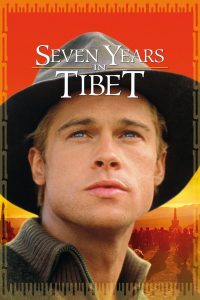
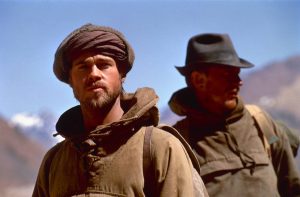
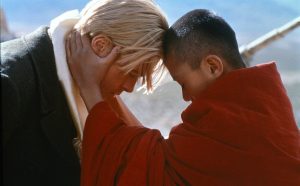 hree Chinese generals fly into Tibet for a meeting with the Dalai Lama, and they agree to remain peaceful, as long as China can become the political master of Tibet. This does not end up working out, however, and the Chinese beat the Tibetans easily in battle. So, China ends up in charge of the area, imposing harsh regulations onto Tibet. At the end of the movie, Heinrich says an emotional goodbye to the Dalai Lama, and leaves Tibet to return to Austria.