Columbia

Author Archive for Caroline Surman – Page 2

Seed Grant Spotlight: Ben Mylius

The Center for Science and Society is pleased to announce its 2018 Seed Grant recipients. Projects were awarded funding to support their proposals for research, events, conferences, and workshops on interdisciplinary topics in Science and Society. This year, the Center has awarded funding to seven interdisciplinary projects led by faculty from a number of departments at Columbia University. Learn more below about Ben Mylius – a doctoral student in the Political Theory program at Columbia. He was awarded a seed grant in 2017 and a follow-up grant in 2018 to organize a student-led discussion group entitled Ecosalon!


Project Inspiration
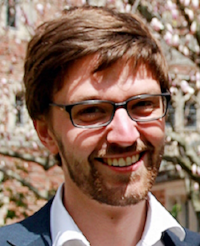
Seed Grant Awardee Ben Mylius

Ben Mylius

Fittingly enough, the challenge of interdisciplinary ecological work first hit me in the middle of a maze. More specifically, I was about three days into a fieldwork trip in the Maze District of Canyonlands National Park for a Yale Project on the Anthropocene (this is a proposed epoch dating from the commencement of significant human impact on the Earth’s geology and ecosystems). I was fresh out of law school, trying to choose a discipline for a PhD and exploring the area with a team made up of a soil ecologist, an environmental historian, a campaigner, a lawyer, and a filmmaker.

We were trying to get a handle on how our various disciplines “saw” the place and its many layers. Our conversations spanned the recent history of cowboys and ranchers, the older histories of Native Americans, the ecologies and geographies of the coyotes, jays, pinon pines, and lichens, not to mention the incomprehensibly ancient geological strata. But what struck me most was how we created a space to meet each other’s worldviews like I had never had before.

Canyonlands National Park

Canyonlands National Park

When I got to Columbia, I set out to find a group for similar experiences. I came across a range of wonderful people working as individuals. But gradually I realized that the majority of the opportunities available for students to come together were structured in very specific and formal ways. As graduate students, the places we could share our work were heavily weighted towards formal conferences presentations, with all the restrictions this entails. There wasn’t much opportunity for us to “learn each other’s languages” in the kind of context free from fear and judgment that I had felt with my group in Canyonlands.

Of course, those formal opportunities are crucial for our scholarly and professional development and I am grateful that we have them. But we also need a place for fellowship across our many disciplines, which remind us of the spirit of curiosity and excitement that got us into academia in the first place. Especially in the context of ecological issues, where no one discipline covers the field, we need a place for warm and open intellectual exchange which allows people at an early stage of their careers to feel their way into new disciplines and ways of thinking without fear of judgment, humiliation, or failure. So, after attending several Center events, I thought of convening our Ecosalon.

The Project

We meet one evening a month, over tasty New York pizza, for a free-ranging conversation on ecological themes. Conservation biologists, architects, political scientists, environmental anthropologists, immunologist, art historians, and several in between have joined our crew.

The most important components of our conversations are the intellectual wandering and fun. We have covered some fascinating topics. To give just one example, one of our anthropologists suggested our group read a text on gender and rivers, written in a dense, allusive form. We started discussing its contents until one of the scientists in the group put up his hand and asked, sincere but bewildered, what on earth the anthropological text was supposed to be communicating! So we jumped into a conversation about the use of texts in different disciplines. We discovered that for scientists, texts ideally seem “invisible” and are read fast for the substance of their knowledge. Meanwhile, anthropologists saw reading texts as a process, with the experience of grappling with the text at least as vital as the “thesis” of the text itself.

One of the things I like most about our conversations is being unable to predict their contours in advance. When I speak to colleagues in my home discipline (political theory and law), I can predict the kinds of things people might say and the ways that they might say them. At Ecosalon, that all goes out the window. And so we get back to the practice of interdisciplinary conversation – the negotiations, confusions, laughter, and curiosity – that is essential to longer-term collaborations.

All of these exchanges have powerful effects. I’ve noticed them taking root in my own work. My research is focused on the ways that key concepts in political theory (freedom, sovereignty, justice), are struggling to deal with things like climate change because they’re based on outdated ideas about humans being ‘separate’ from nature. From thinking I could write a dissertation that explored these things using only literature from the humanities and philosophy, I’ve realized I’ll need to find a way to bring in the natural science on climate, biodiversity, population and the Anthropocene. Doing that will be the only way to communicate across the disciplinary divides I’ve encountered, and do justice to the powerful work of my scientist colleagues and friends. From writing in an abstract philosophical idiom, I’ve come to see I’ll need to share my work through stories, so it reaches people beyond my own specialization. And from working as a “lone wolf,” stuck at home in my office, I’ve started connecting to others at much earlier stages in projects, and am excited to see how their input will take my research outlines in unexpected directions.

Speaking of collaborations, it has been exciting to see the seeds of several different projects take root in recent meetings. One of our political scientists is in talks with our evolutionary biologist about Geographic Information Systems (GIS) mapping and satellite data techniques for population measuring. One of our conservation biologists has worked with one of our journalists on a piece about conservation and environmental policy here in the States. Several of our group have started working alongside our neuroscientist/comics writer on science communication. And I’ve gotten excited, myself, to collaborate with the entire group and the Columbia Digital Storytelling Lab on a project on climate and narratives.

Impact
Public Philosophy Network's Logo

Ben spoke at the PPN’ 2018 conference.

I am incredibly grateful to CSS for the opportunities they’ve given us with their seed grant funding program. They were willing to take a gamble on a project that measured success and impact in unconventional ways, a gamble which – from my perspective, at least! – has paid off in spades. In February, I traveled to the Public Philosophy Network’s 2018 conference to present “Thinking Ecologically: The Columbia Ecosalon Experiment,” which explored the projects and experiences that have resulted from our monthly meetings. The various projects we’re now working on is one thing, but the biggest impact of all, from my point of view, is that each of us now has a network of others from across the university to draw on as future questions arise. These are people we wouldn’t have met in any other way, and in disciplines we don’t know well ourselves. Through Ecosalon, we’ve been able to connect them and give them the sense of community they’ll need to reach out to one another. We’ve been able to give people the chance to ‘be experts’ in their own fields, amongst what is effectively a highly-educated but (in their field) lay audience. And we’ve been able to create solidarity amongst our members, by reminding them that, daunting as ecological questions are, there are thinkers far beyond their own horizons who are out and exploring – and who are willing to join them on the tentative, step-by-step work of trying to make an impact, in the university and beyond.

I’m looking forward to seeing what the next year or two might bring: an exhibition? A conference? A podcast? A proposal for a co-taught course? And I’m excited to welcome other graduate students, postdocs, and other Columbia affiliates to our ongoing conversations.

If you’re keen to join, we’d love to hear from you!

Ben Mylius


Ben ([email protected]) is a doctoral student in the Political Theory program at Columbia looking at the ways that key concepts in political theory (freedom, sovereignty, justice), are struggling to deal with things like climate change. You can learn more about his research on his personal website.

Interested in supporting Ben or our other fantastic seed grant awardees? Visit our donation page or feel free to contact us.

Cluster Leader Robert Pollack Collaborates with American Folk Art Museum

Science and Subjectivity Cluster Leader Robert Pollack, along with Cluster Advisory Board Member Amy Pollack are collaborating with the American Folk Art Museum and participating in the “Exploring the Poetical Sciences: The Story of Edward and Orra White Hitchcock” symposium to be held September 17, 2018.

The symposium is being held in conjunction with the exhibit “Charting the Divine Plan: The Art of Orra White Hitchcock (1796–1863)” which explores the confluence of art, love, science, and religion in the extraordinary art of Orra White Hitchcock, one of America’s first female scientific illustrators. During the half-day syposium, Robert Pollack and Amy Pollack will present their book “The Course of Nature: A Book of Drawings on Natural Selection and Its Consequences.” Together as an artist and a scientist, they ask “how did we get here and what made makes me different from the rest of Nature?” among only inquiries with full respect for all contexts, both scientific and not. Amy Pollack’s figures stand on their own as elegant summaries of one or another aspect of Nature and our place in it. Meanwhile, Robert Pollack’s one-page essays for each illustration lay out the underlying scientific issues along with the overarching moral context for these issues.

For more information about the symposium and exhibit, visit the event webpage.

Call for Applications – Data Science PhD Scholarship, University of Trento

The University of Trento is accepting applications for a PhD position in the field of “Multilayer Network Analysis.” The peculiarities of this position consist in its further institutional affiliations and in its scope of application.

The position will be affiliated with the Complex Multilayer Networks (CoMuNe) Lab of the Foundation Bruno Kessler, also in Trento, as well as with the Max Planck Institute for the History of Science in Berlin and in relation to the research project “The Sphere. Knowledge System Evolution and the Shared Scientific Identity of Europe.”

The scope of the PhD is to develop models for the analysis of multilayer networks that meet the requirements dictated by the use of datasets extracted from historical sources. Such data are usually described by a particularly high number of attributes and are correlated to each other by means of a very high number of ontologically different relations. Moreover, the models will have to guarantee a correct rendering of the knowledge evolution mechanisms (historical time) as formulated in the frame of the historical research project. The PhD is in math and the candidate has to possess a solid educational background for this purpose.

Application deadline to be announced in June. For more information, please refer to the Call for Applications announcement

Call for Applications: Center for Science and Society Public Outreach Grants

ELIGIBILITY: Projects must include a (co) organizer who is a full-time employee at Columbia University, Teachers College and Barnard College (e.g, faculty, department administrator, postdoc, researcher).

AMOUNT: Proposals may request up to $10,000; however, most grants will be in the range of $2,000 to $5,000.

DEADLINE: Applications should be submitted no later than June 8, 2018.

PROPOSAL INSTRUCTIONS: Available as PDF here

Center for Science and Society Public Outreach Grants

The Center for Science and Society at Columbia University is issuing a call for proposals for outreach, service, and other projects that:

1. Help boost public understanding of issues involving society and science, technology, and medicine;
2. Teach K-12 students about current issues in science and society; or
3. Work with communities to respond to issues that affect or are affected by science.

The Center for Science and Society (CSS) grew out of a conviction that the world’s most pressing and increasingly complex issues – climate change, public health, food security, and gender inequality to name just a few – can no longer be addressed through the lens of just one discipline but require an interdisciplinary and cross-sector approach to problem-solving. The Center’s mission is therefore to create a new paradigm of collaborative inquiry between the natural and social sciences and the humanities. In addition to pursuing our mission through our research clusters, seed grants, and academic conferences, CSS is committed to furthering public understanding about the role of science in society.

Submitting Proposals

Proposals must include the following:

1. 1-2 page written summary of project that outlines the scope of work and how the project addresses issues at the intersection of science and society.
2. Budget – please note that grants can only support direct costs. Proposals may request up to $10,000; however, most grants will be in the range of $2,000 to $5,000.
3. C.V. and contact information for a Columbia University affiliate who will be a primary (co)organizer of the project. The affiliate must be a full-time employee at Columbia University, Teachers College and Barnard College (e.g, faculty, department administrator, postdoc, researcher).

Please send proposals as a single PDF document by 5:00 p.m. EST on Friday, June 8, 2018 to Roshana Nabi, CSS Project Manager ([email protected]) with “CSS Public Outreach Grants” in the subject line of the email. Notifications about awards will be issued by June 30, 2018.

Conditions of the award: Funds must be expended by June 30, 2019. Grant recipients must provide a final report on project activities, including a budget report.

For more information, please contact CSS Project Manager Roshana Nabi at [email protected].

Center for New Narratives in Philosophy’s Christia Mercer Awarded Radcliffe Fellowship

Center for New Narratives in Philosophy Director Christia Mercer (who also serves as the Gustave M. Berne Professor of Philosophy and on the Center for Science and Society’s Advisory Board) has been awarded a fellowship at the Radcliffe Institute for Advanced Study at Harvard University.

As the 2018–2019 Mildred Londa Weisman Fellow, Professor Mercer will pursue an individual project in a community dedicated to exploration and inquiry at Harvard’s Institute for Advanced Study, titled “Feeling the Way to Truth: Women, Reason, and the Development of Modern Philosophy.”

For more information, please visit CNNP’s website.

Presidential Scholar Matteo Farinella Featured in Columbia Magazine

Presidental Scholar in Society and Neuroscience Matteo Farinella was featured in the Spring 2018 issue of Columbia Magazine. Read “Who’s Afraid of the Big Bad Neuron?” to find out what drew Matteo to comics and neuroscience and learn more about his life as a Presidential Scholar in Society and Neuroscience.

Call for Applications: Digital Intern, New York Academy of Medicine

The New York Academy of Medicine (NYAM) is looking for a digital intern to work in the Library’s digital program. The internship will provide hands-on experience with creating and building digital collections, editing metadata for digitization projects, and conducting quality control of scanned images.

The intern will have an opportunity to learn about the digitization process and how to build digital collections. NYAM is looking for an intern who is imaginative and interested in learning more about developing digital collections and how metadata is used to enhance collections.

Duties and responsibilities include: creating digital collections on Islandora website; collecting, editing, creating and organizing metadata according to standards; and conducting quality control on scanned images and digital collections.

Applicants should have familiarity with technology, digital collections, and/or digital humanities projects; experience with metadata schemas (e.g. MODS, Dublin Core, MARC, IPTC etc.); knowledge of XML, XSLT, and OCLC; coursework in Library and Information Science

The internship starts June 2018 and is paid or may be taken for course credit. Intern must be available 2 days per week between the hours of 10:00am-5:00pm, Monday through Thursday, working approximately 10 hours a week over a 12 week period.

Please submit cover letter and resume with “Digital Intern” in the subject line to [email protected] by May 18, 2018. Please also outline your academic needs for obtaining course credit, if applicable.

Cluster Leader Kavita Sivaramakrishnan’s Book Published

Kavita Sivaramakrishnan’s (Associate Professor of Sociomedical Sciences, Mailman School of Public Health and Interim Co-Director, Robert N. Butler Columbia Aging Center) new book “As the World Ages – Rethinking a Demographic Crisis” has been published by Harvard University Press.

People are living longer, creating an unexpected boom in the elderly population. Longevity is increasing not only in wealthy countries but in developing nations as well. In response, many policy makers and scholars are preparing for a global crisis of aging. But for too long, Western experts have conceived of aging as a universal predicament – one that supposedly provokes the same welfare concerns in every context. In the twenty-first century, Kavita Sivaramakrishnan writes, we must embrace a new approach to the problem, one that prioritizes local agendas and values.

Professor Sivaramakrishnan is a member of the Center for Science and Society’s Steering Committee and co-leads the Global Histories of Science Research Cluster.

“Revisiting Philosophy and Its Pasts” Research Cluster is now the “Center for New Narratives in Philosophy”

The “Revisiting Philosophy and Its Pasts” Research Cluster is now the “Center for New Narratives in Philosophy (CNNP).” Cluster Leader Christia Mercer, Gustave M. Berne Professor of Philosophy at Columbia University, now serves as Director of CNNP. She is joined by Associate Director Skye Cleary.

The CNNP is an international center for the most innovative work in the history of philosophy. The center promotes diversity in philosophy as it is practiced and taught and fostering two kinds of work: (1) by supporting the growing movement among historians of philosophy to broaden their research to include women and other non-canonical figures, and (2) by encouraging collaboration among philosophers and social activists to explore social issues, especially concerning criminal justice reform.

For more information, please visit the CNNP website.

Conference Reports and Videos Now Available for “The Success of Failure”

The Center for Science and Society, along with its co-sponsors – Heyman Center for the Humanities, the Institute for Social and Economic Research and Policyand Teachers College – are proud to present the event reports and session recordings from “The Success of Failure: Perspectives from the Arts, Sciences, Humanities, Education, and Law” conference, held December 7-8, 2017.

“The Success of Failure” explored the broad typology of failure across disciplines by offering perspectives from law, psychology, tech startups, education, experimental theater, and jazz music – just to name a few. Each field discussed its own struggles and solutions as participants and audience members grappled with the central question: How do we reconcile the contradictions of success and failure?

Visit the Success of Failure Past Event Information Page to view a session-by-session report, an executive summary, and event program. Video recordings of select sessions can also be found on the Center for Science and Society’s YouTube channel.


@ 2018 The Center of Science and Society at Columbia University
| Contact Us | Non-Discrimination | |