Pema Bhum on the Role of Latse Library
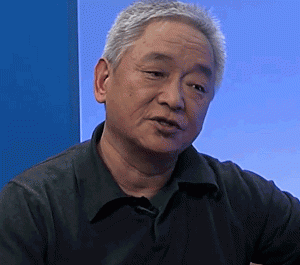
Pema Bhum is one of the most figures in modern Tibetan literature and serves the director of the Latse Tibetan Contemporary Library in New York. He is author of two memoirs of the Cultural Revolution — Six Stars with a Crooked Neck (2001), and Dran tho rdo ring ma (2006)–as well as Heartbeat of a New Generation, now translated into three languages. In 1988, he founded the first independent Tibetan language newspaper in exile, Dmangs-gtso, and the Tibetan literary magazine, Ljang-gzhon. Bhum has previously taught at Northwest Nationalities University in Lanzhou and Indiana University. He currently teaches Classical Tibetan at Columbia University.
RS: How did you first get involved with Trace Foundation?
PB. In a personal sense, I’ve known Andrea, the founder of Trace foundation for a long time, when I was living in India. We met in Dharamsala while she was going trekking in Ladakh in the early 90’s. At this time we didn’t have plans to start a project. In 1994 I moved to New York and Andrea told me she had plans to start Trace Foundation.
RS: What were you doing then?
PB: In 1996 I was working as a teacher in a Tibetan school in 1996. At this time Andrea suggested I start working for trace as a proposal writer, they needed somebody who was fluent in Tibetan and Chinese. I was juggling a lot of jobs at the time, including writing for Radio Free Asia. At that time I wasn’t that involved with Trace. In 1997 I became assistant to Gene Smith, who was putting together his collection of Tibetan language literature. He lived on the top floor of the Trace Building and he had over 600 boxes of books!
RS: Was this when the idea for Latse library came about?
PB: Not quite. I was however helping ordering Tibetan and Chinese language books from the catalogues. There was the general idea of putting together a Tibetan library but what kind of library and how we would put it together were still unclear. As you might know Gene’s collection was predominantly traditional Buddhist literature. i didn’t think this kind of traditional Tibetan literature was relevant to the contemporary situation and thought that perhaps focusing on contemporary literary works might give better insight into Tibetan reality. Gene of course kept with his work on classical texts and that culminated in the Tibetan Buddhist Resource Center. I found myself thinking that there were already many scholars and resources on classical Tibetan works but there was a real dearth of scholarship and materials on Modern Tibetan literature. We thought a modern Tibetan library was an endeavour that we at Trace could take on. Andrea, and Kim Morris, the then director were in agreement. Between 1998-200 we ordered and catalogued the books we needed from Tibet and China and stored them in a basement storage. In 2003 the current site was purchased and that same we opened the Latse Contemporary Tibetan Library.
RS: You must remember that day well. How was the event marked?
PB: We had a large opening ceremony and reception where we invited a number of Tibet scholars from around the world. After the 1980’s we saw the revitalization of Tibetan culture in Tibet after the Cultural Revolution and such we invited guests from Tibet too. It just happened that same year marked the one hundred year anniversary of the passing of the Tibetan modernist monk scholar, Gedun Choephel. We at Trace felt a strong affinity with one of the most progressive scholars in Tibetan history and it seemed it a coincedence that our modern library was opened in the same year. In November of 2003 we held a large celebration to mark the occasion.
RS: Is Latse the only library in the world devoted to contemporary Tibetan library.
PB: Yes, I think you can say that. Our library is focused specifically on contemporary works of Tibetan literature published in Tibet and China. Of course in the years after our founding, a center for Modern Tibetan studies was established at Columbia, but in terms of a contemporary library we are only one!
RS: What was the Tibetan community like in the early 2000’s? And how would you describe Latse’s role in this community.
PB: In 2003 there were only two thousand Tibetans living in New York. Nothing like today, now there are many living in Manhattan, Queens and Flushing.
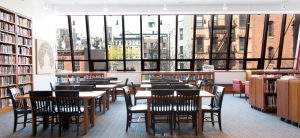
A library in the traditional sense is where people come to read. To be honest we don’t have that many patrons who come in just to read. But I like to think about Latse in a sense that transcends the typical definition of a library, I think of Latse as a center for Tibetan culture and our programming relfects this, we have public screenings, poetry recitations and lectures. These events are very popular and well attended. I remember an event we had for Losar, Tibetan New Year, in 2005 that caused quite stir in the Tibetan community, we invited three popular contemporary Tibetan singers Pengon, Tawo Palden, Lelung Tsering and we had over 700 people attend the concert in a Columbia University Auditorium.
RS: What is the average library patron like?
PB: We actually have a lot of Tibetans from Tibet come. They usually have a good level of Tibetan language and theycome seeking the latest publications from Tibet. We also have a lot of elder Tibetans who are interested in reading some Tibetan Buddhist scriptures, of which we do keep a few around. Lots of researchers and graduate students get in touch in too, and not just from New York city but all over the world through email.
RS: How would you recommend a visitor without much Tibet related experience, or without Tibetan language training make the best use of the library?
PB: We have a lot of written resources in English and Chinese, as well as audio-visual and material culture materials. I welcome interest parties to get in touch and make an appointment to visit the library on a weekend or stop by on a Friday or Saturday when we are open to the public on a drop in basis.