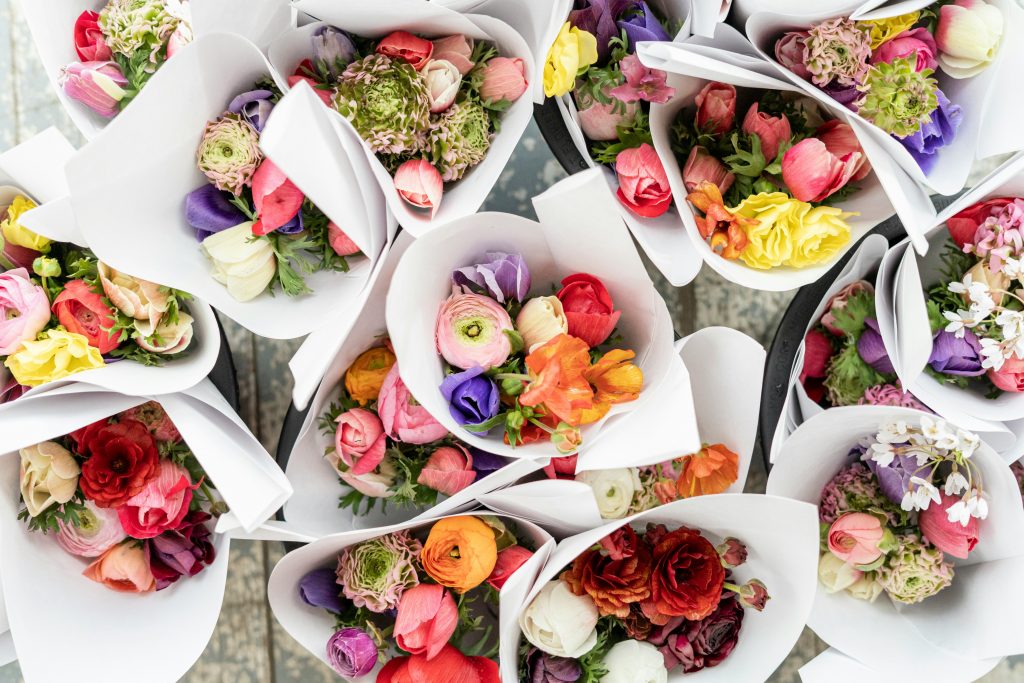
The floral industry is one with tons of rich history. Throughout the centuries, it’s played a key role in cultural movements, business, and commerce. And even today, it’s a sector of the economy that reflects larger societal trends. In order to understand its unique relationship and the ebbs and flows of the market, it’s helpful to dig in a little and study the numbers.
Global Flower Market Trends
To put it in a simple, concise summary statement, the global flower market is flourishing. With increased demand in various regions driving significant growth, there’s a lot of upside happening at the moment.
Additionally, e-commerce platforms are revolutionizing the way flowers are purchased, offering consumers the convenience of ordering bouquets with just a few clicks. This digital shift is expanding the reach of floral businesses, allowing them to tap into a broader market beyond their geographic location.
Trends indicate a surge in flower consumption, particularly in emerging markets where rising incomes are enabling more individuals to indulge in floral products. According to the latest research, the global market for cut flowers is anticipated to grow at a compound annual growth rate (CAGR) of 5.3 percent per year from 2022 to 2030 – which means we’re just at the very beginning of this growth curve. More specifically, the research from the Global Strategic Business report says the cut flower market will hit the $50.1 billion mark by 2030 – a number that’s up significantly from $33.3 billion back in 2022.
Researchers say roses are driving this boom, as they’re projected to enjoy a 5.9 percent CAGR over this period – reaching a total market size of $15.8 billion by the end of 2030. The next most popular segments are chrysanthemums and gerberas.
The Impact of Seasonality on Flower Prices
Seasonality plays a key role in the pricing and availability of flowers. Certain blooms are only available during specific times of the year unless grown in controlled environments like greenhouses. This impacts how much vendors charge for certain types of flowers.
For example, peonies are typically in peak season during late spring and early summer, and their prices can be much more expensive outside this season. Understanding this seasonality can help consumers and businesses plan purchases and promotions around the availability of specific flowers, optimizing costs and ensuring they have the freshest selection available.
Sustainable Practices in Flower Farming
Sustainability is becoming more important in flower farming as consumers and businesses seek to minimize environmental impacts. Many growers are adopting eco-friendly practices such as using organic pesticides, implementing water conservation methods, and reducing greenhouse gas emissions.
On top of all of this, there’s a growing trend towards locally sourced flowers to decrease transportation impacts and support local economies. These sustainable practices are helping protect the environment and enhance the quality of the blooms, making them more appealing to eco-conscious consumers.
Flower Industry Innovations and Technologies
Innovation is transforming the floral industry, making it more efficient and consumer-friendly. Trends like precision agriculture, which utilizes GPS and IoT sensors, are optimizing the way flowers are grown.
“Innovations such as greenhouse farming, hydroponics, and vertical farming have led to increased efficiency and productivity in flower production according to the report,” Thursd.com reports. “Moreover, advancements in transportation and logistics have enabled growers to reach broader markets and ensure the timely delivery of fresh flowers.”
It’s also worth noting that the use of blockchain technology is improving traceability throughout global flower supply chains, allowing consumers to know exactly where their flowers come from and how they were grown. For example, if you’re getting a flower delivery in Dubai, you can know whether those flowers are being sourced from somewhere in the Middle East, South America, Europe, or Africa.
Consumer Behavior and Floral Purchasing Patterns
As is the case in any industry, consumer behavior in the floral industry is influenced by various factors including demographics, cultural events, and personal preferences. Flowers are often purchased for special occasions such as weddings, funerals, and celebrations, but there is also a significant market for everyday home decor and design (which, to be honest, had sort of disappeared over the past couple of decades).
The trend towards personalized and custom floral arrangements is on the rise, with consumers looking for unique designs that reflect their style and sentiment. Along with this trend, we’re seeing an increasing preference for purchasing flowers from brands that demonstrate a commitment to environmental sustainability.
The Future of the Floral Industry
The flower industry is a massive global sector that often reflects the overall health of the economy and environment. With so much growth expected over the next five years (and beyond), there’s plenty for suppliers, vendors, and customers to be optimistic about.
The key, as always, will be to invest in the protection of the environment so that people can enjoy beautiful flowers for decades and centuries to come.