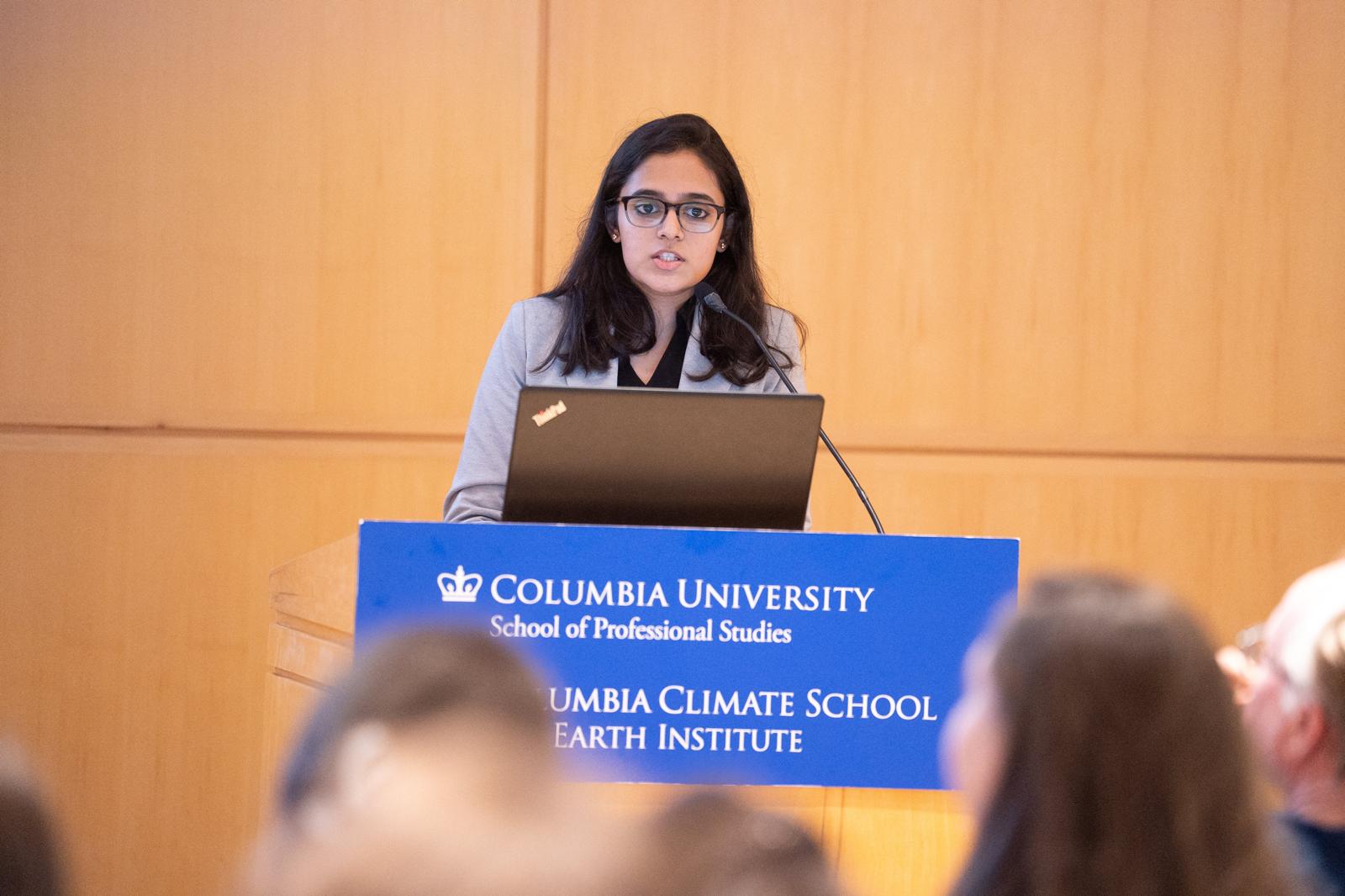
Watch Manasa Prabhakar take the lead in presenting whether an international aviation tax, if imposed, would negatively impact tourism. Backed by both quantitative and qualitative findings, she demonstrates that such a tax would primarily serve as an additional revenue stream for vulnerable nations—least developed countries and small island developing states—whose GDPs heavily rely on tourism. This revenue could help offset their adaptation costs. She also proposes a governance framework to ensure that these funds are responsibly allocated to these nations, recommending the UN Loss and Damage Fund as a key mechanism.
From a consumer perspective, the tax would lead to an average increase of $20 to $40 on an international ticket priced at around $800. Using demand elasticity, she argues that this cost would likely have little impact on first-class and business-class passengers. However, further analysis through surveys is needed to assess the effect on economy-class travelers. Economically and environmentally, she emphasizes that this modest investment today could save hundreds in climate-related costs in the future.
Overall, Manasa and her team of 14 were the first to make the concept of international taxation for aviation appear viable. She asserts, “We strongly encourage our client to present this proposal to country representatives, the UN, and other development bodies for discussion. I am confident it will resonate. It is only just and fair that an industry long excluded from climate negotiations finally pays its share for the immense emissions it generates. This must happen eventually—so let’s take action now. The best part is, it brings a strong motivation and commitment to transitioning toward sustainable aviation fuel.”