The Role of Energy in Shaping the Future of Cities
As we envision the future, three themes intertwine: cities, energy, and inequality. This article delves into the world of cities, the bustling hubs of density that offer a multitude of efficiencies in terms of energy and equal distribution (or do they?).
Densification: A Double-Edged Sword
 Source: The Discoverer Blog (https://www.thediscoverer.com/blog/the-most-crowded-cities-in-the-world/XvHyVpKgiwAG5ail)
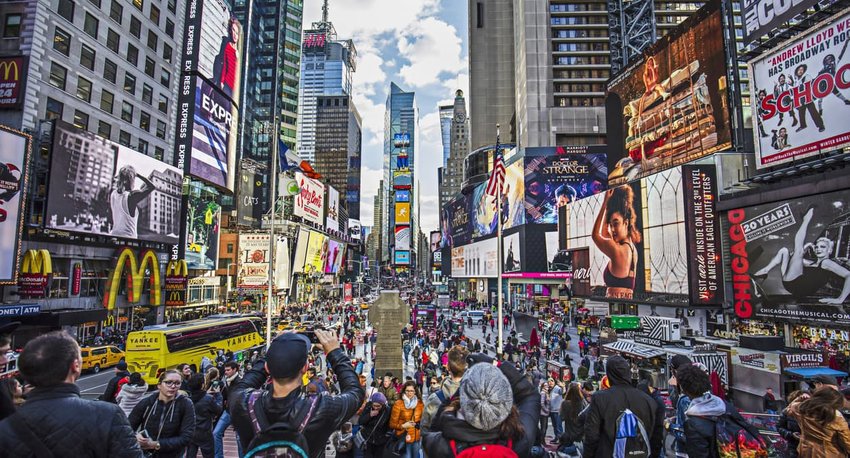
High density offers benefits in land use, transport, and infrastructure. Urban sprawl is minimized, existing infrastructure is utilized effectively, and essential services, amenities, and workplaces are often within walking, cycling, or public transportation distance. This reduces car usage and allows for the cost-effective sharing of essential resources like water, sewage, and electricity networks. However, the very energy that fuels city growth can also contribute to heightened wealth, consumption, and the urban heat island effect. Bustling city centers often rely on energy-intensive systems, leading to a larger carbon footprint. Densely packed buildings can trap heat, raising temperatures and requiring even more energy for cooling.
Energy Beyond Electricity:
 Source: Adobe Stock (https://stock.adobe.com/images/the-source-of-consciousness-energy-of-the-universe-life-force-prana-the-mind-of-god-and-spirituality-generative-ai/560521452)
When discussing energy for cities, we often think of electricity, fuel, and resources that power buildings and infrastructure. However, there’s another crucial form: the human spirit. Vaclav Smil, a leading energy researcher, reminds us: “Energy is the only universal currency… one of its many forms must be transformed to another in order for stars to shine, planets to rotate, plants to grow, and civilizations to evolve.” Just like our bodies, cities are powered by fuel. The food we eat gets transformed into fuel, allowing us to think, solve problems, and dream up innovative ideas. A bustling city market exemplifies this principle; every bite of a fresh apple fuels the minds of professionals, artists, engineers, and entrepreneurs who then spark the development of visible forms of energy. Professionals devise energy-efficient policies, architects use this to design buildings powered by the sun and wind, and engineers develop technologies that reduce energy consumption and demand new policies, creating a continuous cycle of innovation.
The Interconnected City:
 Source: Travelers (https://www.travelers.com/resources/business-industries/technology/how-smart-cities-prepare-for-tech-infrastructure-risks)
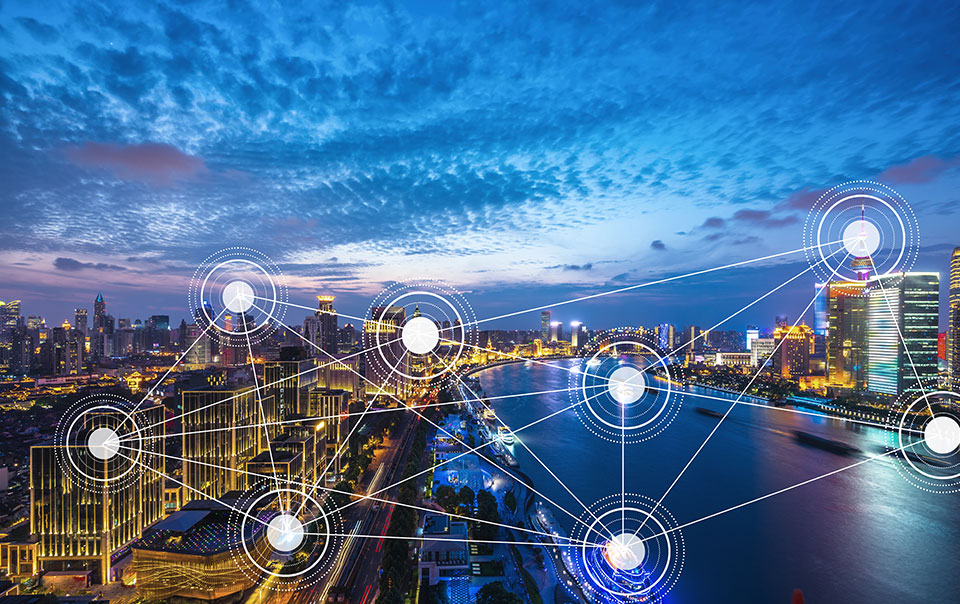
Beyond the human spirit, cities rely on an intricate web of trade woven within them. Every morsel of food, every drop of water, every flicker of energy originates from beyond their immediate boundaries. While we invest in international partnerships, do we extend the same diligence to our own cities? The answer is often no. The comforts we enjoy today are often taken for granted, delivered seamlessly without apparent effort. Imagine Singapore, Chennai, or New York without a robust energy supply – their achievements would be nonexistent. Cities are sustained by the constant influx and interrelation of resources – food, water, fuel, etc. – that nourish their vitality and fuel their progress. While we are happy to welcome these resources, we often rush to exploit them as soon as they arrive. This short-sighted approach fails to acknowledge the potential for waste as a resource and the need to re-evaluate air conditioning reliance.
Waste as a Resource:
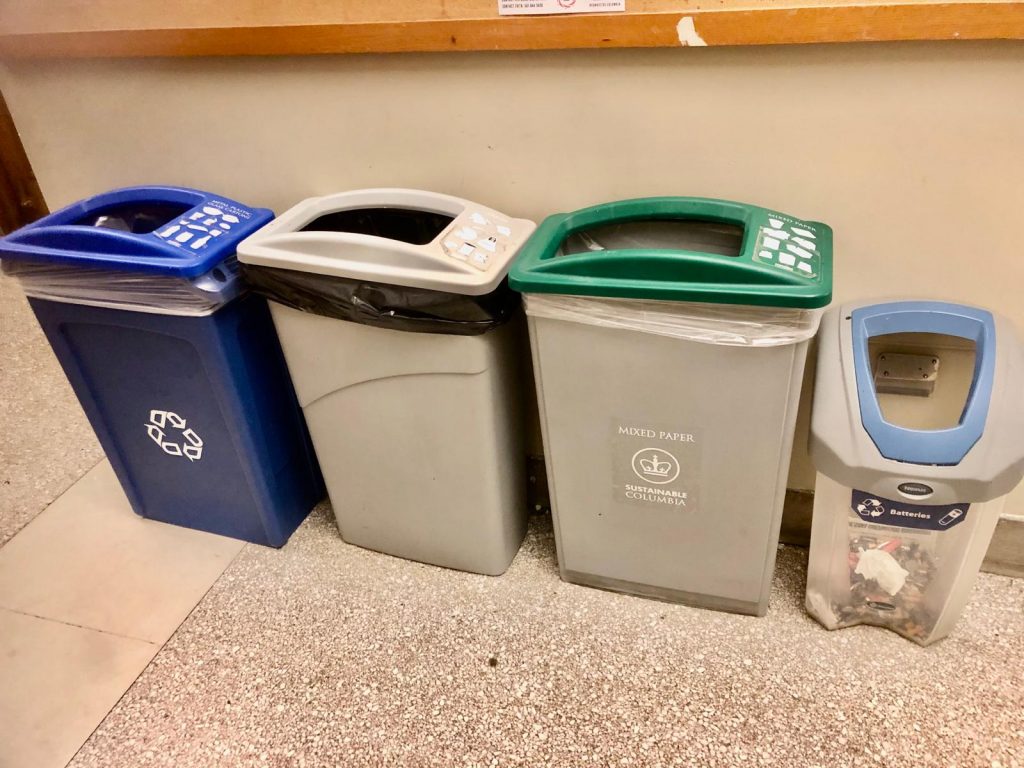
As we delve deeper into urban dynamics, waste, often seen as an inconvenience, emerges as complex and surprisingly energy-rich. Take New York City’s garbage on Mondays – its volume significantly increases due to the bulky Sunday New York Times. While residents embraced recycling initiatives, much of this “recycled” material ends up accumulating in landfills, slowly transforming into methane. However, research by Oukili et al. (2022) estimated that a Moroccan landfill site produced approximately 17,800,000 kWh of electrical energy in 2020.
This highlights the crucial point: we must acknowledge the untapped energy potential within our waste streams.
The Challenge of Air Conditioning:
Another facet of urban energy dynamics is cooling. Air conditioning, accounting for a significant portion of building energy use, plays a vital role in urban comfort. However, its widespread use worsens the urban heat island effect, impacting labor productivity and even increasing morbidity and mortality rates. This “cool crunch” underscores the urgent need for building efficiency measures, particularly in rapidly urbanizing countries like China, India, and Indonesia, to mitigate the escalating demand for air conditioning. Projections indicate a dramatic rise in household air conditioning usage, with the global stock estimated to grow to 5.13 billion by 2050, up from 1.6 billion today (Air Conditioners Market – Global Forecasts to 2029, n.d.).
So, what’s next? Is density truly advantageous, or not? Perhaps density holds some merits to a certain extent. However, it is crucial to prioritize the integration of greater energy efficiency into our environment. Moreover, let’s not disregard the significance of ensuring equitable access for all individuals. Simply being fortunate enough to have been born on the favorable side of the planet doesn’t justify monopolizing all the benefits. On the contrary, those on the less privileged side deserve enhanced access to opportunities. Acknowledging our own privilege, let’s adhere to the principle of “Focus on what you have, not what you wish you had, and focus on what you need, not what you want.” Others also deserve a good quality of life.
And what comes after that? Understanding the interconnectedness of all energy forms in the universe, irrespective of one’s belief in science. The stark reality, demonstrated through Quantum mechanics and proven through the ages, is that the universe comprises space filled with fields of vibration, interconnected, unified, and in constant communication. Distance and time hold no significance; one end of the Universe moves in connection with the other, with everything in between constituting a grand movement or dance held in space. In truth, our lives and everything in the entire universe are not just connected but inseparable.
Therefore, it’s entirely acceptable to live an extravagant life in a bustling city. However, let’s contemplate how our actions impact the next moment, all through energy. If one form of energy is harmful, it will inevitably affect other forms, including our very existence in the subsequent moment. Whether it’s waste, food, water, fuel, goods, or services, everything influences energy, and in turn, energy influences us.
~ Manasa Prabhakar
References:
Oukili, A. I., Mouloudi, M., & Chhiba, M. (2022). LandGEM biogas estimation, energy potential and carbon footprint assessments of a controlled landfill site. case of the controlled landfill of Mohammedia-Benslimane, Morocco. Journal of Ecological Engineering, 23(3), 116–129. https://doi.org/10.12911/22998993/145410
Air conditioners market – Global forecasts to 2029. (n.d.). https://refindustry.com/news/market-research/air-conditioners-market-global-forecasts-to-2029/