The full report can be read here: Is Chennai Prepared for Induction Cooking – Manasa Prabhakar
Background
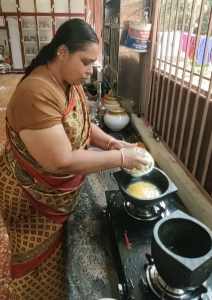
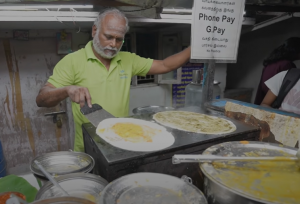
In Chennai, the capital city of Tamil Nadu, LPG (Liquefied Petroleum Gas) is the predominant fuel for cooking in both residential and commercial settings. LPG is favored for its efficiency, ease of use, quick heating capabilities, and relatively low cost. The rapid urbanization and growth of Chennai have led to increased LPG consumption, with significant demand from both households and commercial establishments such as restaurants and hotels.
Despite its advantages, LPG is a fossil fuel with associated environmental and health impacts. Its combustion produces greenhouse gases like CO2, contributing to global warming. The extraction and distribution processes also lead to environmental degradation. Health concerns include indoor air pollution from CO, NOx, and unburnt hydrocarbons, which can cause respiratory issues and eye irritation. Additionally, LPG’s flammability poses safety risks, including potential fires and explosions.
As the world shifts toward electrification, including in the cooking sector, initiatives are being launched to transition from LPG to electric cooking methods. In India, the National Efficient Cooking Programme (NECP), spearheaded by Energy Efficiency Services Limited (EESL), promotes induction cook stoves. This program aims to deploy 2 million induction stoves nationwide to reduce environmental impact and improve air quality. The NECP is supported by Modern Energy Cooking Services (MECS) and aligns with broader energy transition goals, including PM Narendra Modi’s endorsement of solar PV e-cookstoves.
Objective of the Study
The study aims to evaluate Chennai’s readiness for adopting electric cooking, specifically induction stoves. Since this is an exploratory study, the following research questions have been identified:
1. How do household composition, income levels, education, and occupation influence cooking practices and the adoption of modern cooking technologies in Chennai households?
2. What roles do household members play in purchasing cooking items, preparing meals, and managing fuel payments, and how do these roles impact the choice of cooking methods in Chennai?
3. What factors contribute to the current levels of satisfaction with LPG stove usage among households in Chennai?
4. How do Chennai households perceive induction stoves’ safety, efficiency, and cost-effectiveness compared to LPG stoves?
5. What are the primary barriers preventing the adoption of induction stoves in Chennai households?
6. What factors influence the willingness of Chennai households to pay for induction stoves and compatible cookware?
7. How do Chennai households perceive the environmental and health impacts of using LPG stoves, and how do these perceptions influence their cooking fuel choices?
Scope and Significance
This research focuses on the practicality of transitioning from LPG to induction cooking in Chennai, including both residential and commercial contexts. It provides insights into household acceptance and the benefits and challenges of this transition. The study aims to support policy development and program implementation, contributing valuable data for scaling up induction cooking and advancing India’s climate goals.
Limitations
The study is exploratory and serves as a preliminary investigation. It has limitations, including an uneven sample distribution across income levels and challenges related to remote survey administration. The study also excludes input from wage earners and migrant workers, which could provide additional insights.
Methodology
The survey involved 22 households and one restaurant in Chennai, selected to represent various income levels. Households were categorized into three income groups, and the commercial establishment provided insights into high-volume cooking operations. A discretionary sampling approach was used due to the exploratory nature of the study. The survey was conducted via Google Forms, collecting both quantitative and qualitative data.
This research offers a foundational understanding of Chennai’s readiness for induction cooking, providing data that can inform future studies and policy efforts to support the transition to more sustainable cooking practices.
While a complete transition to induction cooking within the next few years may not be feasible, it is advisable to promote the use of LPG alongside induction stoves (fuel stacking). Households should be encouraged to increase their use of induction cooking while continuing to rely on LPG.