
In the bustling metropolis of New York City, managing waste effectively is not just a challenge; it’s imperative for the city’s and its inhabitants’ health. Enter SIMS Municipal Recycling – Sunset Park Material Recovery Facility, a pivotal player in the city’s waste management infrastructure. SIMS operates on a simple yet profound principle: treating only recyclables and not the garbage. This distinction is crucial, as it underscores the importance of separating waste at its source. The municipal waste collecting agency gathers recyclables exclusively, ferrying them to SIMS for processing. Yet, despite the meticulous systems in place for waste separation, the reality often falls short of expectations. Residents, at times, neglect proper sorting, leading to additional burdens on SIMS, necessitating segregation efforts that extend beyond their designated scope.
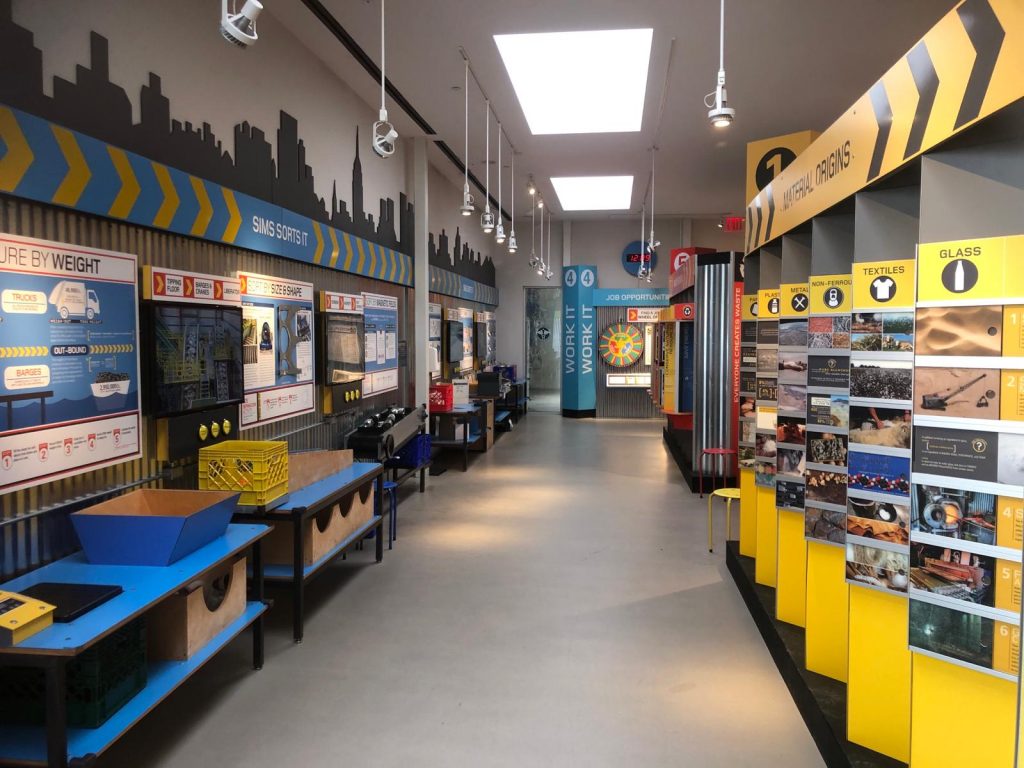
Within SIMS’ state-of-the-art facilities, technology reigns supreme. The facility operates round-the-clock with a staggering 75% operational capacity, ensuring continuous waste treatment. Boasting the title of North America’s largest waste management facility, SIMS employs cutting-edge machinery, minimizing human involvement while maximizing efficiency. Advanced sorting mechanisms, including laser object detectors, optical sorters, AI robotics, and remote arms, facilitate the meticulous separation of recyclables, achieving an impressive 90% accuracy rate in waste treatment.
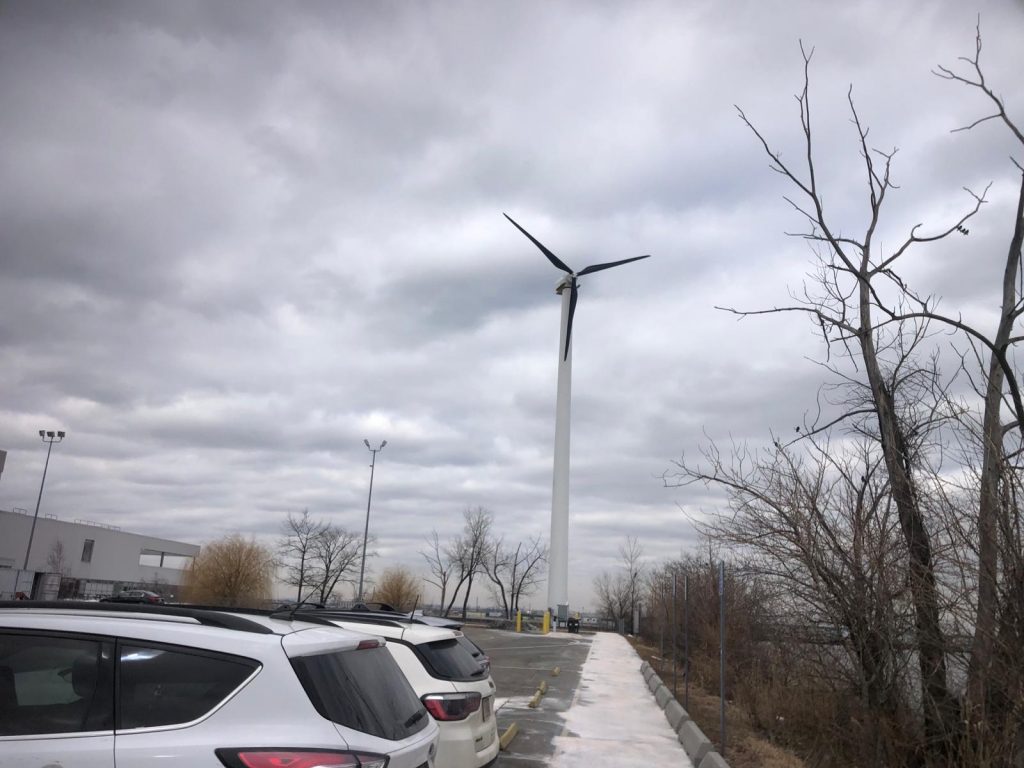
One particularly fascinating aspect is that SIMS is the first agency in NYC to integrate wind turbines into its premises for electricity generation. This demonstrates their commitment to environmental responsibility, which extends beyond waste treatment to sustainable energy sourcing.
Recycling process at SIMS:
Disc Screens: First, spinning metal rods break the glass materials from amongst the others. The glass falls through 2.5-inch holes onto another conveyor belt. The glass is then sent to their glass plant, and the remaining materials roll to the next step. (Remember to kindly leave plastic caps on plastic bottles so they won’t be lost in the glass stream!)
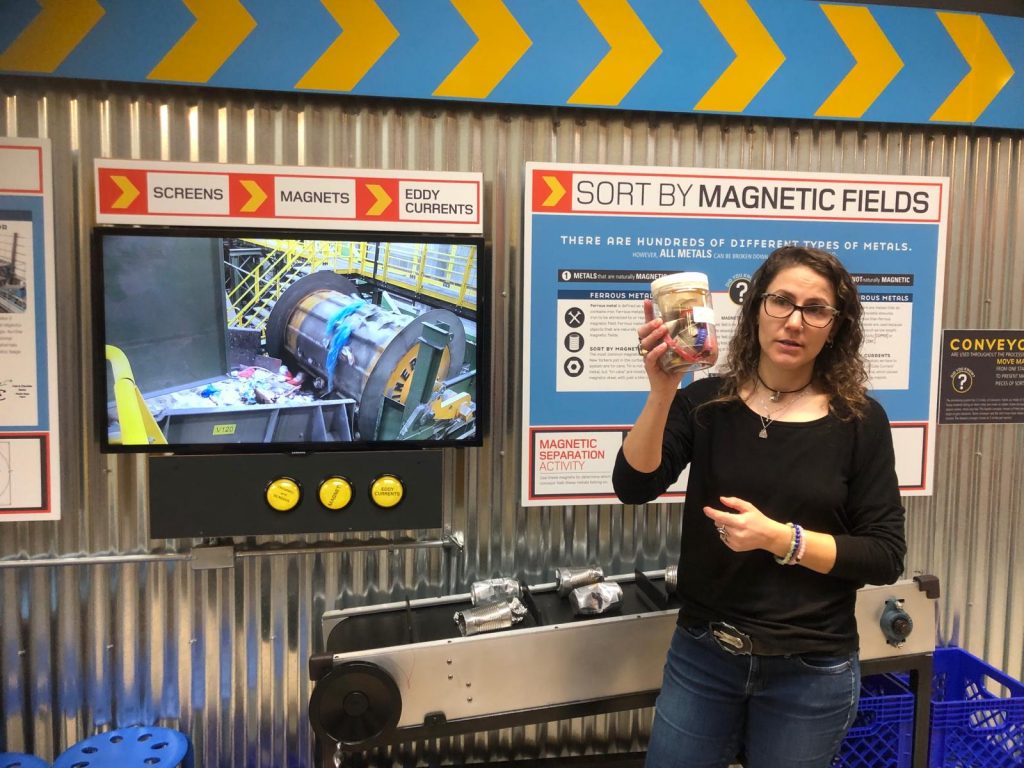
Drum Magnet: A powerful magnet that pulls all ferrous metals (metals containing iron, making them magnetic) out of the material mix, like tin cans, paint cans, and even wire hangers. Ferrous metals are then sent to the trommel where they are sorted by size. (Remember to kindly remove metal caps from plastic or glass bottles so they may be recovered).
Optical scanners: Near-infrared light is used to identify different types of materials like rigid plastics (PET, HDPE, PP), cartons, and plastic bags. When the screener finds what it has been programmed to look for, it cues an air jet that shoots the item onto another conveyor belt.
Eddy Current Separator: A “reverse magnet” that charges non-magnetic metals and then repels them onto another conveyor belt. The most common items sorted here are aluminum cans and foil, but they could also include copper and brass. (In NYC, any item that is at least 50% metal can be recycled).
Quality control specialists: Their system is mostly automated, but humans will give many material lines one final check. QC specialists remove materials that do not belong and recover materials of value before sorted items head to a bunker. (There are about 12 QC specialists working during each shift).
Bunkers: After materials are sorted, they end up in one of the bunkers. When the bunker is full, one of its doors will open, and the materials are fed into one of the balers.
Balers: Compress sorted materials into blocks, ready for transport to companies that will make the materials into new things.

The residents play a pivotal role in this ecosystem of waste management. Each household is responsible for proper waste disposal, with distinct bins designated for recyclables, organic waste, and general trash. The blue bins accommodate metals, glass, cartons, and rigid plastics, while the green bins cater to mixed paper and cardboard materials. However, the grey bin, reserved for non-recyclable items, remains a cause for concern. Despite concerted efforts to promote recycling and waste reduction, significant challenges persist, with a portion of waste inevitably destined for landfills. It’s crucial for residents to understand that proper waste sorting not only facilitates recycling but also minimizes the strain on landfill space. My team and I from Columbia University practically realized this urgency during our field study.

What is even more shocking and heartbreaking is the sheer volume of waste generated by NYC in just half a day – the room below contains only the waste generated in that short span, amounting to hundreds of tons.

Encouragingly, efforts are underway to address these issues, with initiatives like Columbia University’s comprehensive waste management program as a sustainability beacon.
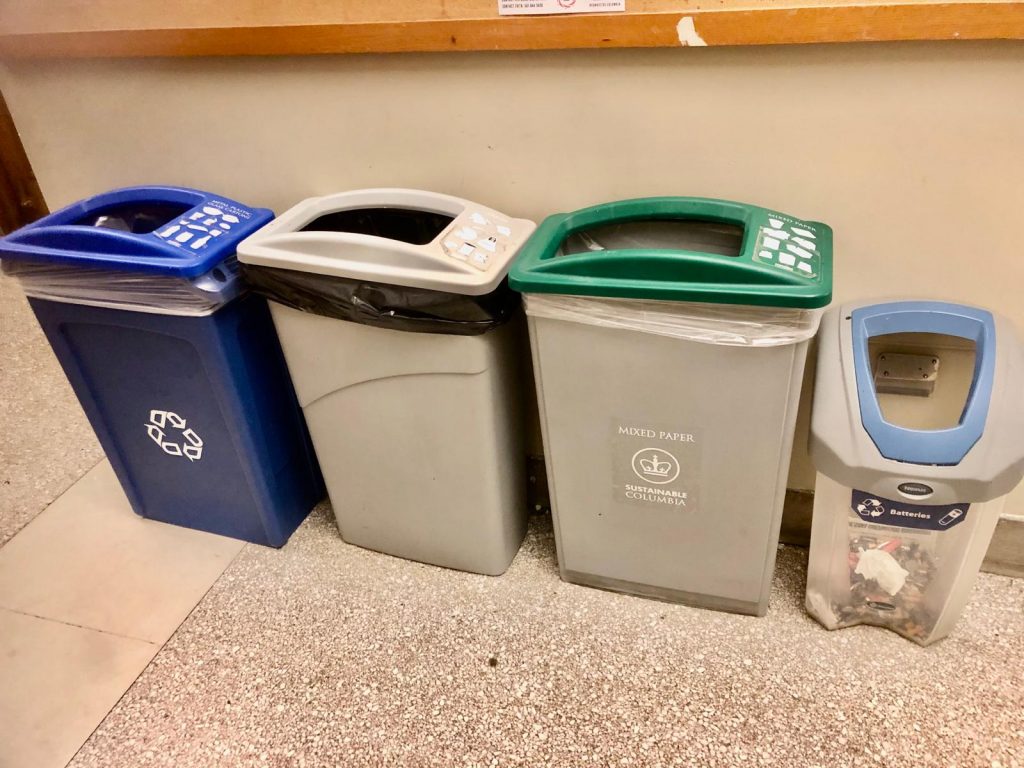
Columbia University has implemented a multi-faceted approach to waste management, encompassing the segregation of recyclables, organics, and general waste across its campus. As you can see below, Columbia aims to reduce contamination and increase recycling rates by providing designated bins for each waste stream and promoting awareness among students and staff.
One notable aspect of Columbia’s initiatives is the introduction of organic waste bins, acknowledging the importance of diverting food waste from landfills. Additionally, the university has taken proactive measures to encourage responsible disposal of hazardous materials, such as batteries, further highlighting its commitment to environmental stewardship. The picture below covers the four types of bins maintained on the campus, including a separate small one for batteries.
Beyond waste segregation, Columbia Dining has spearheaded initiatives to promote sustainability in its operations. From utilizing post-consumer recycled content in napkins to transitioning to compostable paper straws and plant-based cups, the dining program sets a precedent for eco-conscious practices. The estimated 6.6 million napkins used annually in Columbia Dining are made of 100% post-consumer recycled content. 2018 Columbia Dining transitioned to 100% compostable paper straws and plant-based cold cups. They recycle more than one million bottles and cans and more than 150,000 cardboard boxes each year.
Moreover, the provision of reusable eco-containers underscores a commitment to reducing single-use plastics and minimizing waste generation.
As we navigate the complexities of waste management in urban environments, it’s essential for individuals and institutions alike to embrace sustainable practices. By adhering to proper waste sorting guidelines, minimizing the consumption of non-recyclable materials, and supporting initiatives promoting environmental stewardship, we can collectively work towards a cleaner, greener future for future generations.
~ Manasa Prabhakar
What a well-written article! Thank you for sharing awareness of what is currently being done in NYC and Columbia. It’s delightful to know our university is leading by example in the realm of sustainability and how we can continue to progress further as an institution and as individuals toward that mission.
Thank you, Gabby! Indeed, Columbia strives in all ways possible.