Address: 4711 47th Ave, Woodside, NY 11377
Subway: 46th St. (7)
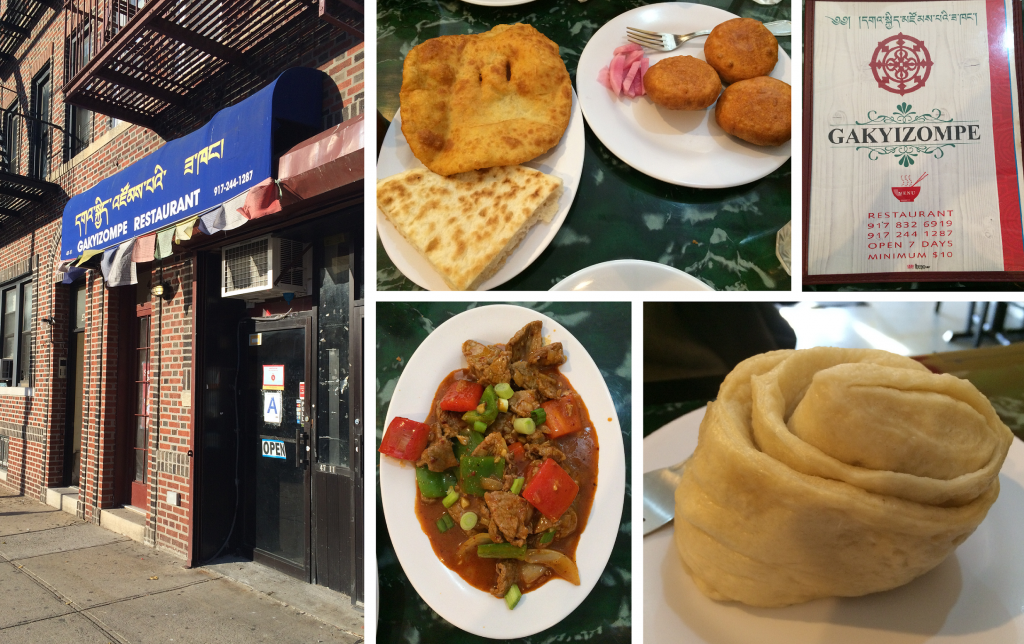
 Several blocks from the Tibetan Dumpling Cafe (TDC) is Gakyizompe, whose inconspicuous entrance is also marked by a string of fluttering prayer flags.
Walking into the restaurant, we found ourselves to be the only customers, which was a first (there was a man who I thought was a customer but later realized was probably the one responsible for making deliveries).
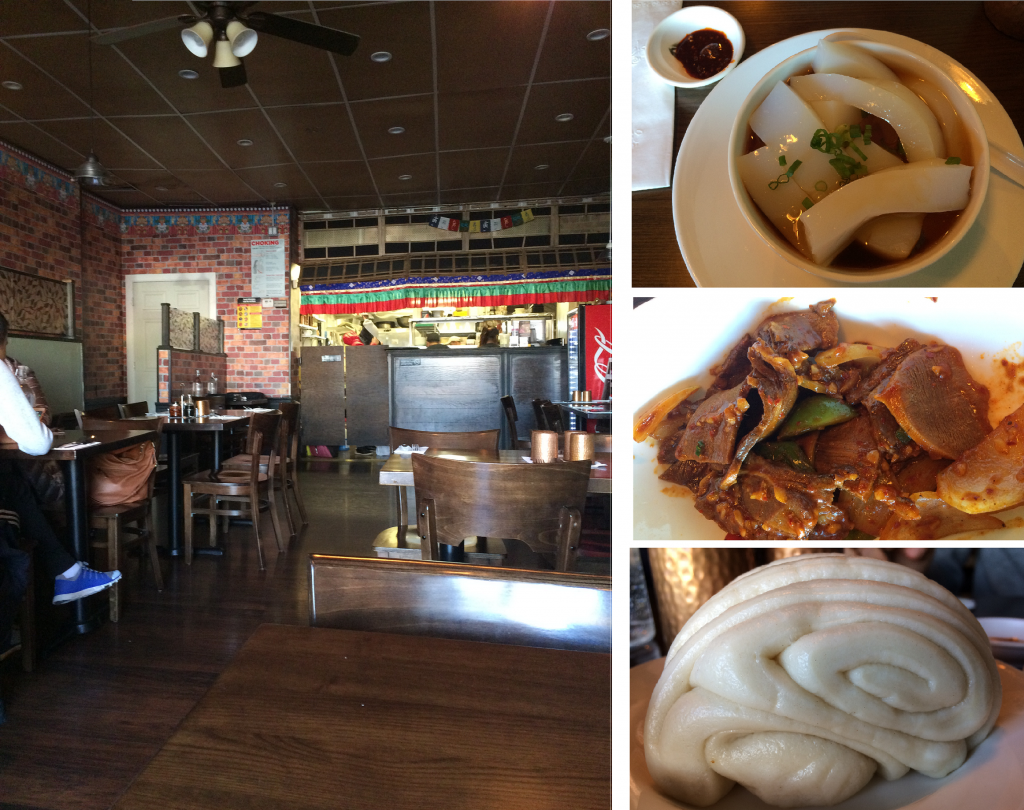
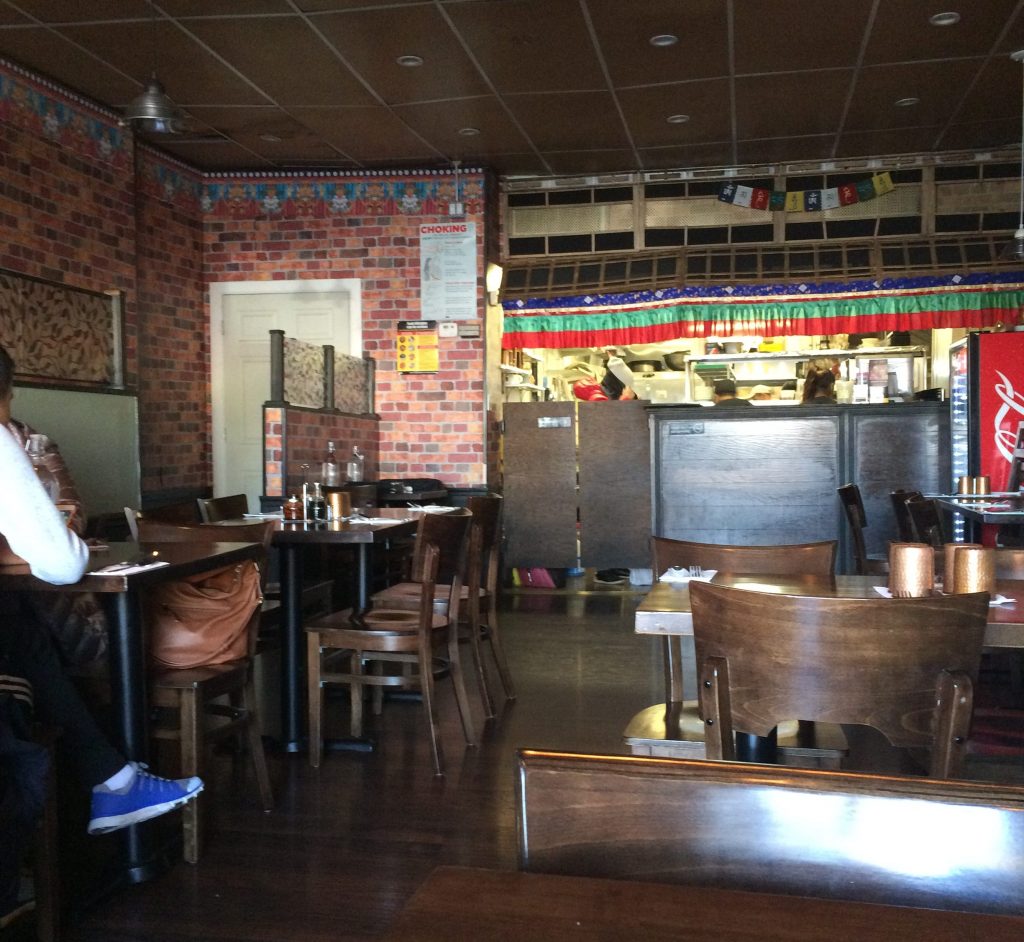
Gakyizompe was spacious enough to have three rows of seating: tables for two against the walls on the left and right and tables for four in the middle. The waitress seated us at a table for four. I estimated the size of the place to be about twice that of Lhasa Fast Food (LFF). The kitchen was more closed-off than the other Tibetan restaurants’ kitchens, but there was still a window looking into the cooking space. An old TV in the back corner played videos of traditional dances to what I could only guess was Tibetan music. All-in-all, the setting seemed to be between that of LFF and TDC–minimal in design and tableware but well-lit and capacious.
Knowing my tendency to indecisive, I had looked up Gakyizompe’s menu while we were at TDC and had a good idea of what to get. I ordered the shabaley (sha-bah-lay) and debated between the three different types of bhagleps (bahg-lepp) offered. The waitress, whose English was the best out of all the waitresses we’ve spoken with so far, explained that the yooshang bhaglep and the normal bhaglep on the menu are the same–akin to certain Indian flatbreads–and the amdo bhaglep is a more fried version of the other two. We chose to get one of each.
The shabaley came as five piping hot beef and onion patties in a fried dough casing. While I liked the initial crunch of the crust, I found the dough exterior to be a bit too chewy. Beyond the dough, the beef filling was good as it was but I liked it better when I spooned some soy sauce over it.

The two bhagleps were quite distinct in look, texture, and taste. The amdo bhaglep (top left) is much more fried and crispy than the yooshang bhaglep (bottom left), though the interior is quite soft. Because it was fried, it did have a bit more of a flavor to it than the normal bhaglep. On the other hand, the yooshang bhaglep, or just bhaglep, was very lightly pan-fried. The inside was very soft and porous.
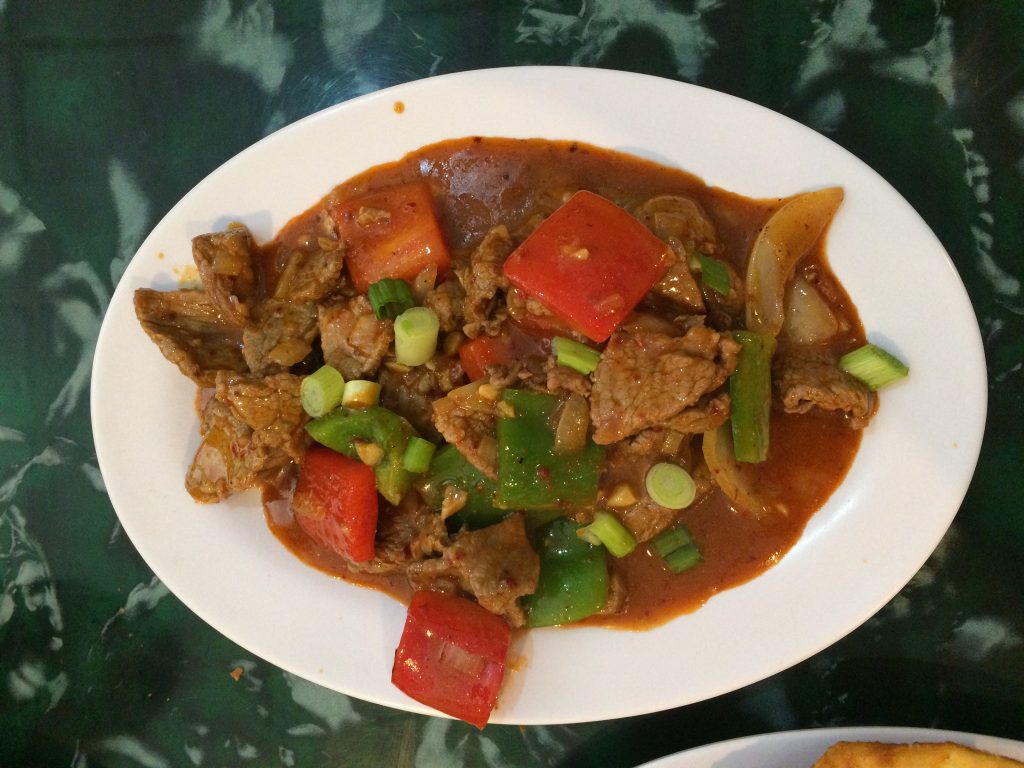
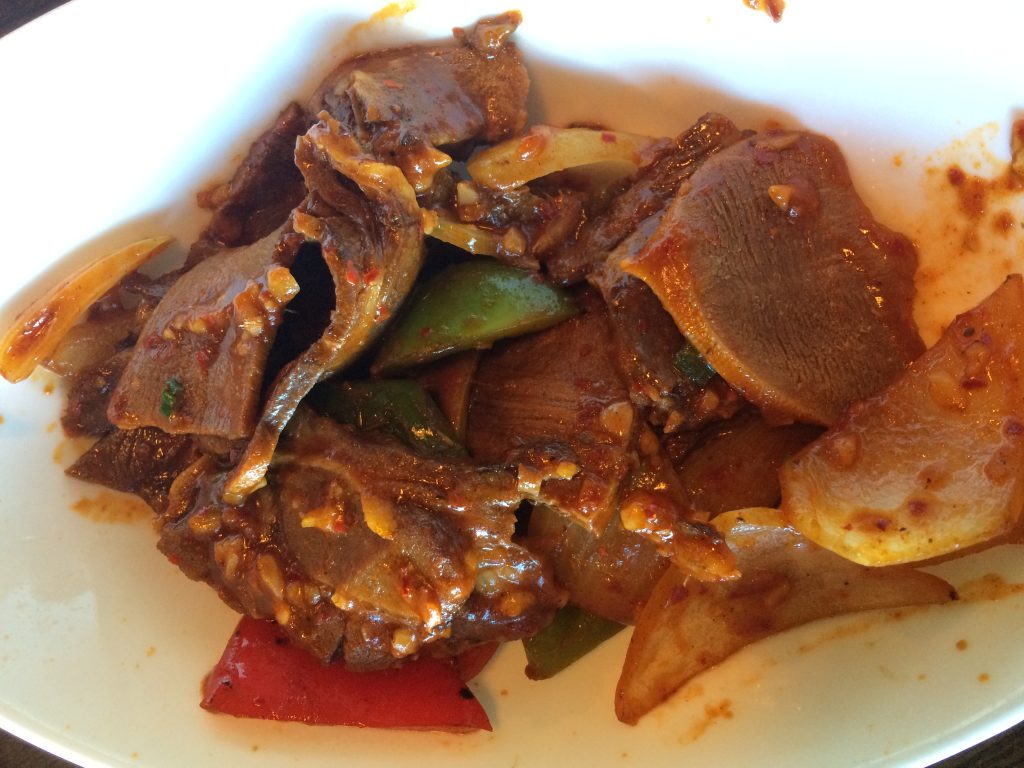
The bhagleps were a bit too plain to eat by themselves, so we ordered the beef chili to go with it. The “chili” part of the dish’s name is quite misleading because it turned out to be unlike any American chili: the beef was sliced and sauteed with onions, red and green bell peppers in a reddish-orange sauce (wow, Tibetans really like the onion-red bell pepper-green bell pepper combination, this is the the fourth dish we’ve order that has had all three of those together). This sauce wasn’t as recognizable as the one from TDC…I guessed that it was tomato-based, but I could be very wrong. All-in-all, the dish was satisfying and the bhagleps sopped up the sauce well.
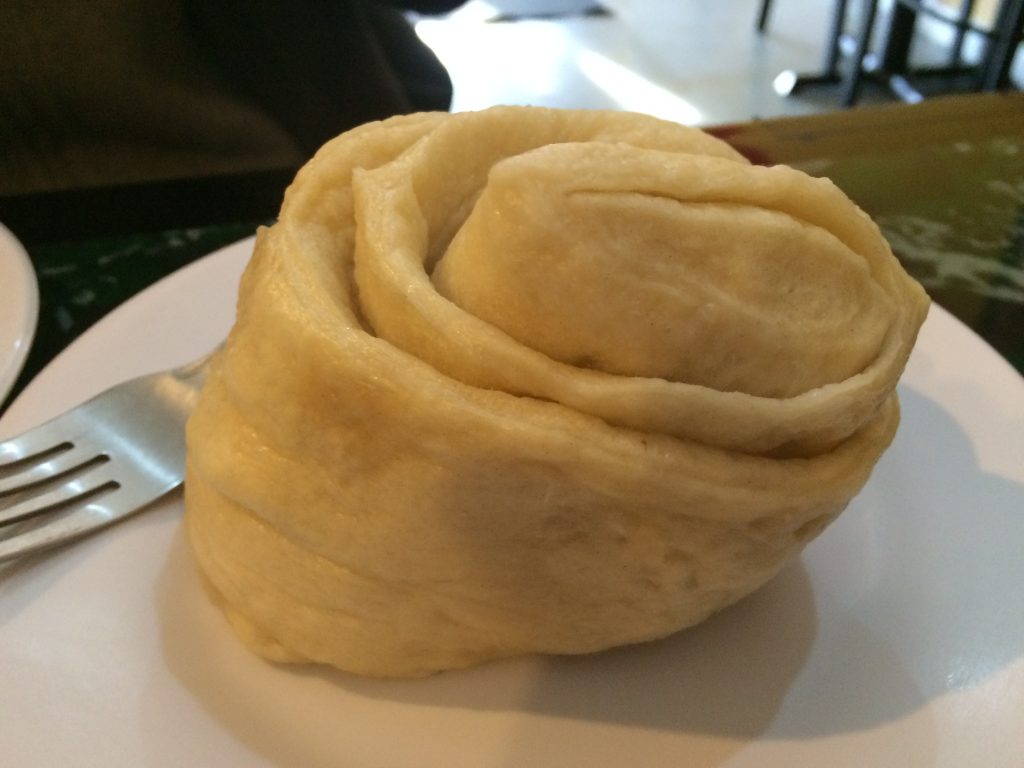
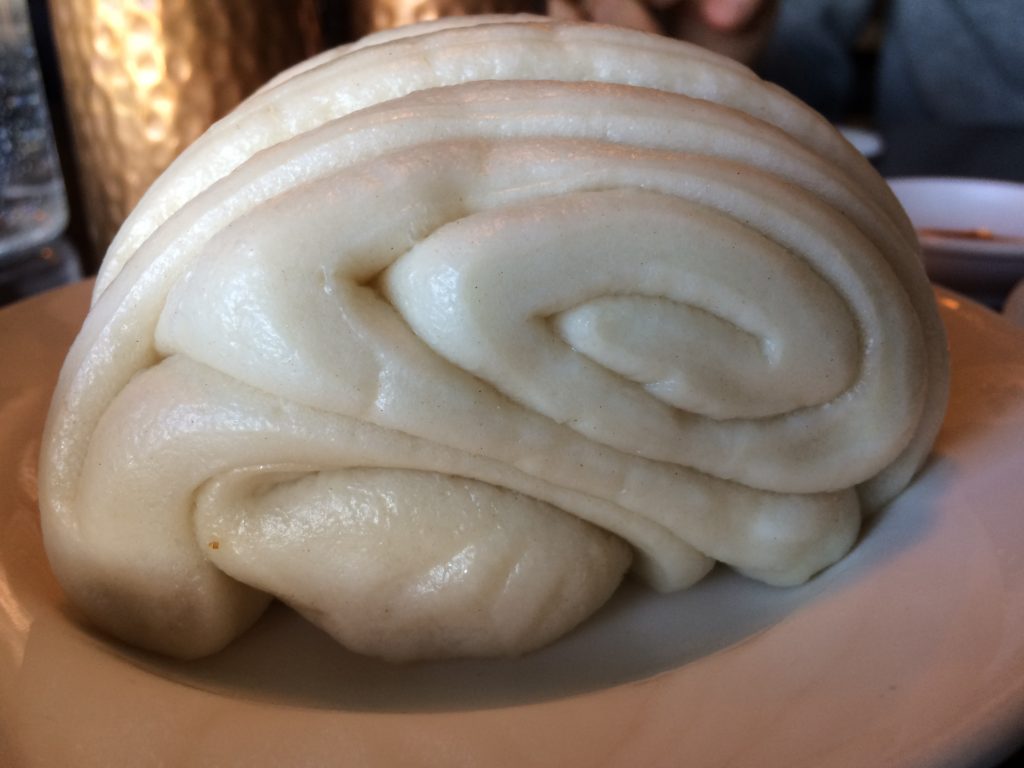
The beef chili also came with a tingmo. This tingmo looked very different from the one we had at TDC because it was shaped more like a roll and had a very homemade look to it. The look and texture of the dough reminded me of the homemade steamed buns and rolls my parents make–they would always complain about how the buns’ surfaces were indented and not as smooth as those of the store-bought ones.
When I asked for the check, I learned that if I paid in cash (as opposed to credit card), I wouldn’t have to pay tax. Luckily, I had a couple bills on me.
With half a tingmo wrapped up to go, we stepped back out into the cold and walked back to the subway.

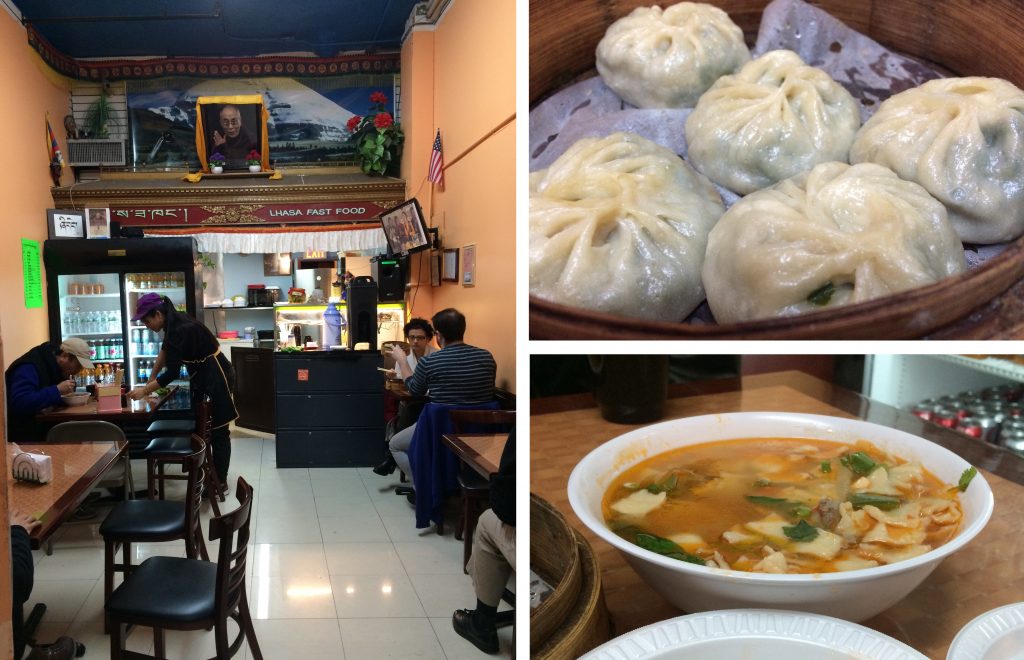
 The first thing that grabbed my attention inside was a picture of the Dalai Lama placed on a false roof above the kitchen. In the picture, the Dalai Lama looked like he was just about to wave and say hello. His expression was so enthusiastic that I couldn’t help but smile before looking down to search for a place to sit. There were no empty tables, so we joined a lady who seemed to be finishing her meal. I knew I wanted to try the beef momos, but wasn’t sure what else to get. When the lone waitress came by to take our order, I asked her in Chinese what their most popular dishes were. Through pointing and some broken Chinese, she told me that the momos and thenthuk were what people usually ordered. Beef and chives momos and thenthuk it was.
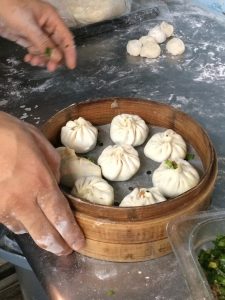 some sort of meat, chives, or a mixture of the two. Eight momos are places in a bamboo steamer basket and steamed for eight minutes.
