Columbia

Archive for highlights – Page 2

Job Opportunity: Social Data Initiative Program Officer, Social Science Research Council

The Social Science Research Council seeks a Program Officer for the Social Data Initiative (SDI). This position will report to the SDI Program Director and will manage one of the SSRC’s newest and largest programs: the Social Media and Democracy Research Grant program.

The Social Science Research Council (SSRC) is an independent, international, nonprofit organization devoted to the advancement of interdisciplinary research in the social sciences through a wide variety of workshops and conferences, fellowships and grants, summer training institutes, scholarly exchanges, research, and publications.

The longstanding study of media effects on democracy has taken on new resonance with the rise of social media platforms, the dramatic change in the business model of traditional news media, the influence of algorithms on advertising, and increasingly globalized and interconnected communications. The Social Data Initiative (SDI) at the SSRC was launched to examine the impact of social media on society, explore questions about the responsible use of social network data, generate insights to inform policy at the intersection of media, technology, and democracy, and advance new avenues for future research. The SSRC, as a respected and nonpartisan organization, is acting as a trusted broker to bridge new collaborations between industry and academia in partnership with a consortium of foundations, and will administer a number of grants on a rolling basis.

This is a one year appointment, with potential for renewal contingent on funding, and applicants must have a PhD in one of the social sciences or a closely related field. Annual salary will be commensurate with experience, and comprehensive benefits are included.

The deadline for applications is July 25, 2018. For more information and to apply, please visit the job website.

Job Opportunity: Postdoctoral Position, Bureau des Longitudes

A one year position studying scientific instruments the Bureau des Longitudes (1795-1932): social and material history is accepting applications.

Responsibilities include:

1) General study of scientific instruments designed, manufactured, distributed under the direction of the Bureau des Longitudes between 1795 and 1932. This study will be based on the exploitation of the minutes of the transcripts of that institution, as well as research in various Archives (Conservatoire National des Arts et Metiers, Paris Observatory, Hydrographic and Oceanographic Service of the Navy, National Geographic Institute, and forestry, etc.).

2) Targeted study of one or two musicals representative of the Office of Longitudes. This will replenish the finest possible physical and social history of these instruments focusing particularly on their manufacturers, their uses and adaptations by actors and/or diverse communities, and their diffusion.

3) Develop recovery activities around the scientific instruments of the Bureau des Longitudes.

This post-doctorate will be part of the ANR project “The Bureau des Longitudes (1795-1932): the French Revolution to the Third Republic.”  The successful candidate will work closely with researchers of the project.

Prerequisites:

– Hold a doctorate in history of science and technology (mathematical and astronomical sciences 19th – 20th centuries);

– Have a good knowledge and taste of archival research;

– Master the digital tools (spreadsheets, databases, etc.);

– Have a good command of the French language.

Applications must include a letter of motivation, a CV, and 1-2 significant publication samples. Deadline for applications is 20 September 2018. After the selection of records, a personal interview will be held with the candidates (the interview will take place at a distance). The start date is 1 January 2019.

Application files must be sent to [email protected] and [email protected].

Books by Founding Director Pamela Smith Reissued

Pamela Smith’s The Body of the Artisan: Art and Experience in the Scientific Revolution has just been reissued in paperback and electronic editions. Her The Business of Alchemy: Science and Culture in the Holy Roman Empire was also recently published in a second paperback and electronic edition with a new preface by the author.

Pamela Smith is the Founding Director of the Center for Science and Society as well as the Seth Low Professor of History.

Research Cluster Spotlight: Science and Subjectivity

2017-2018 has been a busy and successful academic year for the Center for Science and Society. This summer, we are producing a short newsletter series to celebrate and share all that we have accomplished! We hope you enjoyed our first issue on seed grants and our news article about Awardee Ben Mylius. Today, we are highlighting the work of the Research Cluster for Science and Subjectivity (RCSS), one of the research clusters that comprise the heart of the Center.  

Below, RCCS undergraduate students Neci Whye (Columbia College ’18) and Ewoma Ogbaudu (Columbia College ’18) share their experience creating a course entitled Marginalization in Medicine: A Practical Understanding of the Implications of Race on Health.


The Course

This semester we were blessed with the opportunity to expand the Sunday Dinner Series into much more. While this has been in the works for the past year and a half, this semester we finally saw the Marginalization in Medicine course and the conference of the same name come to fruition.

The course focuses on the health issues that underrepresented communities face and creates a space to facilitate and encourage discussion on how to address them. Topics include drug policy and substance abuse politics; LGBT health in communities of color; and mental health and social stigma. Over the past year, we have developed the syllabus, gone through revisions, conducted research, coordinated with Harlem community organizations, and found faculty advisors. Marginalization in Medicine: A Practical Understanding of the Implications of Race on Health is currently taught by Dr. Rishi Goyal in the Medicine, Literature, and Society major of at the Institute for Comparative Literature and Society. Watching this course come to life has been one of the most fulfilling experiences I’ve had, and would not have been possible without the guidance and support of Dr. Pollack and the Center for Science and Society.

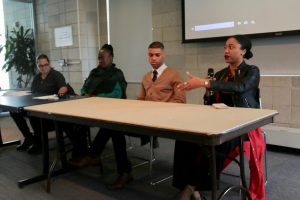
Community organization panel with participants from Harlem United, Harlem Arts Alliance, Gay Health Advocacy Project, and The Corner Project.

Our course is unique for several reasons. It follows in the footsteps of a previous course coming out of the Research Cluster for Science and Subjectivity: Life at the End of Life. We found it necessary that the course includes a service learning component, requiring students to go out into the community and volunteer so they can benefit from practical work while applying the concepts learned in class to benefit the Harlem community. This initiative has allowed us to partner with incredible community organizations such as the Harlem Family Institute, which aims to improve the mental health of black and brown kids; Hip-Hop Public Health, which teaches kids in Harlem about a number of health topics; and Holyrood Episcopal Church/Iglesia Santa Cruz which is a sanctuary church that provides support for those in immediate danger of deportation.

Our students are working to connect people of color in the Harlem community with health professionals and resources to improve their health in hopes of building the community’s trust in health professionals and in us as Columbia students. This aspect is particularly important to me considering the lack of trust communities of color have in the healthcare system. Black patients consistently receive insufficient and oftentimes negligent treatment in comparison to their white counterparts. Repeated histories of black exploitation and experimentation within the healthcare system are supported by common misconceptions that black people do not experience pain. While we discuss these issues in class, the volunteering component provides students the agency to practically engage with and address them within the greater Harlem community.

Additionally, this course is significant in that we as students were able to advocate for and fill a spot we thought was missing in our education. We started our work because we realized these conversations were not being had in the pre-medical and science curriculums. The feedback from other students has been overwhelmingly positive thus far and we look forward to finishing the semester strong!

The Conference

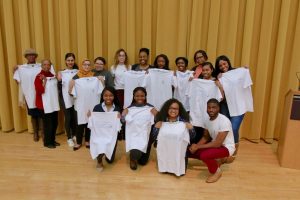
Conference attendees with the “Marginalization in Medicine” T-shirts after the networking mixer.

The Marginalization in Medicine Conference was an all-day conference that aimed to address the social determinants of health, facilitate engaging discussions as related to inequalities in the current healthcare system, and provide students with opportunities to establish relationships with medical school admission representatives. We also hoped to improve the opportunities for pre-medical students of color in fields where they are underrepresented. One of many ways to address these issues is through empowering students of color that are interested in becoming health professionals and increasing awareness on these topics. I believe that we were able to accomplish these goals through the conference.

We were fortunate to assemble an incredible group of people to speak for this event. Dr. Georges Benjamin, the Executive Director of the American Public Health Association, was our keynote speaker. Other guest speakers included Dr. Olajide Williams, the founder of Hip Hop Public Health, the Chief of Staff of Neurology, and the Director of Acute Services at Columbia University; Dr. Rishi Goyal, Assistant Professor of Medicine and head of the Medicine, Literature, and Society major at Columbia; Dr. Winfred Tovar, the founder of MIMSI International; and Dr. Tawandra Rowell-Cunsolo, Assistant Professor of Social Welfare Science at Columbia. Additionally, we had an overdose training workshop, medical students panel, community organization panel, dean’s admissions panel, and a panel featuring the Susan Smith McKinney Steward Medical Society.

These sessions offered student attendees diverse perspectives from various medical fields. Overall, the conference successfully met its goals, indicated by the overwhelmingly positive reviews received. 80% of students who attended and filled out the post-conference survey said they had not previously attended a conference of this nature that addressed these topics. All participants who filled out the survey found the conference necessary. We have included some quotes from attendees below:

“I really enjoyed the Overdose Intervention Training, I thought it was nice that it was more interactive than a traditional panel but just as informative even beyond the technical details we learned.

“It was very useful and inspiring for me, being a woman and a minority. I was inspired to continue along my journey towards medicine and to look at the field from a public health perspective.”

“I took a lot away from it, I hope to work with marginalized communities and the conference showed me ways to do that. For example, with Dr. Williams I saw how he was able to blend two passions of his together to positively impact his community. Also, the conference allowed for moments of self- reflection and to learn how the institutions around us also contribute to these disparities in medicine.”

We would like to take this time to thank everyone who made these two incredible projects come to life. It would not have been possible without Dr. Pollack, Dr. Goyal, Dr. Aiken, the Research Cluster for Science and Subjectivity, and the Center for Science and Society. We are eternally grateful to you all for allowing us to realize our dreams.


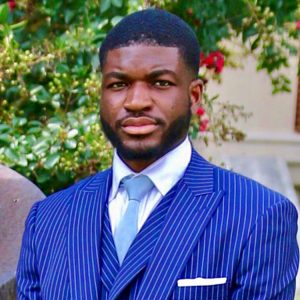
Ewoma Ogbaudu is a graduating senior studying Columbia College studying biology. With Neci, he has addressed marginalization in medicine through creating a class, hosting a dinner series, and a student seminar. Ewoma plans to attend medical school and pursue a master’s in public health.


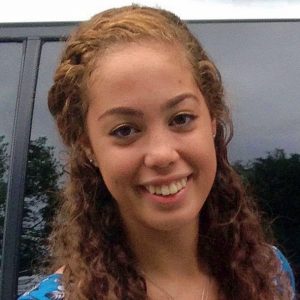
Neci Whye is a graduating senior in Columbia College studying biology and art history. She is passionate about addressing healthcare disparities especially those facing the black community. She aspires to work in marginalized communities as an emergency medicine physician.

Interested in supporting our research clusters? Visit our donation page or feel free to contact us.

Presidential Scholar Matteo Farinella Published in American Scientist

Presidential Scholar in Society and Neuroscience Matteo Farinella wrote an article for the July-August 2018 issue of American Scientist. Read “Science Comics’ Super Powers” to learn about the past and present of comics as visual language in science.

PSSN Scholar Andrew Goldman Publishes Paper and Featured in Columbia News

Presidential Scholar in Society and Neuroscience Andrew Goldman has been published in the Psychology of Music journal. Alongside co-authors Tyreek Jackson (St. John’s University) and Paul Sajda (Columbia University), Andrew published “Improvisation experience predicts how musicians categorize musical structures.” Dr. Sajda also serves as one of Andrew’s faculty mentors.

With the help of PSSN Scholar Lan Li, Andrew created a short video to help explain his research on the neuroscience behind musical improvisation.

Columbia News also profiled Andrew’s study in a July 2018 article.

Seed Grant Spotlight: Ben Mylius

The Center for Science and Society is pleased to announce its 2018 Seed Grant recipients. Projects were awarded funding to support their proposals for research, events, conferences, and workshops on interdisciplinary topics in Science and Society. This year, the Center has awarded funding to seven interdisciplinary projects led by faculty from a number of departments at Columbia University. Learn more below about Ben Mylius – a doctoral student in the Political Theory program at Columbia. He was awarded a seed grant in 2017 and a follow-up grant in 2018 to organize a student-led discussion group entitled Ecosalon!


Project Inspiration
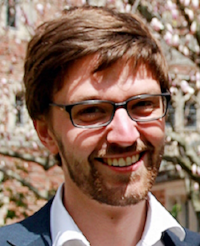
Seed Grant Awardee Ben Mylius

Ben Mylius

Fittingly enough, the challenge of interdisciplinary ecological work first hit me in the middle of a maze. More specifically, I was about three days into a fieldwork trip in the Maze District of Canyonlands National Park for a Yale Project on the Anthropocene (this is a proposed epoch dating from the commencement of significant human impact on the Earth’s geology and ecosystems). I was fresh out of law school, trying to choose a discipline for a PhD and exploring the area with a team made up of a soil ecologist, an environmental historian, a campaigner, a lawyer, and a filmmaker.

We were trying to get a handle on how our various disciplines “saw” the place and its many layers. Our conversations spanned the recent history of cowboys and ranchers, the older histories of Native Americans, the ecologies and geographies of the coyotes, jays, pinon pines, and lichens, not to mention the incomprehensibly ancient geological strata. But what struck me most was how we created a space to meet each other’s worldviews like I had never had before.

Canyonlands National Park

Canyonlands National Park

When I got to Columbia, I set out to find a group for similar experiences. I came across a range of wonderful people working as individuals. But gradually I realized that the majority of the opportunities available for students to come together were structured in very specific and formal ways. As graduate students, the places we could share our work were heavily weighted towards formal conferences presentations, with all the restrictions this entails. There wasn’t much opportunity for us to “learn each other’s languages” in the kind of context free from fear and judgment that I had felt with my group in Canyonlands.

Of course, those formal opportunities are crucial for our scholarly and professional development and I am grateful that we have them. But we also need a place for fellowship across our many disciplines, which remind us of the spirit of curiosity and excitement that got us into academia in the first place. Especially in the context of ecological issues, where no one discipline covers the field, we need a place for warm and open intellectual exchange which allows people at an early stage of their careers to feel their way into new disciplines and ways of thinking without fear of judgment, humiliation, or failure. So, after attending several Center events, I thought of convening our Ecosalon.

The Project

We meet one evening a month, over tasty New York pizza, for a free-ranging conversation on ecological themes. Conservation biologists, architects, political scientists, environmental anthropologists, immunologist, art historians, and several in between have joined our crew.

The most important components of our conversations are the intellectual wandering and fun. We have covered some fascinating topics. To give just one example, one of our anthropologists suggested our group read a text on gender and rivers, written in a dense, allusive form. We started discussing its contents until one of the scientists in the group put up his hand and asked, sincere but bewildered, what on earth the anthropological text was supposed to be communicating! So we jumped into a conversation about the use of texts in different disciplines. We discovered that for scientists, texts ideally seem “invisible” and are read fast for the substance of their knowledge. Meanwhile, anthropologists saw reading texts as a process, with the experience of grappling with the text at least as vital as the “thesis” of the text itself.

One of the things I like most about our conversations is being unable to predict their contours in advance. When I speak to colleagues in my home discipline (political theory and law), I can predict the kinds of things people might say and the ways that they might say them. At Ecosalon, that all goes out the window. And so we get back to the practice of interdisciplinary conversation – the negotiations, confusions, laughter, and curiosity – that is essential to longer-term collaborations.

All of these exchanges have powerful effects. I’ve noticed them taking root in my own work. My research is focused on the ways that key concepts in political theory (freedom, sovereignty, justice), are struggling to deal with things like climate change because they’re based on outdated ideas about humans being ‘separate’ from nature. From thinking I could write a dissertation that explored these things using only literature from the humanities and philosophy, I’ve realized I’ll need to find a way to bring in the natural science on climate, biodiversity, population and the Anthropocene. Doing that will be the only way to communicate across the disciplinary divides I’ve encountered, and do justice to the powerful work of my scientist colleagues and friends. From writing in an abstract philosophical idiom, I’ve come to see I’ll need to share my work through stories, so it reaches people beyond my own specialization. And from working as a “lone wolf,” stuck at home in my office, I’ve started connecting to others at much earlier stages in projects, and am excited to see how their input will take my research outlines in unexpected directions.

Speaking of collaborations, it has been exciting to see the seeds of several different projects take root in recent meetings. One of our political scientists is in talks with our evolutionary biologist about Geographic Information Systems (GIS) mapping and satellite data techniques for population measuring. One of our conservation biologists has worked with one of our journalists on a piece about conservation and environmental policy here in the States. Several of our group have started working alongside our neuroscientist/comics writer on science communication. And I’ve gotten excited, myself, to collaborate with the entire group and the Columbia Digital Storytelling Lab on a project on climate and narratives.

Impact
Public Philosophy Network's Logo

Ben spoke at the PPN’ 2018 conference.

I am incredibly grateful to CSS for the opportunities they’ve given us with their seed grant funding program. They were willing to take a gamble on a project that measured success and impact in unconventional ways, a gamble which – from my perspective, at least! – has paid off in spades. In February, I traveled to the Public Philosophy Network’s 2018 conference to present “Thinking Ecologically: The Columbia Ecosalon Experiment,” which explored the projects and experiences that have resulted from our monthly meetings. The various projects we’re now working on is one thing, but the biggest impact of all, from my point of view, is that each of us now has a network of others from across the university to draw on as future questions arise. These are people we wouldn’t have met in any other way, and in disciplines we don’t know well ourselves. Through Ecosalon, we’ve been able to connect them and give them the sense of community they’ll need to reach out to one another. We’ve been able to give people the chance to ‘be experts’ in their own fields, amongst what is effectively a highly-educated but (in their field) lay audience. And we’ve been able to create solidarity amongst our members, by reminding them that, daunting as ecological questions are, there are thinkers far beyond their own horizons who are out and exploring – and who are willing to join them on the tentative, step-by-step work of trying to make an impact, in the university and beyond.

I’m looking forward to seeing what the next year or two might bring: an exhibition? A conference? A podcast? A proposal for a co-taught course? And I’m excited to welcome other graduate students, postdocs, and other Columbia affiliates to our ongoing conversations.

If you’re keen to join, we’d love to hear from you!

Ben Mylius


Ben ([email protected]) is a doctoral student in the Political Theory program at Columbia looking at the ways that key concepts in political theory (freedom, sovereignty, justice), are struggling to deal with things like climate change. You can learn more about his research on his personal website.

Interested in supporting Ben or our other fantastic seed grant awardees? Visit our donation page or feel free to contact us.

Job Opportunity: Fellowship Program for Scientists and Artists at the STAGE Lab, University of Chicago

STAGE is seeking up to six fellows to work collaboratively on the creation and development of its original theatrical works inspired by science and technology. This opportunity is open to U.S. citizens and permanent residents who have completed undergraduate or graduate degrees, preferably within the last two years. Fellows receive a stipend, and while there is no guarantee, typically participate for one-to-two years, subject to satisfactory performance and in compliance with University policies.

Ideally, we are looking for people with hybrid interests and skills, i.e., scientists who have had some theatre experience and/or theatre people with experience/a strong interest in science and/or technology. We want people who are excited about our work process, as well as people who share our philosophy and are able to honestly assess whether or not they do so.

For application details and to apply, please visit the fellowship website.

Application review will commence on June 1, 2018 and applications will be considered in the order in which they are received. The deadline for applying for the fall 2018 fellowships is July 15, 2018.

Please email at [email protected] with any questions.

Call for Applications: Center for Science and Society Public Outreach Grants

ELIGIBILITY: Projects must include a (co) organizer who is a full-time employee at Columbia University, Teachers College and Barnard College (e.g, faculty, department administrator, postdoc, researcher).

AMOUNT: Proposals may request up to $10,000; however, most grants will be in the range of $2,000 to $5,000.

DEADLINE: Applications should be submitted no later than June 8, 2018.

PROPOSAL INSTRUCTIONS: Available as PDF here

Center for Science and Society Public Outreach Grants

The Center for Science and Society at Columbia University is issuing a call for proposals for outreach, service, and other projects that:

1. Help boost public understanding of issues involving society and science, technology, and medicine;
2. Teach K-12 students about current issues in science and society; or
3. Work with communities to respond to issues that affect or are affected by science.

The Center for Science and Society (CSS) grew out of a conviction that the world’s most pressing and increasingly complex issues – climate change, public health, food security, and gender inequality to name just a few – can no longer be addressed through the lens of just one discipline but require an interdisciplinary and cross-sector approach to problem-solving. The Center’s mission is therefore to create a new paradigm of collaborative inquiry between the natural and social sciences and the humanities. In addition to pursuing our mission through our research clusters, seed grants, and academic conferences, CSS is committed to furthering public understanding about the role of science in society.

Submitting Proposals

Proposals must include the following:

1. 1-2 page written summary of project that outlines the scope of work and how the project addresses issues at the intersection of science and society.
2. Budget – please note that grants can only support direct costs. Proposals may request up to $10,000; however, most grants will be in the range of $2,000 to $5,000.
3. C.V. and contact information for a Columbia University affiliate who will be a primary (co)organizer of the project. The affiliate must be a full-time employee at Columbia University, Teachers College and Barnard College (e.g, faculty, department administrator, postdoc, researcher).

Please send proposals as a single PDF document by 5:00 p.m. EST on Friday, June 8, 2018 to Roshana Nabi, CSS Project Manager ([email protected]) with “CSS Public Outreach Grants” in the subject line of the email. Notifications about awards will be issued by June 30, 2018.

Conditions of the award: Funds must be expended by June 30, 2019. Grant recipients must provide a final report on project activities, including a budget report.

For more information, please contact CSS Project Manager Roshana Nabi at [email protected].

Center for New Narratives in Philosophy’s Christia Mercer Awarded Radcliffe Fellowship

Center for New Narratives in Philosophy Director Christia Mercer (who also serves as the Gustave M. Berne Professor of Philosophy and on the Center for Science and Society’s Advisory Board) has been awarded a fellowship at the Radcliffe Institute for Advanced Study at Harvard University.

As the 2018–2019 Mildred Londa Weisman Fellow, Professor Mercer will pursue an individual project in a community dedicated to exploration and inquiry at Harvard’s Institute for Advanced Study, titled “Feeling the Way to Truth: Women, Reason, and the Development of Modern Philosophy.”

For more information, please visit CNNP’s website.


@ 2018 The Center of Science and Society at Columbia University
| Contact Us | Non-Discrimination | |