Columbia

Author Archive for Melinda Miller – Page 4

Fellowship/Postdoc Opportunities at the Chemical Heritage Foundation

The Chemical Heritage Foundation (CHF) in Philadelphia, PA (USA) is excited to announce three openings for projects in the area of the history of health, medicine, and disease within CHF’s Institute for Research.

  1. Research Fellow: Institutional Histories of Medicine and Biosciences
  2. Research Fellow: Scientists with Disabilities Oral History Project
  3. Public History Fellow:  Clinical Medicine in the 20th Century

Each position is part of a specified project with limited duration funding and needed project outcomes. All offer opportunities for work, collaboration, and training with other departments at CHF (museum, oral history, applied history, and outreach and interpretation). Applications must be sent individually for each open position as specific requirements and duties vary. All Research Fellows will join a thriving research community developing new tools for science studies through oral history and applied history and emerging research topics in materials and culture, health and disease, instrumentation, innovation and regulation, and experiences of minorities in science.

Review of applications will begin immediately in January 2016. The positions will remain open until filled.


1)  Research Fellow: Institutional Histories of Medicine and Biosciences

The Chemical Heritage Foundation (CHF) in Philadelphia invites applications for a Research Fellow in the Institute for Research beginning immediately and lasting until June 30, 2018. The Research Fellow will be a part of a team of researchers on the Beckman Legacy Project examining the research developing out of the five Beckman Institutes established in the 1980s to foster cutting-edge, interdisciplinary, basic research located at Caltech, the University of Illinois Urbana-Champaign, Stanford, University of California, Irvine, and City of Hope. Special emphasis will be given to research that explores the recent history of the instrumentation revolution—particularly engaging with the nature of new imaging and visualization technologies, the broad development of tools and techniques in the life sciences, and the impact of funding availability on the materiality of experimental work. This work relies on documentary evidence, oral histories, and some archival materials. Candidates should have some familiarity with methodology in recent history.

Minimum Qualifications:

  • Ph.D. degree in history or a relevant social science (including familiarity with academic and applied work in science and technology policy, science studies, and/or history of science)

Desired Qualifications:

  • Ability to carry out self-motivated and self-supervised work
  • Superior writing and communication skills as evidenced by presentations at national and/or international meetings and publications in peer-reviewed journals
  • Superior research skills, including qualitative data analysis and archival research; familiarity with oral history a significant asset
  • Knowledge of and recognition in diverse fields: science studies and history of science with a special emphasis on the recent history of medicine
  • High scientific and technical literacy and aptitude in related areas of study

Location: This position can be located in either Philadelphia at CHF or in CA near the research sites.

To apply: Please send a cover letter, CV or resume, two writing samples, and contact information for two references to: [email protected]


2)  Research Fellow: Scientists with Disabilities Oral History Project

The Center for Oral History at the Chemical Heritage Foundation is hiring one postdoctoral fellow for a two-year limited duration position focusing on scientists with disabilities.  Our goal is twofold: to conduct life-history interviews with individuals to understand better the ways in which they have navigated built environments and research structures, and the ways in which these environments and structures have changed over the last twenty-five plus years; and to build a collection of oral histories that can serve as the basis for further historical research into the lived experiences and sociotechnical framing of disability within careers in science, medicine, technology, or engineering.  The fellow should have interviewing experience, subject-area expertise, and an interest in working with and developing current CHF holdings.

Minimum Qualifications:

  • Ph.D. degree in history or a relevant social science (including familiarity with academic and applied work in science studies, history of science, and/or disability studies)
  • Interviewing experience

Desired Qualifications:

  • Ability to carry out self-motivated and self-supervised work
  • Superior writing and communication skills as evidenced by presentations at national and/or international meetings and publications in peer-reviewed journals
  • Superior research skills, including qualitative data analysis and archival research
  • Knowledge of and recognition in diverse fields: science studies and history of science with a special emphasis on disability studies
  • High scientific and technical literacy and aptitude in related areas of study

Location: This position is located in Philadelphia at the CHF offices.

To apply: Please send a cover letter, CV or resume, two writing samples, and contact information for two references to: [email protected]


3) Public History Fellow:  Clinical Medicine in the 20th Century

The Chemical Heritage Foundation (CHF) is actively recruiting for the limited duration (January 2016 – December 2018) position of Public History Fellow.  The Public History Fellow will work with internal teams in the museum and the Institute for Research to conceptualize a collection strategy for artifacts related to 20th-century clinical medicine. The Fellow will bring this strategy into practice through the development and implementation of exhibitions and public programs that bring these stories to wider audiences. The Public History Fellow will contribute to the conceptualization, project management, and installation of CHF exhibitions and interactives – both physical and digital; serve as the content researcher on exhibitions; use that research to create content for CHF’s multi media platforms; contribute to the maintenance and development of the permanent exhibition; and support the creation of opportunities for constituent engagement using artifact collections.

The ideal candidate would possess the following experience and qualifications.

  • Master’s degree in history of science, history, or related field.  Ph.D. strongly preferred.
  • Demonstrated interest and commitment to public history.
  • Strong knowledge of museum principles, concepts, methodologies, techniques, and procedures.
  • Demonstrated record of success in the interpretation and communication of artifacts for a variety of audiences.
  • Excellent written and oral communications skills, with the ability to successfully adapt to multiple audiences.
  • Strong attention to detail, high-level project and time management skills.
  • Proven ability to work on multiple projects simultaneously in a deadline-driven environment.

Location: This position is located in Philadelphia at the CHF offices.

To apply: Please send a cover letter, CV or resume, two writing samples intended for public audiences, and contact information for two references to: [email protected]
Call for Applications: Faculty Seed Grants for Interdisciplinary Projects in Society and Neuroscience

ELIGIBILITY: All full-time faculty at Columbia University and Barnard College

AMOUNT: Up to $30,000.00 for projects 1-2 years in duration

DEADLINE: February 22, 2016

PROPOSAL INSTRUCTIONS: Available as a PDF here.

The Presidential Scholars in Society and Neuroscience Program (PSSN) invites all full-time faculty at Columbia University and Barnard College to submit proposals for interdisciplinary projects that lie at the intersection of neuroscience, the humanities, and the social sciences.

Faculty Seed Grant Competition

The PSSN Program will offer annual seed/pilot grants to enable collaboration between Columbia and Barnard faculty in the humanities, arts, or social sciences, and faculty in the natural sciences whose primary focus is the empirical study of mind, brain, and behavior.  This request for proposals is open to all full-time faculty at Columbia University and Barnard College that contribute to these interdisciplinary goals.  Proposals should outline interdisciplinary research that involves either direct collaboration between neuroscientists and researchers from other disciplines, or traverses traditional disciplinary boundaries in order to investigate issues relevant to society and neuroscience. Awards will be made of up to a total of $30,000 for projects 1 – 2 years in duration. Three to five grants will be awarded each year.

Submitting Proposals

Please download the full application instructions and grant guidelines before starting your proposal. Only complete proposals will be reviewed. Please submit proposals as a single PDF document by 5:00 p.m. EST on Monday, February 22, 2016 to [email protected] with “Seed Grants for Interdisciplinary Projects in Society and Neuroscience” in the subject line of the email.

Please direct any questions to [email protected].

Call for Applications: Columbia/Barnard Research Assistant with Expertise in Programming and Design

The Making and Knowing Project, an ongoing digital history/humanities research project, seeks a Columbia or Barnard student for a part-time research assistant position. The student will help to develop, document and implement automated processes for a complex text transformation pipeline. The candidate should have experience writing complex software applications, and be familiar with object oriented programming and design patterns.

Minimum qualifications:
● COMS 1004,1006, or 1007 and COMS 3134 or 3137, or equivalent
● Scripting languages, such as Python or Ruby
● Advanced text manipulation and transforms, including regular expressions
● HTML/XHTML/XML
● Linux administration

Application Deadline Extended to January 13. Please see attached call for applications, for further details.


Dresden Summer 2016 Workshop – International Academy for the Arts

The 2016 Dresden Summer – International Academy for the Arts will take place from August 27 –  September 3, 2016.

Application Deadline: April 30, 2016.

Intended as a specialized and intensive study course this week-long summer program addresses both senior and junior museum professionals, as well as those seeking to get to know the magnificent Dresden collections from behind the scenes. The course seeks to explore topics relevant to contemporary international museum and exhibition practice; participants are invited to share ideas with colleagues from all over the world.

In 2016 , the focus for the ‘Dresden Summer – International Academy for the Arts’ will be ‘collecting’: Who collects what, when, and why? How do different approaches towards and/or different reasons for collecting affect the presentation and observation of objects? Participants will explore these topics by intensively studying the world-renowned Dresden collections through specialized guided tours, behind-the-scenes visits with experts from the conservation and curatorial departments, close examination of selected objects, expert talks and discussions. For further information, please, visit the Staatliche Kunstsammlungen Dresden website.


Making & Knowing Project Featured in Columbia Magazine

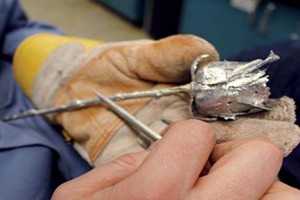
The Columbia Magazine’s Winter 2015-2016 issue features a visit to Professor Pamela Smith’s graduate class, Craft and Science:  Objects & Making in the Early Modern Period, part of the Making & Knowing Project.  Professor Smith and her students demonstrate a historical technique called “life casting,” in which they recreate plants and animals using molten metal and molds in their chemistry laboratory. The techniques that they are reproducing are derived from a 16th Century manuscript containing instructions and recipes for different crafts and items of every day use during this period. Collections of detailed notes including documentation of trial and error, such as those found in manuscript BnF Ms. Fr. 640, formed the basis of the contemporary scientific method that developed over the next few hundred years.

mandk rose


Read the full article on the Columbia Magazine website.

Call for Applications: Robert N. Butler Summer Undergraduate Internship Program

With its ten-week summer internships, the Columbia Aging Center seeks to inspire talented students to become part of a pipeline of future leaders who are able to master the challenges societies and individuals must face as the world’s citizens live longer lives. Butler Interns will have rare access to the Columbia Aging Center’s diverse scholars, an intellectual hub of the field. Over the course of the internships, students will develop skills and acquire knowledge that will benefit them in pursuit of future studies and careers. Internships will include behavioral and social science research, policy analysis on specific issues, literature reviews, data collection, engagement with local businesses and organizations, event planning, laboratory and site visits, skill workshops, and more.

Eligibility: Undergraduates enrolled in Columbia’s undergraduate schools and who as of January 8, 2016 are considered juniors or seniors.

Details: The 10-week internships begin late May 2016. Positions are roughly 20 hours per week. Internship stipend is $4,000. Please download the FAQ below.

Deadline: Applications are due by 5 p.m. (EST) on Friday, January 8, 2016. Finalists will be contacted in February 2016 for an interview. Interns will be announced by the end of March 2016.

Download full Call for Applications.
Please visit the Columbia Aging Center website for additional instructions and to apply.

NSF Seeks Candidates for Division Director of Social and Economic Sciences

The National Science Foundation (NSF) is accepting applications for the position of Division Director for the Social and Economic Sciences (SES) Division within the Directorate for Social, Behavioral, and Economic Sciences (SBE). The Division Director “provides leadership and direction for the support of research and education activities that develop and advance scientific knowledge focusing on political, economic, and social systems and how individuals and organizations function within them.”

More information on the position can be found in the Dear Colleague Letter from SBE. Applications may be submitted through USAJOBS.

Columbia Spectator Interviews Cluster Leaders about Interdisciplinary Research and Learning

pillars of columbia

The Center for Science and Society and Cluster leaders Pamela Smith and Robert Pollack were featured in a recent article on interdisciplinary research and curriculum at Columbia.

Defining what it means to be “interdisciplinary” is not an easy task, and students, faculty and researchers at Columbia have varying opinions of what interdisciplinary research and teaching looks like.  Yet, the University has been a proponent of interdisciplinary learning for nearly 100 years, since introducing a core curriculum for its college students.  The Columbia Spectator feature article, The Pillars of Columbia, looks at the rich history of interdisciplinarity at the University, the current Institutes and Centers that endeavor to bring people from different fields together, and the future educational needs of students and scholars confronting society’s major global challenges.

Image Copyright © 2015 Columbia Spectator

New Graduate Student Series – Science, Technology, and Religion in American Reading Group

We invite all graduate students who are interested to join the Science, Technology, and Religion in America Reading Group at Columbia for the 2015-16 academic year.

This reading group is intended for graduate students who are interested in the intersection between science, technology, and religion to come together for critical discussion. We will be doing a selective survey of how scholars have theorized this intersection in recent years. Additionally, we will be workshopping members’ scholarly articles or dissertation chapters relevant to each session’s theme. In combining these pursuits the goal is to help students locate their work within existing scholarly conversations.

Among others, we will read and discuss the works of authors such as: Peter Harrison, David Edgarton, John Lardas Modern, Bruno Latour, Donna Haraway, Marshall McLuhan, Martin Heidegger, and Ray Kurzweil. We expect to have two scholars with work relevant to the discussion join us as conversation partners at different points in the year.

Over the course of the 2015-16 academic year the reading group will meet once per month (dates below) on Wednesdays from 5:00 – 7:00 PM, and a total of eight times. Location TBD. Our intention is for this to be a scholarly community and so we request a year long commitment from participants.

Meeting Dates:
Fall Semester:
September 30
October 21
November 11
December 2
Spring Semester:
January 27
February 24
March 23
April 13

If you are a graduate student interested in joining, or have more questions about the reading group, please email Joseph Fisher ([email protected]) or Cara Rock-Singer ([email protected]).

New Graduate Student Series – Science, Knowledge and Technology Workshop (SKAT)

The SKAT workshop is a forum for the seminar-style presentation and discussion of graduate student work in the sociology of expertise, the sociology of professions, actor-network approaches, medical sociology, science studies, etc. The workshop is hosted by Columbia Sociology but welcomes graduate students from all institutions and disciplines.

The dates for Fall 2015 are as follows:

September 21 – Guus Dix, Maastricht University/Max-Planck-Institute Cologne
October 5 – TBD
October 19 – Noah Arjomand, Columbia University
November 9 – Luciana de Souza Leão, Columbia University
November 23 – Adrianna Bagnall, Columbia University
December 7 – TBD

Our first meeting will be September 21 at 1pm. Guus Dix, from Maastricht University/Max-Planck-Institute Cologne, will be presenting “What incentives will bring. Fictional expectations, worth and symbolic power in economic life”. Knox Hall, Fifth Floor, Room TBA.

For more information or if you are interested in presenting on one of the remaining dates or in the Spring 2016 semester, find us here: http://blogs.cuit.columbia.edu/skat/.


@ 2018 The Center of Science and Society at Columbia University
| Contact Us | Non-Discrimination | |