
A Frog in a Slowly Boiling Pot: The Status of Russia’s Judges, Lawyers, and Human Rights Defenders

A Frog in a Slowly Boiling Pot: The Status of Russia’s Judges, Lawyers, and Human Rights Defenders

By Guest Writer Nevin Kamath Photo Attribution: James LeeFormerIP at en.wikipedia, CC BY 2.0, via Wikimedia Commons Perhaps an underreported tragedy of Russia’s war in Ukraine is the ongoing evaporation of freedoms within Russia itself. I recently moderated the American Bar Association’s (ABA) “Challenges Facing Judges, Lawyers, and other Human Rights Defenders in Russia - Where are we now?” presented to the ABA and the general public by the ABA’s International Law Section, International Human Rights Committee in June 2023. What we heard from three experts was a grim reminder of why Russia scores at a 16/100 (Not Free) and dropping in Freedom House’s 2023 research. What does the current situation in Russia look like for judges, lawyers, and human rights defenders? We first heard from Daria Korolenko, a lawyer and researcher with OVD-info, which is an NGO that defends the freedom of peaceful assembly and the freedom of speech by “monitoring  the detention of activists at rallies and providing politically persecuted citizens with...
Read More
Manipur Violence: The Weaponizing of Sexual Offenses During Conflicts

Manipur Violence: The Weaponizing of Sexual Offenses During Conflicts

By Guest Writer Prabhu Gupta The small Indian state of Manipur has been engulfed in intense civil conflict due to ethnic tensions. The primary Meitei population, along with the smaller Kuki minority, are engaged in a struggle for control and territorial dominance, leading to violent clashes. Recently, a video went viral showing two naked women being paraded naked, molested, and raped by a mob in the violence-inflicted areas resulting in a huge uproar from both within and outside the nation. Factual Backdrop and issues leading to the crisis The northeastern Indian state of Manipur, situated to the east of Bangladesh and sharing a border with Myanmar, has a population of approximately 3.3 million people. The majority population belongs to the Meiteis, while around 43% belong to the Kuki and Naga tribes, which make up the predominant minority groups. In Manipur a situation of ongoing violence began in May, resulting in the death of at least 130 people and injuries to 400 more. The conflict...
Read More

What’s Next in Criminalizing Intimate Partner Violence

By Staff Writer Zeqi Chen In March 2022, the Violence Against Women Act (VAWA), was reauthorized for the fourth time, albeit after a four-year delay. First enacted in 1994, VAWA is the federal legislative milestone against domestic violence that provides protections for individuals who have suffered gender-based harm.  VAWA’s most iconic achievement was the establishment of criminalization as a way to combat intimate partner violence and advance the criminalization of intimate partner violence. This approach, which allocates most of its funding to law enforcement to address domestic violence, was opposed by anti-violence activists as early as 1994 when VAWA was passed. They warned that criminalizing domestic violence would disproportionately target communities of color and punish survivors.  With the death of George Floyd to the “Black Lives Matter” movement, the breakdown of trust between the public and police has led to increasing challenges to the traditional role of law enforcement and debates around the effectiveness of its powers in social justice. The assumption that...
Read More
The Role of Gendered Perspectives in the Context of Crimes Against Humanity

The Role of Gendered Perspectives in the Context of Crimes Against Humanity

By Guest Writer Shagnik Mukherjea Image by the EU Civil Protection and Humanitarian Aid In April 2023, the Sixth Committee of the United Nations initiated a two-year process to deliberate and negotiate the draft articles on the prevention and punishment of crimes against humanity. At the forefront of the multitude of issues being tackled by the International Law Commission (ILC) and numerous States are gender-based issues, with a particular emphasis on reinforcing legal obligations and ensuring safeguards for victims of sex and gender-based violence. Over the past few decades, significant strides have been made in achieving justice for gender-based crimes. However, most of these legal frameworks have required incorporating gender-specific concerns into existing structures that were not originally designed to address these issues. For instance, the International Criminal Tribunal for the former Yugoslavia (ICTY) investigated and prosecuted individuals for wartime sexual violence, considering rape and sexual enslavement as crimes against humanity in the Kunarac et al. Case. Furthermore, the Furundžija Case emphasized that instances...
Read More
Indonesia’s Military-Democracy Interplay is a Lesson Never Learned

Indonesia’s Military-Democracy Interplay is a Lesson Never Learned

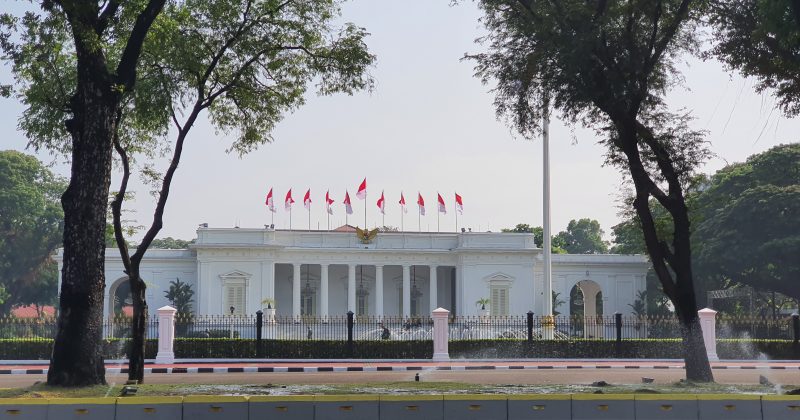
By Guest Writer Rafsi Albar Image by Arkananta Dhimas Naufal For 31 of its 78 years, Indonesia was ruled by the iron fist of the “smiling general,” Suharto. His leadership, known as the “New Order,” originally focused on economic development in order to make up for the losses suffered as a result of President Sukarno’s political manoeuvres. Despite being arguably successful in improving the welfare of its more than 100 million people across three decades, his military background eventually found a way to intervene in the young nation’s supposed democracy. The dual function of the armed forces, more commonly known locally as Dwifungsi ABRI, is a doctrine developed around the same time as Suharto’s rise to power following the political upheaval caused by the Indonesian Communist Party’s insurgency in 1965. The armed forces—or ABRI—then encompassing both the military and police, saw civil administration as ineffective. As such, they believed that former and active ABRI personnel should be able to assume strategic positions in...
Read More

It Is Feminist, So It Is Good: Feminist Jail Is Not Feminist

By Staff Writer Zeqi Chen In May 2022, a proposal titled The Women’s Center for Justice: A Nation-Leading Approach on Women & Gender-Expansive People in Jail, respondedresponds to concerns about New York City’s current plans to close Rikers Island by 2027. The current alternative to Rose M. Singer Center, the women’s jail on Rikers Island, is to build a new facility for women and gender-expansive people as part of a larger men’s jail in Kew Gardens, Queens. But the proposal states that “​​New York City should transform the closed Lincoln Correctional Facility at West 110th Street into a Women’s Center for Justice. ” According to the proposal, this approach is designed to highlight the unique needs for trauma-informed care, family reunification and skill building that female inmates need as mothers and victims of intimate partner violence or domestic violence. Rose M. Singer Center, which Proposal claims is the site of nearly all female and gender-expansive populations in New York City jails,...
Read More

Filling the Gaps: Challenges of Regulatory Framework and Institutional Support For Persons With Disabilities in Educational Institutions

By Guest Writers Jayam Jha and Pooja Rajawat In the ongoing session of the Rajya Sabha, the seat of the former Indian Prime Minister, Dr. Manmohan Singh was shifted from the first row to the last row, due to his inability to walk to the first row because of health-related issues. This has sparked a debate regarding the accessibility of public buildings for persons with disabilities. It asks a pertinent question: what do we do when the parliament of a country is not accessible for persons with disabilities? Out of all other institutions, the need to revamp educational institutions—be it public or private—is more important than ever before, especially when we observe the 30 years of Unni Krishnan vs. The State of Andhra Pradesh, wherein the Right to Education was included within the ambit of Right to Life under Article 21 of the Constitution of India. This right to education was later explicitly inserted under Article 21A of the Constitution by...
Read More
Hijab Mandate and Women’s Agency: Navigating Autonomy in Afghanistan

Hijab Mandate and Women’s Agency: Navigating Autonomy in Afghanistan

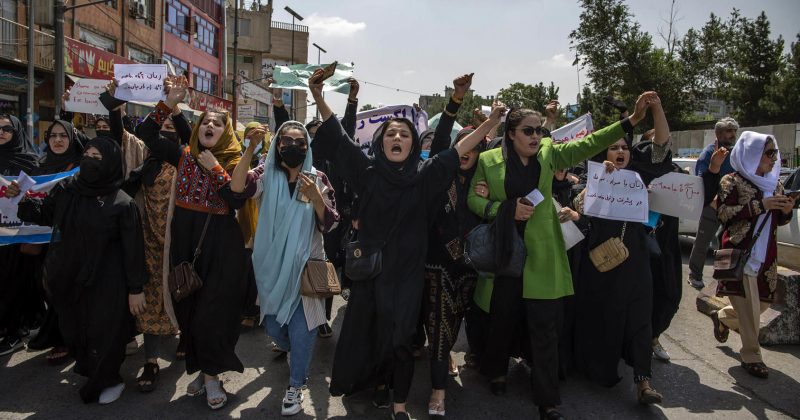
Article by Staff Writer Nazeela Elmi Image by Kiana Hayeri from The New York Times In September 2021, a few days after the Taliban takeover of Afghanistan, a group of women in black head to toe niqab covering went out in Kabul University and Kabul streets to demonstrate their support for the Taliban regime. Many rightfully assumed that, as all of the signs held by the protestors had the same blueprint and all of them wore the same article of clothing, the demonstrations were staged by the Taliban against women who held anti-Taliban views and who protested following the collapse of the former Afghan government. This kind of covering was unprecedented in Kabul or anywhere in Afghanistan.  Women’s veiling varies across Afghanistan given their roles in society, agriculture, throughout their historical junctures, and in various geographical and cultural regions. Veiling has not been mandated under the law in the former government in Afghanistan, though the burqa was imposed during the first rule of...
Read More
Accountability Dilemma: The Use of AWS in the Russia-Ukraine Conflict

Accountability Dilemma: The Use of AWS in the Russia-Ukraine Conflict

By Guest Writer Harsh Bansal INTRODUCTION The Russia-Ukraine conflict has reached an unprecedented level of intensity, fueled by advancements in military technology and modern warfare systems. As the possibility of the conflict being brought before the International Criminal Court (ICC) looms – which is likely in the backdrop of the issuance of Arrest Warrants by the Pre-Trial Chamber II – questions regarding assigning responsibility and accountability for the use of Autonomous Drones such as the USA's Switchblade, Turkey's Bayraktar TB2, Iran's Shahed-136, and most recently Ukraine's UJ-22 on the Kremlin Senate will arise.  AWS These drones possess the remarkable capability of autonomous functioning, allowing them to operate independently without direct human control, hence dubbed Autonomous Weapon Systems (AWS). USA’s Defense Directive No. 3000.09 defines AWS as a system that "once activated, can select and engage targets without further intervention by a human operator.” All drones have different degrees of autonomy, hence making it more difficult to identify the perpetrator. Degrees of autonomy can be divided...
Read More

Democratic Republic of Congo v. Uganda: A Decade of Negotiations and Unfounded Judgment

By Guest Writer Pritika Negi and Eilin Maria Baiju By honoring and upholding the victim’s right to receive remedies and reparations, the international community maintains strong empathy for the victims of gross violations of International Humanitarian Law. After more than a decade, the International Court of Justice (ICJ) on February 9 2022, delivered a contentious judgment with respect to the international armed conflict between the Democratic Republic of Congo (DRC) and Uganda after the failure to reach a consensus in negotiations. Contrary to the goal, the mode of reparation was restricted to a mere $325 million in monetary compensation. The Democratic Republic of Congo (DRC) were to pay this amount in five annual installments instead of the initially claimed lump sum of $11 billion. The court awarded this compensation on an exceptional basis in the form of “global sums''—a rough estimate of the amount of damages that a court may grant when there are serious evidentiary difficulties, after denying all the...
Read More